
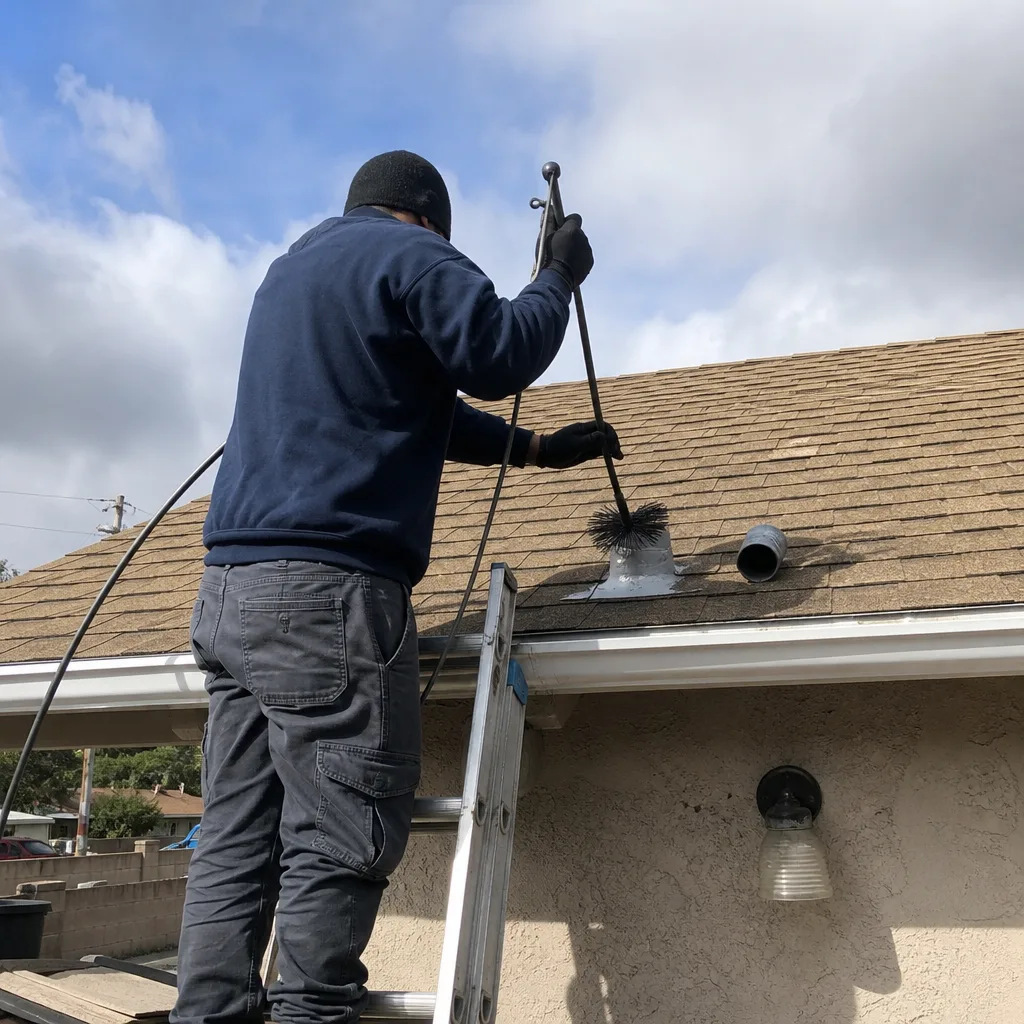
Last updated November 2, 2026
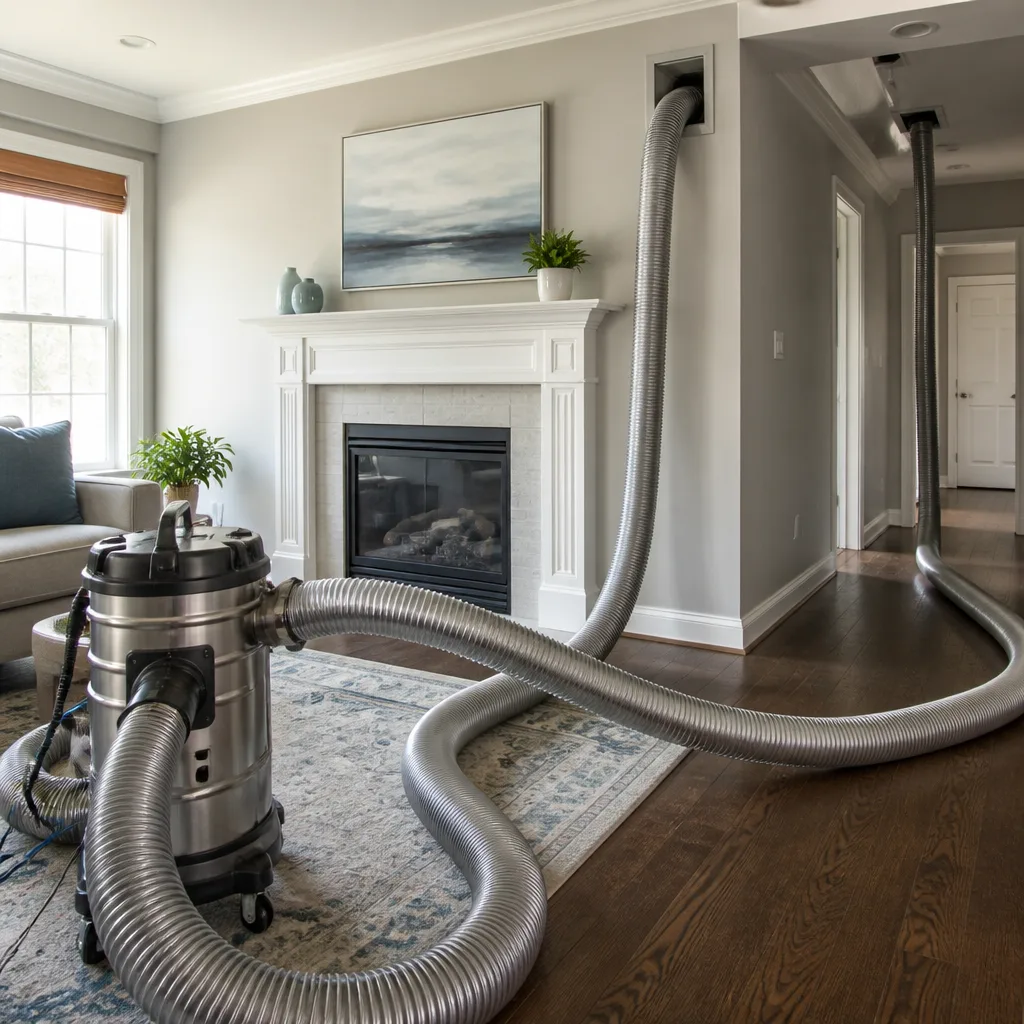 Whole-home duct cleaning
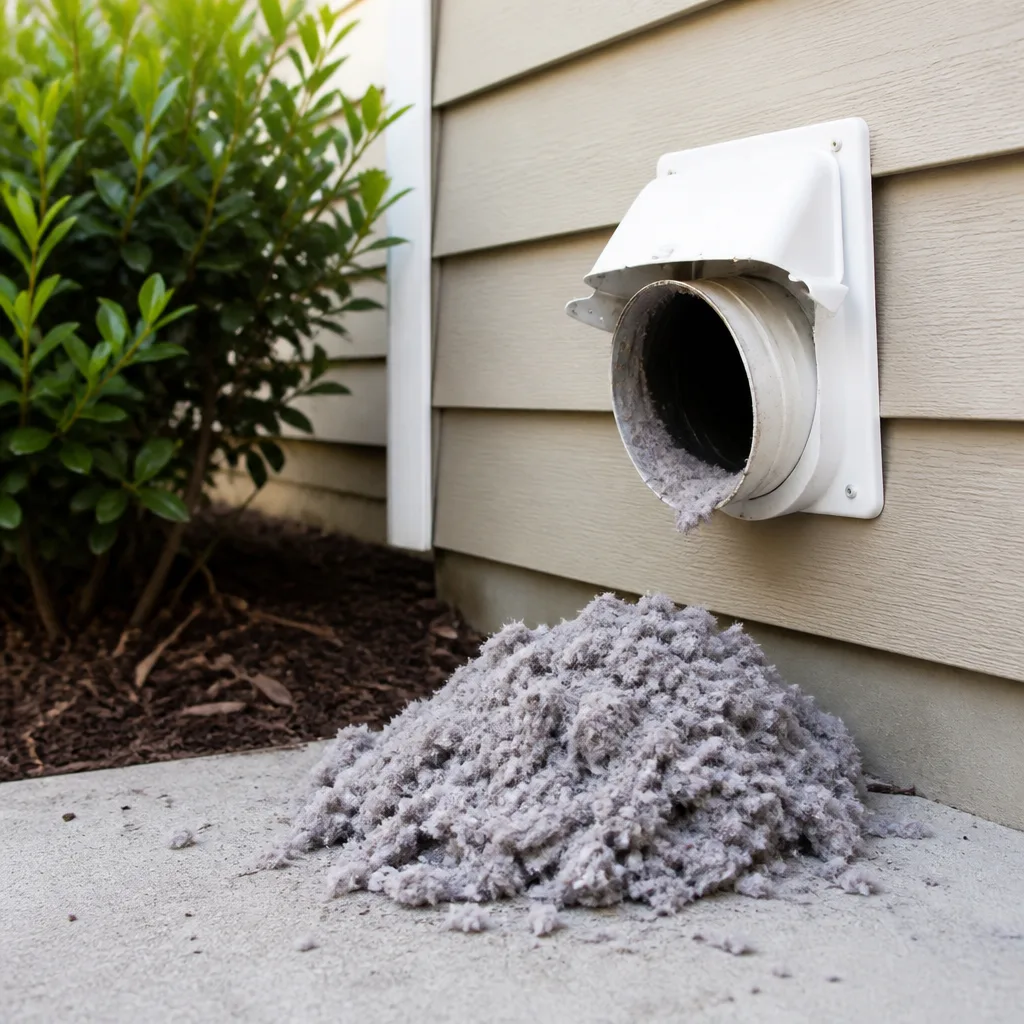 Dryer vent cleaning
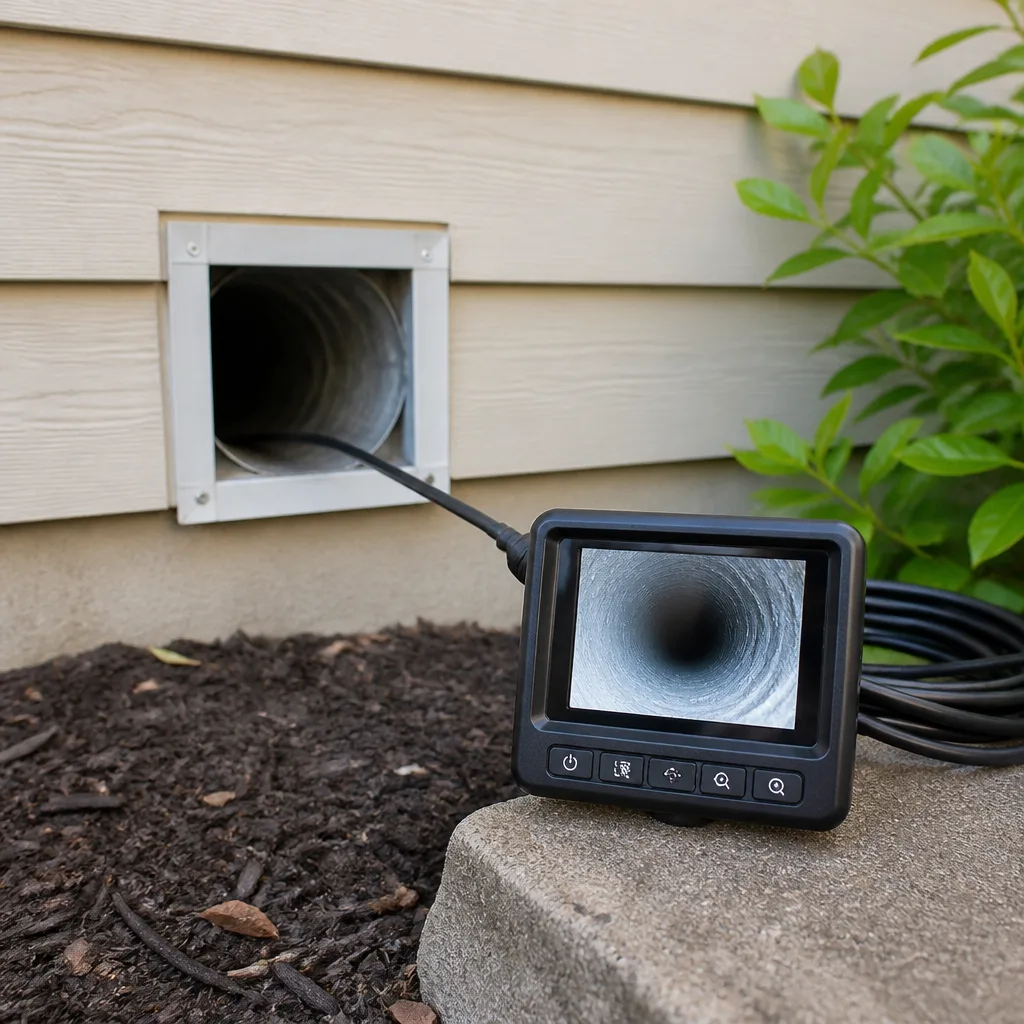 Camera inspection
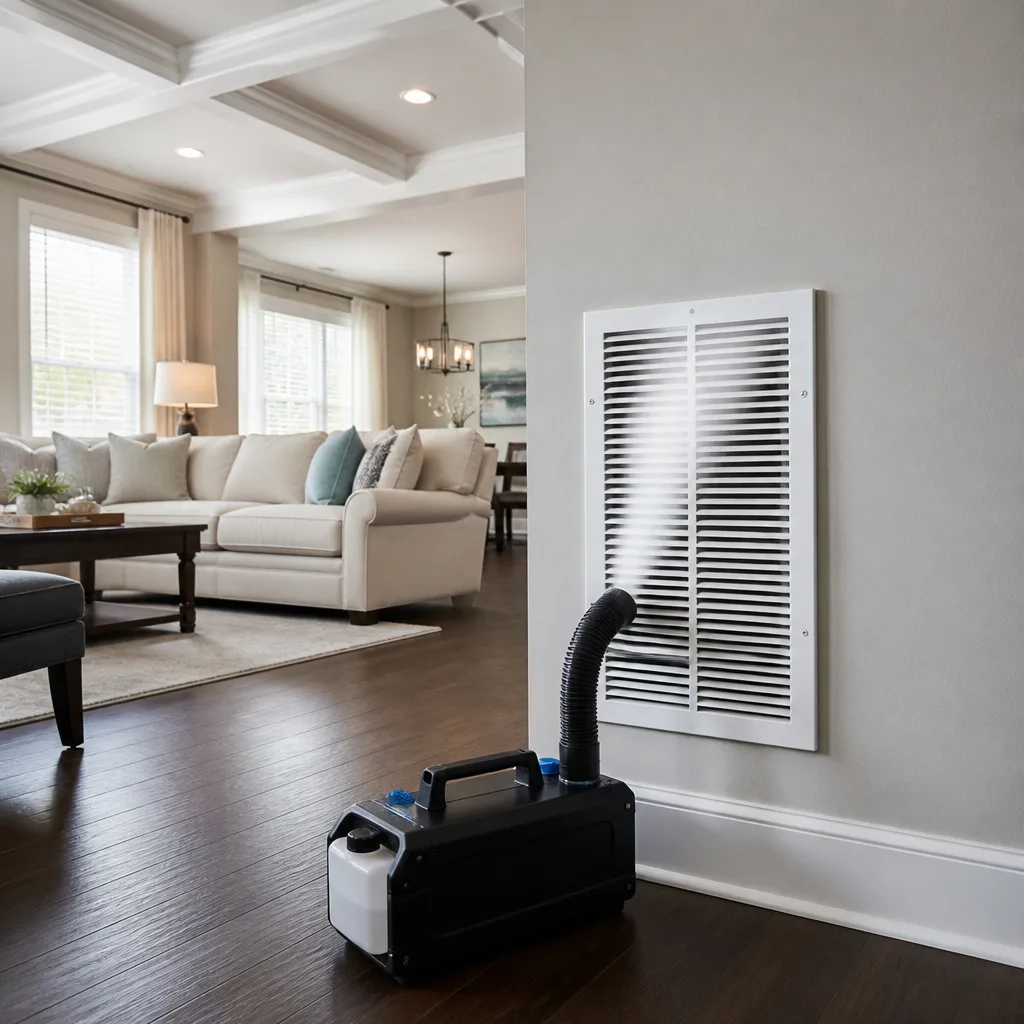 Sanitizing & deodorizing
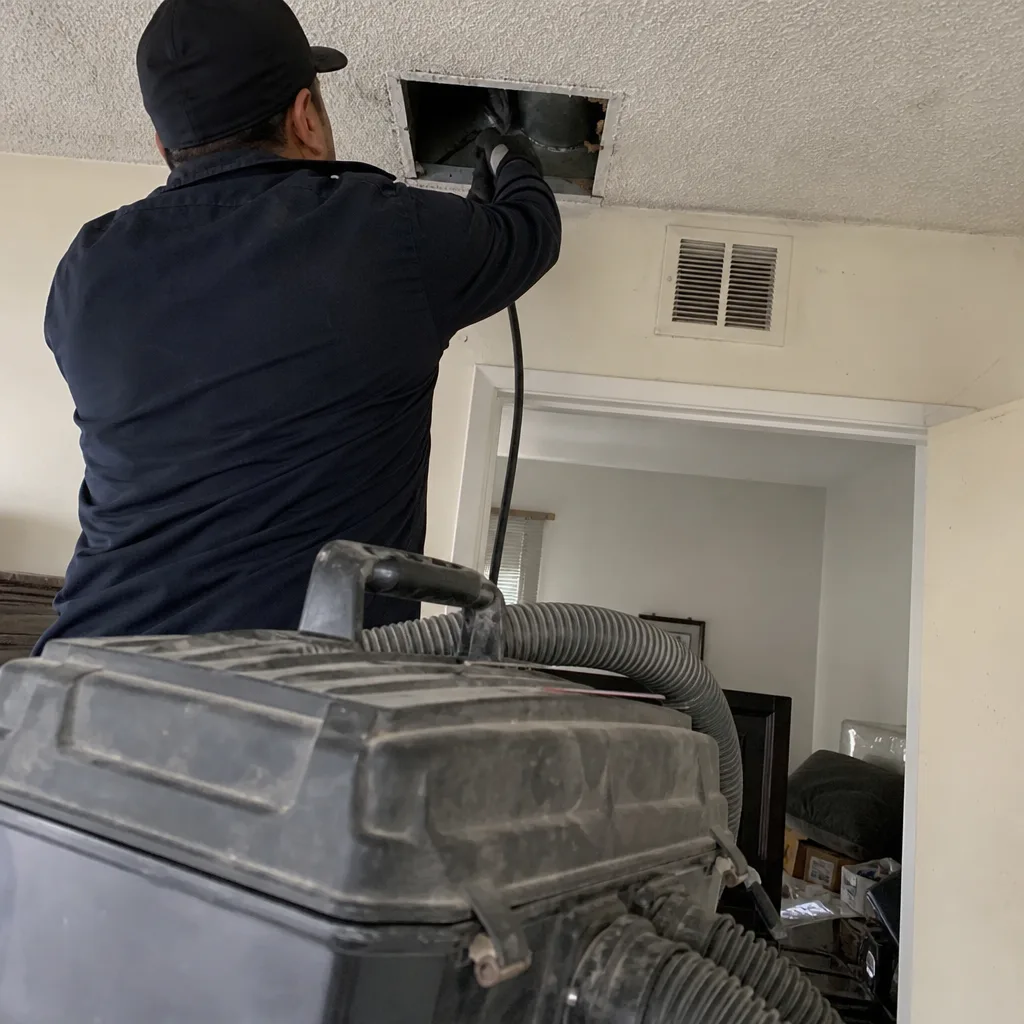
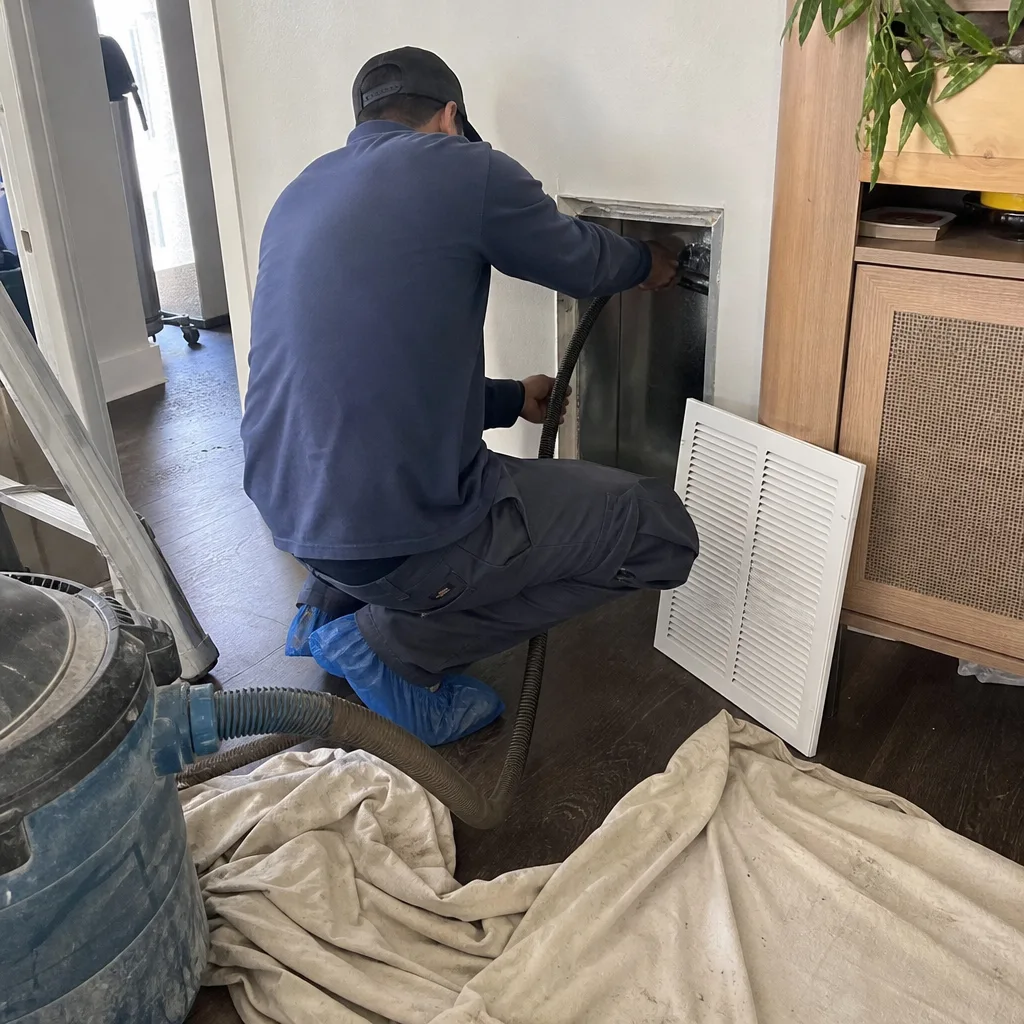
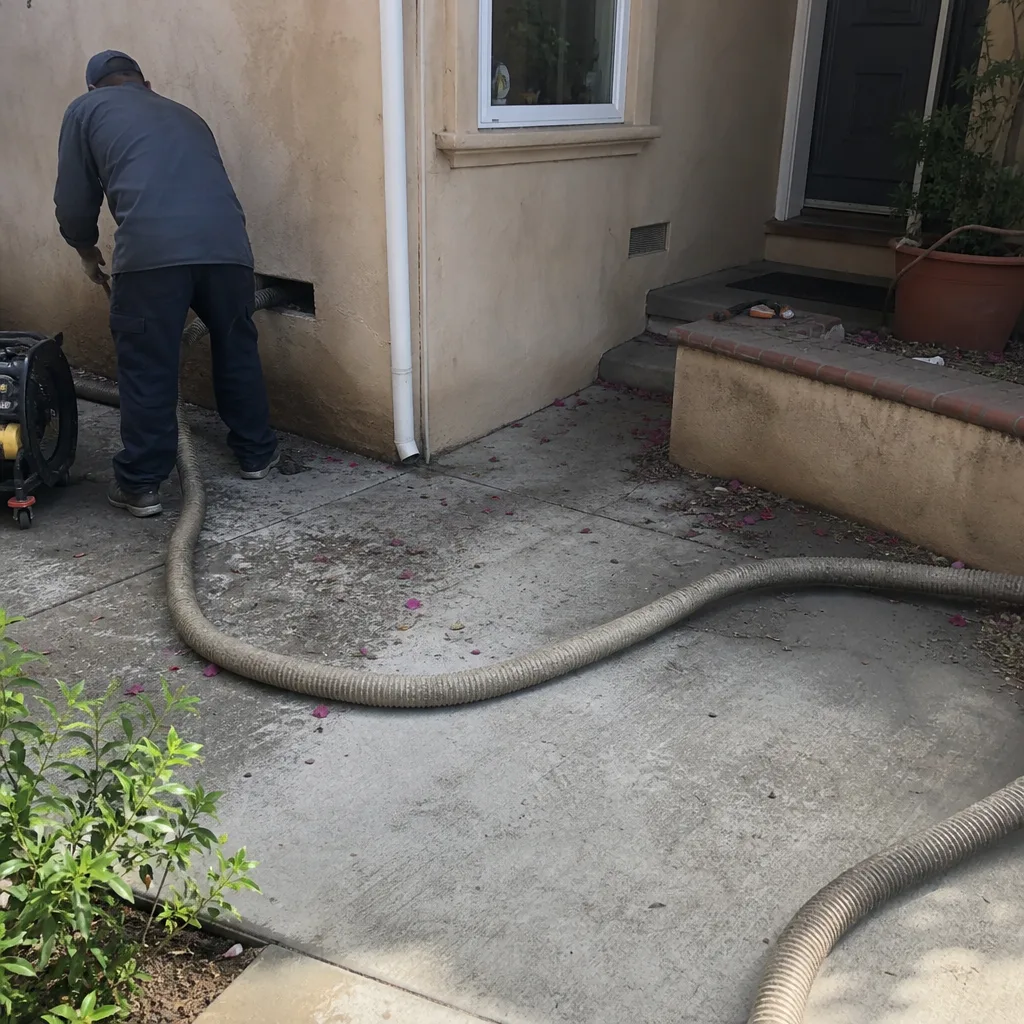
Whole-system duct and dryer vent check with before-and-after photos - you see exactly what came out of your vents
That "$99 whole-house special" is a bait ad - the real number appears once they are in your hallway, or the "clean" is a shop-vac at the register. We photograph the inside of your ducts before and after instead.
How to Hire an Air Duct Cleaning Contractor in Carson: A Step-by-Step Guide
The most common duct cleaning scam in Southern California doesn’t involve a fake invoice. It involves a real technician with a real vacuum that simply isn’t powerful enough to do the job you paid for. That’s the uncomfortable truth most Carson homeowners discover only after the van pulls away. This guide will teach you how to audit a contractor’s equipment, verify their claims, and structure the hiring process so you’re paying for a measurable result, not a show. We’re writing this from Carson because we work here, and we know what this market actually looks like on the ground.
Styles & brands we work with
- Whole-home duct cleaning
- Dryer vent cleaning
- Camera inspection
- Sanitizing & deodorizing
Quick Answer
To hire an air duct cleaning contractor in Carson, verify three things before signing: the equipment they use (professional-grade rotary brush systems with true HEPA filtration, not a shop vac), their process (negative air pressure maintained during agitation, access walk-through before quoting), and their scope (our Air Duct Cleaning services, dryer vent cleaning, and duct repair as distinct services). A legitimate contractor will show you their gear, explain their CFM rating, and quote a flat system price after inspecting your ductwork, not over the phone.
Table of Contents
- Why Equipment Matters More Than Price in Carson
- Specific Questions to Ask Before Anyone Quotes You
- What NADCA Certification Actually Requires (and How to Verify It)
- Red Flags in the Quoting Process
- How to Structure the Access Walk-Through Before Signing
- Insurance and Liability: What California Contractors Must Carry
- The Step-by-Step Hiring Process for Carson Homeowners
- Common Mistakes to Avoid
- When to Call a Professional
- Frequently Asked Questions
- The Bottom Line
Why Equipment Matters More Than Price in Carson
Carson sits in the South Bay basin, where marine layer moisture, freeway-adjacent particulates from the 405 and 110 corridors, and older housing stock combine to create duct systems that accumulate a specific kind of grime. It’s not just dust. It’s a fine gray-black film that adheres to duct walls and requires mechanical agitation to remove. This is why equipment is the single most important factor in your hiring decision.
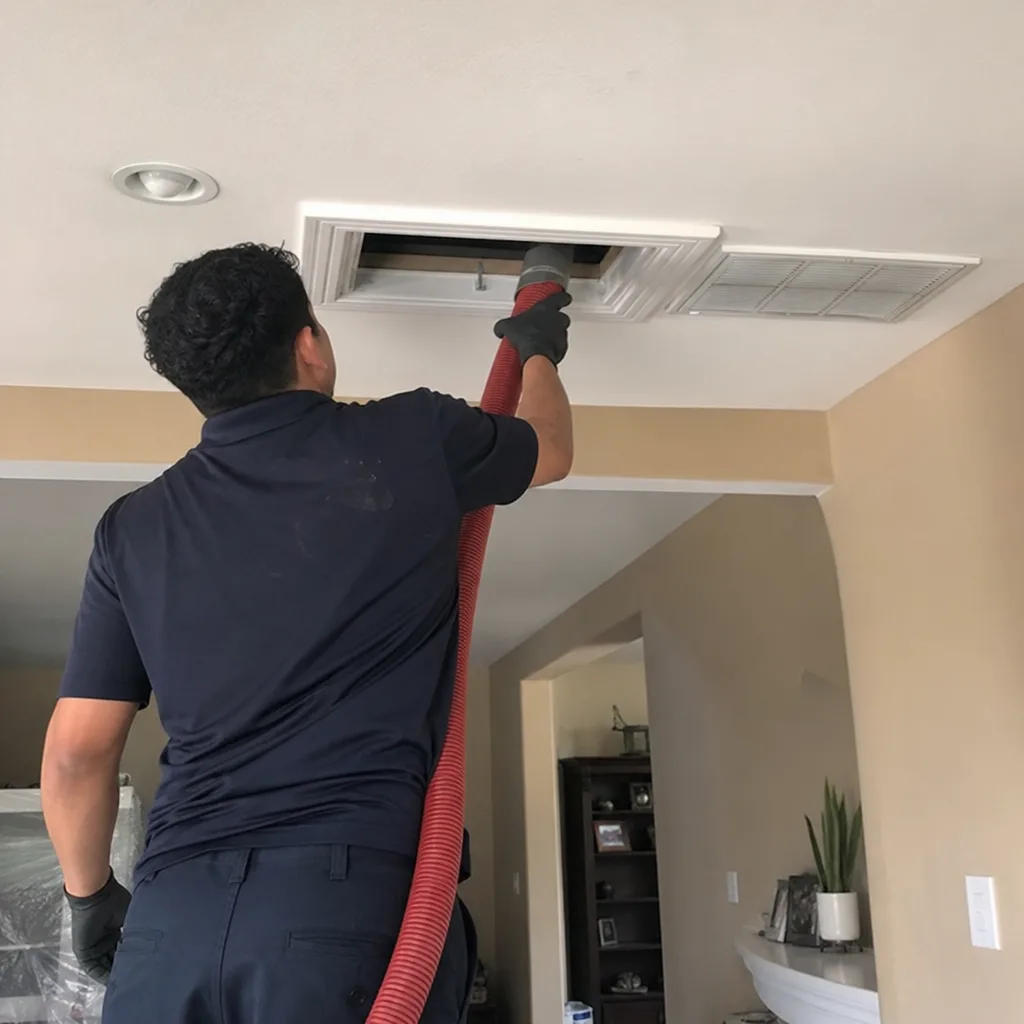
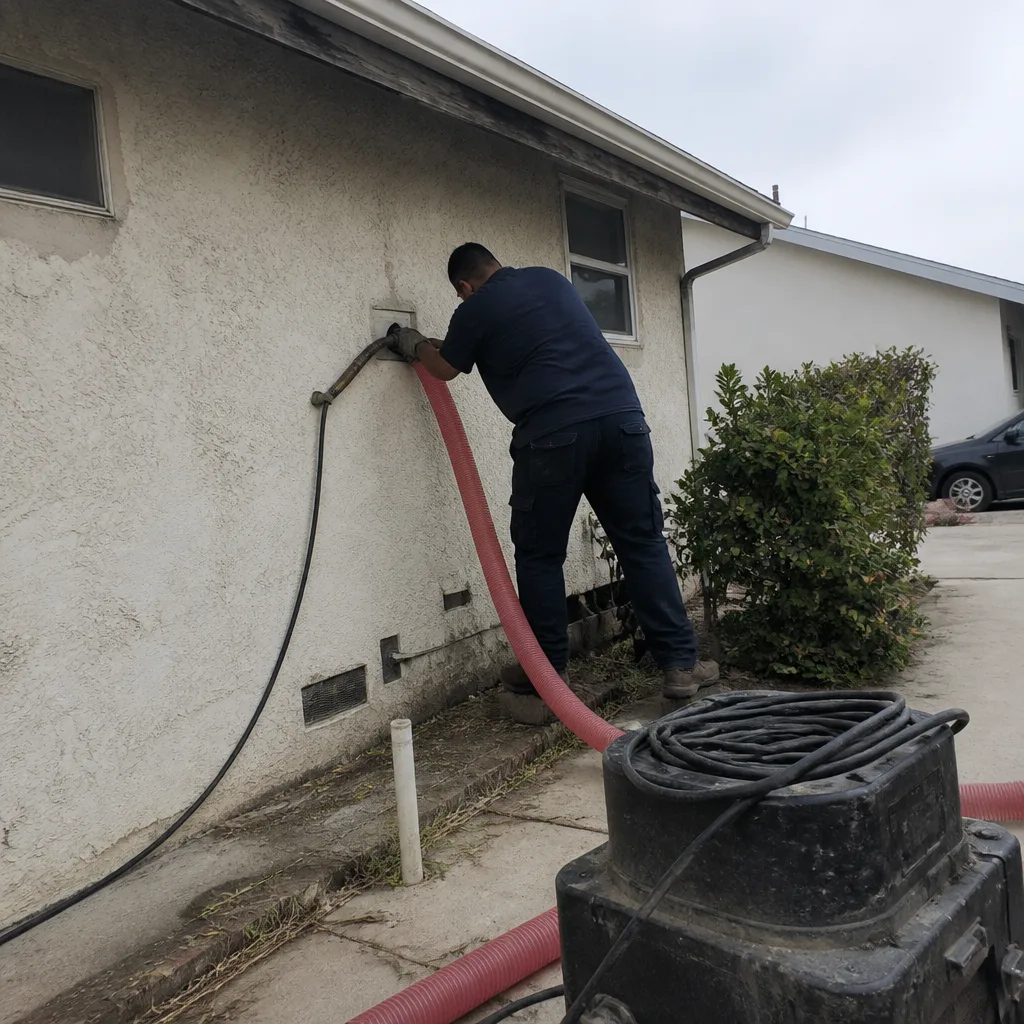
A shop vac with a long hose generates maybe 150 to 400 CFM (cubic feet per minute) of airflow. That’s not enough to pull debris through a residential duct run. Professional systems like the Rotobrush and Nikro units we operate generate significantly higher CFM and, critically, combine it with rotary brush or air whip agitation that physically breaks the bonded layer off the duct surface. Without agitation, you’re paying someone to wave a vacuum wand around your registers. The debris stays.
The second equipment question is filtration. A vacuum that pulls debris out of your ducts and exhausts it back into your living room is making your air worse, not better. True HEPA filtration (99.97% capture at 0.3 microns) matters. Abatement Technologies negative-air machines, the same category of machinery used in mold and contaminant remediation, create a sealed pressure differential that pulls air from the room through the duct system and exhausts it through HEPA filters. That’s a remediation-grade standard, not a residential convenience. When we say contractor-grade equipment at residential pricing, this is what we mean.
Ask any contractor in Carson to name their equipment before you ask for a price. If they can’t tell you the brand, the CFM rating, and the filtration standard, you’ve learned everything you need to know. Your ducts move air through every room. What’s in them matters.
Specific Questions to Ask Before Anyone Quotes You
Most Carson homeowners start the process by asking about price. That’s backwards. Price is the last conversation you should have. The first conversation is about equipment, process, and scope. Here are the exact questions that separate a legitimate operation from a blow-and-go crew.
1. “Is your system truck-mounted or portable?”
Truck-mounted systems connect to a powerful gas or diesel engine mounted in the vehicle, producing significantly more suction than portable electric units. Portable units can be legitimate, but only if they’re professional-grade machines with high CFM output and HEPA filtration, not consumer shop vacs. In Carson, where many homes have rooftop package units or crawl-space duct runs, a portable system with true negative-air capability can work well. The key is the CFM and filtration, not the form factor.
2. “What’s the CFM rating of your vacuum system?”
CFM (cubic feet per minute) measures how much air the system moves. A legitimate residential duct cleaning system needs enough airflow to transport loosened debris from the farthest register back to the collection unit. Ask for the number. If the contractor doesn’t know it, or if they give you a blank look, that’s the end of the conversation. Professional crews know their CFM rating the way a mechanic knows their torque wrench.
3. “What agitation method do you use – rotary brush, air whip, or skipper ball?”
This question alone will eliminate most unqualified operators in Carson. The rotary brush is the industry standard for residential ductwork: a rotating brush head is fed through the duct, physically scrubbing the walls. An air whip uses compressed air to whip a nozzle against the duct surface, useful for certain flex duct configurations. A skipper ball is a foam or rubber ball with ropes that scrapes heavy buildup in commercial or industrial ducting. Each has its place. A contractor who can explain which method suits your duct material is a contractor who understands the job. A contractor who says “we just vacuum it out” is not one.
4. “Do you maintain negative pressure at the unit during agitation?”
This is the technical question that tells you whether they understand containment. During agitation, debris loosened from duct walls becomes airborne. If the system is not maintaining negative pressure – meaning air is being pulled, not pushed – that debris can escape into your home. A proper setup uses a negative-air machine connected at the system level to pull air through the ducts and exhaust it through HEPA filtration to the outside or through a sealed filter bank. Abatement Technologies equipment is built specifically for this. Anyone doing duct work without negative pressure containment is doing half a job.
What NADCA Certification Actually Requires (and How to Verify It)
NADCA – the National Air Duct Cleaners Association – is the only meaningful industry certification body for duct cleaning in the United States. The ACR (Air Systems Cleaning Specialist) certification requires passing a comprehensive exam, documenting hands-on experience, and agreeing to follow NADCA’s standards for process and safety. It’s not a rubber stamp. But here’s what most homeowners in the South Bay don’t know: anyone can paste a NADCA logo on a website. Verification takes two minutes.
Go to NADCA’s member directory online and search for the company name. If they’re not there, the logo is decoration. NADCA also maintains a standard called the ACR Standard, the industry benchmark for how duct cleaning should be performed. The standard specifies things like using mechanical agitation, maintaining containment, protecting the home during service, and documenting the result. A contractor who claims NADCA certification should be able to describe what the standard requires. If they can’t, they’re not certified. Period.
It’s also worth understanding that NADCA certification belongs to technicians, not companies. A company can employ certified technicians without the company itself being listed. So ask the direct question: “Are your technicians NADCA-certified, and can I verify that in the directory?” Legitimate operators won’t flinch. We name our equipment because it matters which tools go into your home. We’re just as direct about credentials.
Red Flags in the Quoting Process
The quoting process is where bait-and-switch operations in Carson reveal themselves. The scam typically follows a pattern: a low teaser price, a scheduled visit, then an on-site “discovery” that jacks the invoice up. Here are the specific red flags to watch for before you sign anything.
Per-vent pricing that inflates on-site
Some companies quote a price per vent, then count the vents once they’re inside your home and present a number two or three times the original quote. A vent count that was supposed to be six becomes fourteen. Duct cleaning should be quoted as a flat system price based on system size, not a per-vent tally. If the quote is per-vent, ask what total they guarantee for your specific system. If they won’t commit, walk away.
Quotes given without knowing duct material type or square footage
A serious contractor needs to know what they’re cleaning before they quote. Duct material matters: rigid sheet metal cleans differently than flex duct, which can be damaged by overly aggressive agitation. System size matters: a 1,500-square-foot condo in Carson has a very different duct volume than a 3,000-square-foot house in the Dominguez Hills area. If a company quotes over the phone without asking about your system, they’re not pricing the job. They’re pricing the lead.
Refusal to show equipment before work begins
If you ask to see the equipment and the technician hedges – “it’s in the truck, we’ll set it up later” or “you don’t need to worry about that” – that’s a problem. A legitimate crew has no reason to hide their gear. Ask to see the unit in the truck or at the point of setup. If it looks like something you could buy at a hardware store, it probably is. In Carson, we’ve seen the full spectrum of gear show up at residential doors. The equipment tells the story before the work begins.
How to Structure the Access Walk-Through Before Signing
Before you agree to anything, a credible contractor should want to see your system. This is a sign of professionalism, not an inconvenience. The walk-through serves two purposes: it lets the contractor quote accurately, and it lets you evaluate whether they know what they’re looking at. Here’s what a proper access walk-through should include.
First, the contractor should locate the air handler or furnace and the supply and return plenums. They should inspect the return-side ductwork, which is typically where the worst buildup occurs. They should note the duct material: rigid sheet metal, flex duct, or a mix. They should check for access panels or confirm that access holes will need to be cut and properly sealed. They should identify any visible leaks, separations, or damage at the connections. In Carson’s older housing stock, particularly homes built before 1990, flex duct connections at the plenum are a common failure point. A contractor who notices this during the walk-through and mentions it is doing their job. Found during cleaning, fixed the same visit – that’s the standard you want.
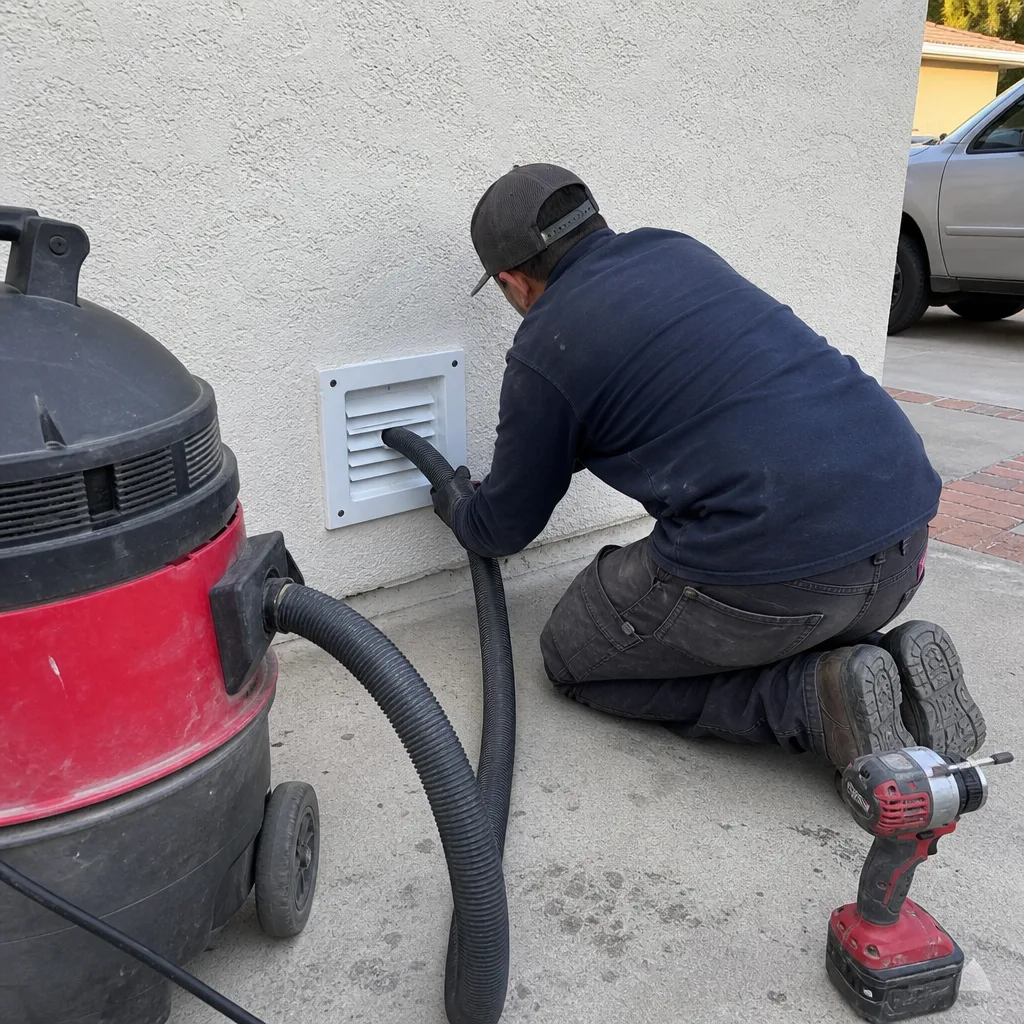
Second, the walk-through should include a conversation about scope. Air duct cleaning, dryer vent cleaning, and air duct repair are three distinct services. A contractor who treats dryer vent cleaning as a “bonus” add-on is not taking fire prevention seriously. Lint-blocked exhaust venting is the leading cause of residential dryer fires in the United States. Dryer vent cleaning isn’t a bonus service. It’s a fire-prevention job. Make sure the walk-through clarifies exactly what’s included and what isn’t.
Third, ask about containment and protection. A proper job involves sealing the register openings during service, laying drop cloths, and protecting your floors and furnishings. If the walk-through doesn’t address these details, assume they won’t happen.
Insurance and Liability: What California Contractors Must Carry
California requires any contractor performing work in your home to carry general liability insurance. For duct cleaning specifically, the policy should cover property damage caused by the work itself. This matters because duct cleaning involves physically touching a system that’s integrated into the structure of your home. A flex duct connection disturbed at the plenum, a register boot loosened, a crawl space access left open – these are real risks, and a legitimate contractor carries coverage for them.
Ask for a certificate of insurance directly from the contractor’s insurer, not a photocopied card. The certificate should list you as the certificate holder, which means you get notified if the policy lapses. Minimum general liability coverage of $1 million per occurrence is standard. Workers’ compensation insurance is also a legal requirement for any company with employees in California. If a worker is injured in your home and the company doesn’t carry workers’ comp, you could be exposed. Ask for verification of both.
Beyond insurance, verify that the contractor has a valid California business license. You can check this online through the Contractors State License Board (CSLB) database. Licensed, insured, and bonded is the language you want to hear, but verify it. In Carson, where duct cleaning is an unregulated corner of the home services market, verifying credentials is not paranoia. It’s due diligence.
The Step-by-Step Hiring Process for Carson Homeowners
Here is the complete process, laid out as a checklist you can follow from first call to final inspection, with more guides & resources available on our blog. This is the process we’d recommend to a friend in Carson. It works.
- Verify credentials before the first call. Check the company’s name in the NADCA directory and the CSLB database. Verify insurance with a certificate. This eliminates 80% of unqualified operators before you ever speak to anyone.
- Call and ask the equipment questions. Use the list from the section above: truck-mount or portable, CFM rating, agitation method, negative pressure containment. Take notes. If they can’t answer, end the call.
- Schedule an access walk-through. A legitimate contractor will want to see the system before quoting. During the walk-through, watch for whether they inspect the return side, note duct material, and check for visible damage.
- Get a flat system price in writing. The quote should specify the total price for your system, not a per-vent estimate. It should state exactly what’s included: air duct cleaning, dryer vent cleaning if requested, and any repair work identified during inspection.
- Confirm the process before the job starts. Ask what equipment will be used, how containment will be managed, and how long the job will take. A legitimate contractor will answer without hesitation.
- Ask for before-and-after photos of your own ducts. This is the single best way to verify the work was actually done. A camera inspection before and after cleaning shows you exactly what was removed. Any legitimate contractor should offer this without being asked. If they refuse, that’s a problem.
- Do a final walk-through after the job. Check that all access points are properly sealed, registers are clean and reattached, and the system is running normally. Review the photos. Pay only after you’re satisfied.
If this process feels like more work than you wanted, remember what it’s protecting you from. The gap between a legitimate contractor and a bait-and-switch operation in Carson is three phone calls and a walk-through wide. It’s not hidden. It’s visible in the gear list, the insurance certificate, and the way they answer the equipment questions.
Common Mistakes to Avoid
- Hiring based on the lowest price. Duct cleaning is a process-driven service. The cost of a cut-rate job is that the debris stays in your ducts. In Carson’s marine-layer climate, where ducts hold moisture and debris bakes on, a superficial cleaning leaves the same allergen load you started with.
- Accepting a quote over the phone without an inspection. A company that quotes without seeing your system is pricing a lead, not a job. You’ll find out the real price once they’re standing in your hallway.
- Not asking about agitation method. Without mechanical agitation, duct cleaning is a vacuum wand pointed at your registers. The debris that matters – the bonded film on duct walls – stays exactly where it was.
- Ignoring dryer vents. Some homeowners schedule air duct cleaning and assume the dryer vent is included. It often isn’t. Lint-blocked exhaust venting is the leading cause of residential dryer fires. Ask specifically.
- Not requesting before-and-after photos. This is the only way to verify the work was actually done. A legitimate contractor will provide them as standard practice. If they demur, ask yourself what they don’t want you to see.
- Assuming an air duct cleaning company can also repair ductwork. Most can’t. Duct cleaning and duct repair are different skill sets. If a company’s only service is cleaning and they find a separated flex duct connection during the job, they’ll tell you to call someone else. Ask upfront whether repair is a service they provide directly.
- Confusing a logo with a credential. A NADCA logo on a website means nothing until you verify it in the directory. Same with insurance claims. Verify everything. In Carson, this takes five minutes and saves you thousands of dollars in bad work.
When to Call a Professional
You don’t need to diagnose your duct system to know when something’s off. If you’re seeing dust accumulation on surfaces within days of cleaning, if certain rooms are noticeably stuffier than others, if your HVAC system is running more than it used to, or if you smell a stale, musty odor when the system kicks on, those are signals that the ductwork needs professional attention. Water damage, recent construction, or a previous “cleaning” you weren’t confident about are also reasons to schedule a real inspection. In Carson’s specific climate, where marine moisture plus freeway particulate makes a specific kind of grime, these signs shouldn’t be ignored. Duct Cleaning Carson offers free estimates in Carson. Call (866) 569-6170 to schedule an access walk-through and get a flat system quote.
Frequently Asked Questions
Air duct cleaning in Carson typically ranges from $450 to $900 for a standard single-family home, depending on system size, duct material, and the level of buildup. For full pricing details, see our Air Duct Cleaning Cost Breakdown: The Carson Homeowner’s Reference for 2026. A flat system price is the only honest way to quote. Avoid per-vent pricing. It’s designed to inflate on-site. Call (866) 569-6170 for an exact quote after an access walk-through. Estimates are free.
Cheaper quotes almost always come from companies using consumer-grade equipment – shop vacs and basic vacuums that can’t generate the CFM or negative pressure needed for a real cleaning. They’re cheaper because the job is cheaper to perform. It’s not the same service. The low price is an equipment decision, not a profit decision.
Ask for before-and-after photos of your own duct system, taken with a camera inspection tool during the job. These photos show you exactly what was removed. Any legitimate contractor provides them as standard practice. If they won’t provide them, you have your answer.
NADCA recommends air duct cleaning as needed, based on inspection, not on a calendar schedule. However, in Carson’s South Bay environment, where marine air and freeway-adjacent particulate combine, most homes benefit from an inspection every 3 to 5 years. See our Seasonal Air Duct Cleaning Care for Carson: Year-Round Homeowner’s Guide for timing recommendations. Homes with pets, recent construction, or a previous low-quality cleaning may need it sooner.
Air duct cleaning removes accumulated dust, pollen, and particulate from the duct system, which is what the service addresses. What remains in your ducts blows through your home every time the system runs. Cleaning reduces the reservoir. It’s not a medical treatment, and we won’t claim it cures allergies. What it does is remove the physical material that circulates through your rooms.
That depends on who you hire. Most duct-cleaning-only companies cannot. They’ll find a separated flex duct connection or a leak at the plenum and tell you to call someone else. Duct Cleaning Carson offers Air Duct Repair as a standalone service, so leaks, separations, and damage found during cleaning can be fixed in the same visit. Ask this question before you hire. It changes the scope of what gets done.
The Bottom Line
Hiring a duct cleaning contractor in Carson is an equipment audit, not a price comparison. Ask about CFM ratings, agitation methods, and negative pressure containment. Verify NADCA claims in the directory and insurance claims with a certificate. Get a flat system price after an access walk-through, and demand before-and-after photos of your own ducts. The difference between a legitimate contractor and a bait-and-switch operation is visible in the gear list, not the Yelp rating. In Carson, where marine moisture and freeway particulate make duct grime a persistent problem, the right contractor matters. For Duct Cleaning Carson home services including Air Duct Cleaning, Dryer Vent Cleaning, and Air Duct Repair in Manhattan Beach, call (866) 569-6170 for a free estimate and a walk-through that tells you exactly what’s in your ducts.
Written by the team at Duct Cleaning Carson, serving Carson since 2011.
See the difference
 Before
 After
 Before
 After
 Before
 After