
Last updated November 2, 2026
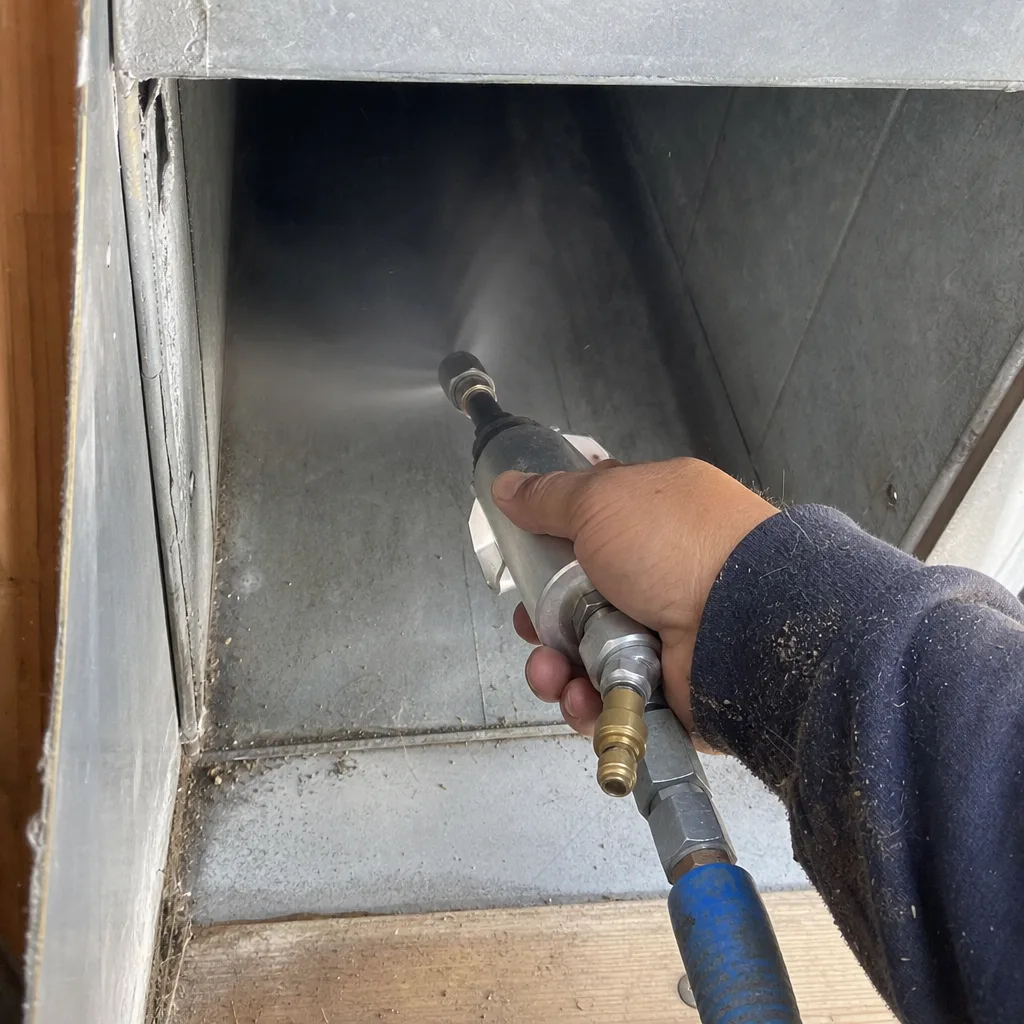
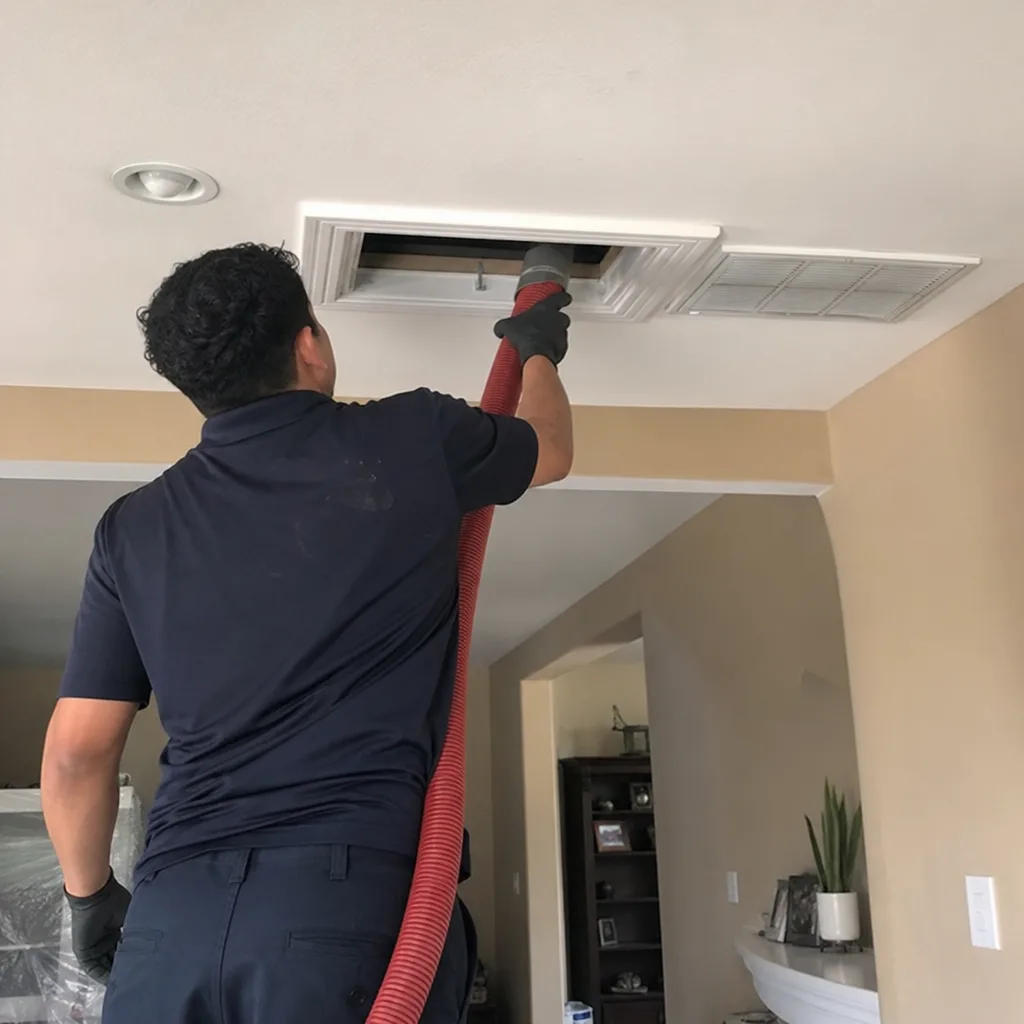
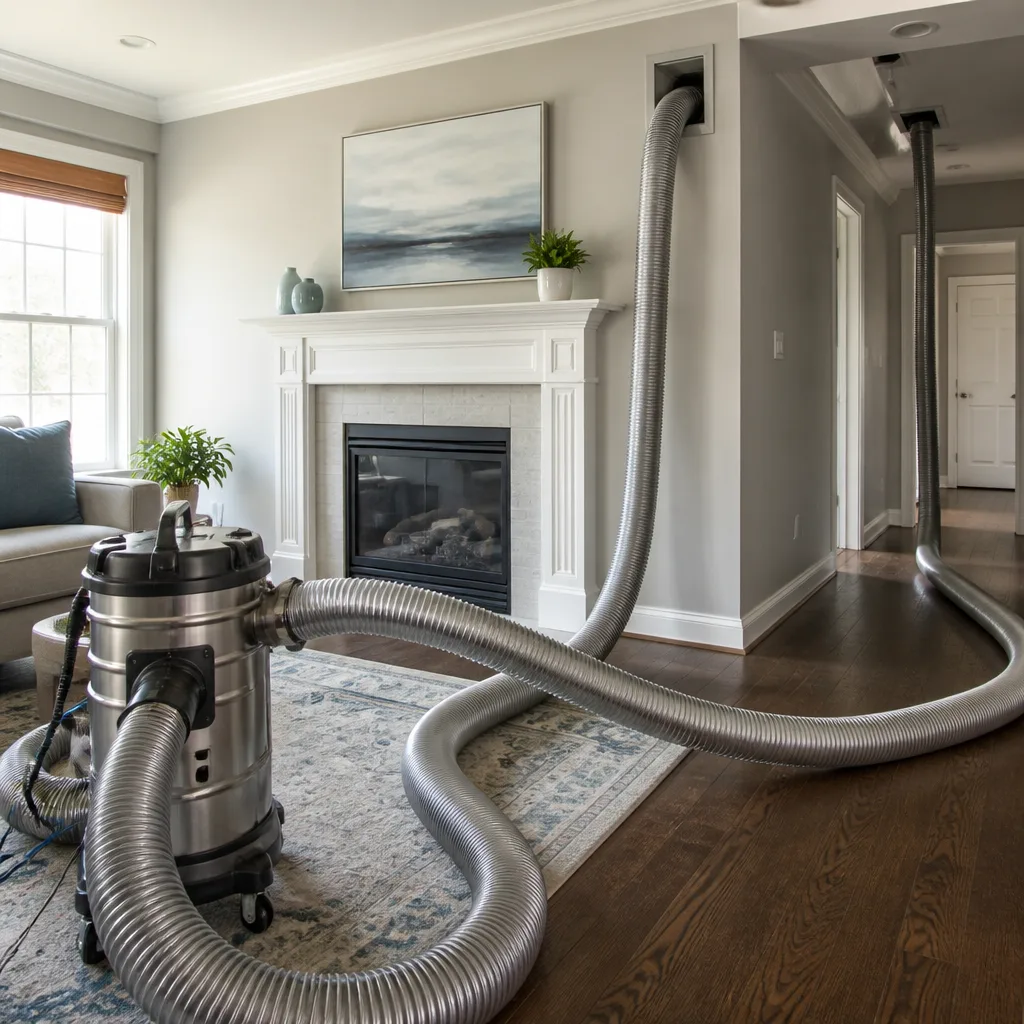 Whole-home duct cleaning
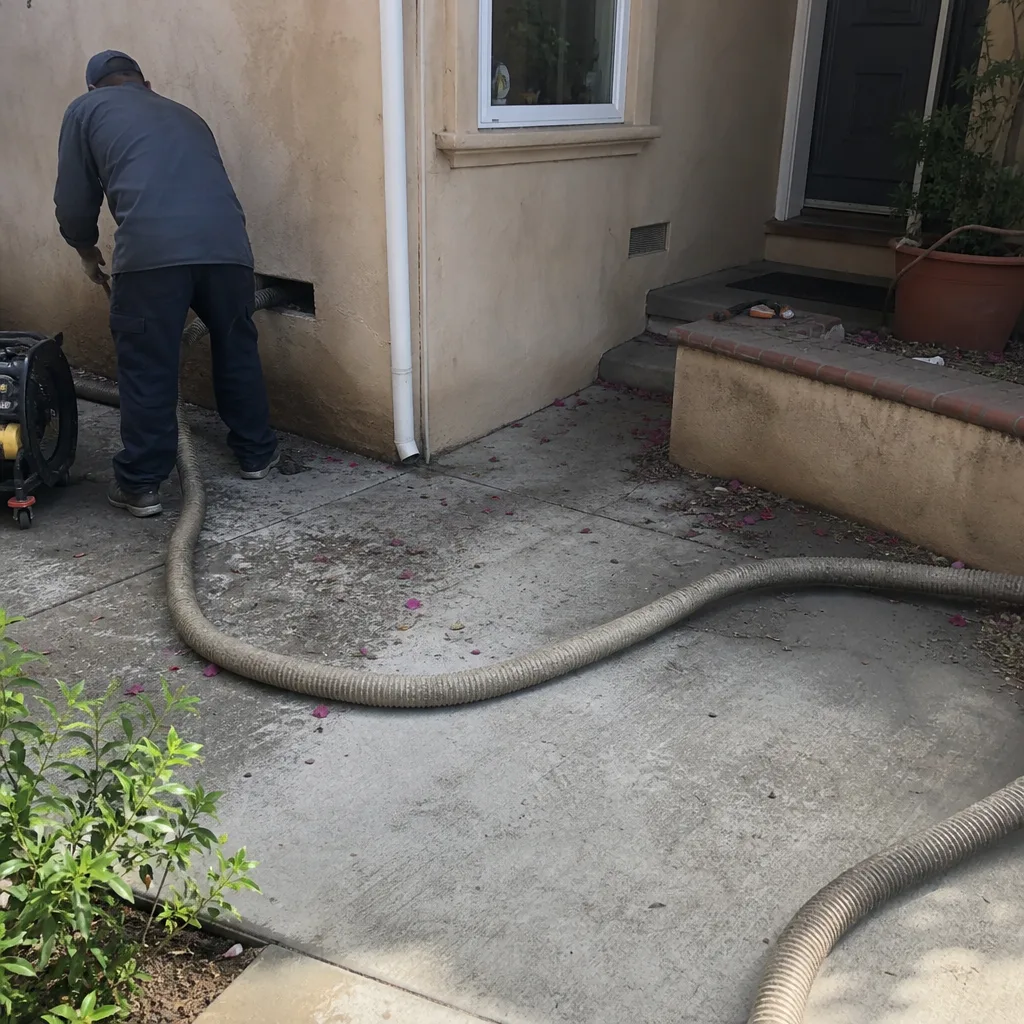
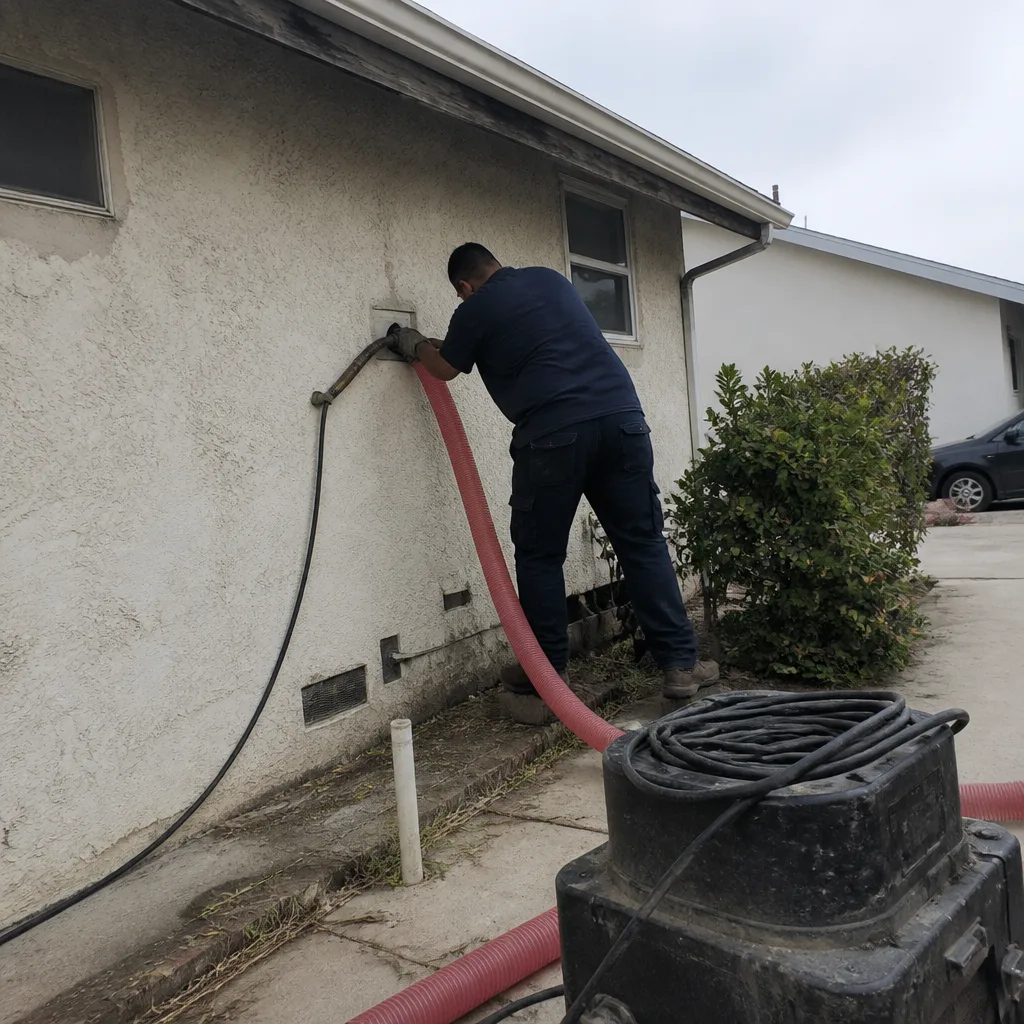
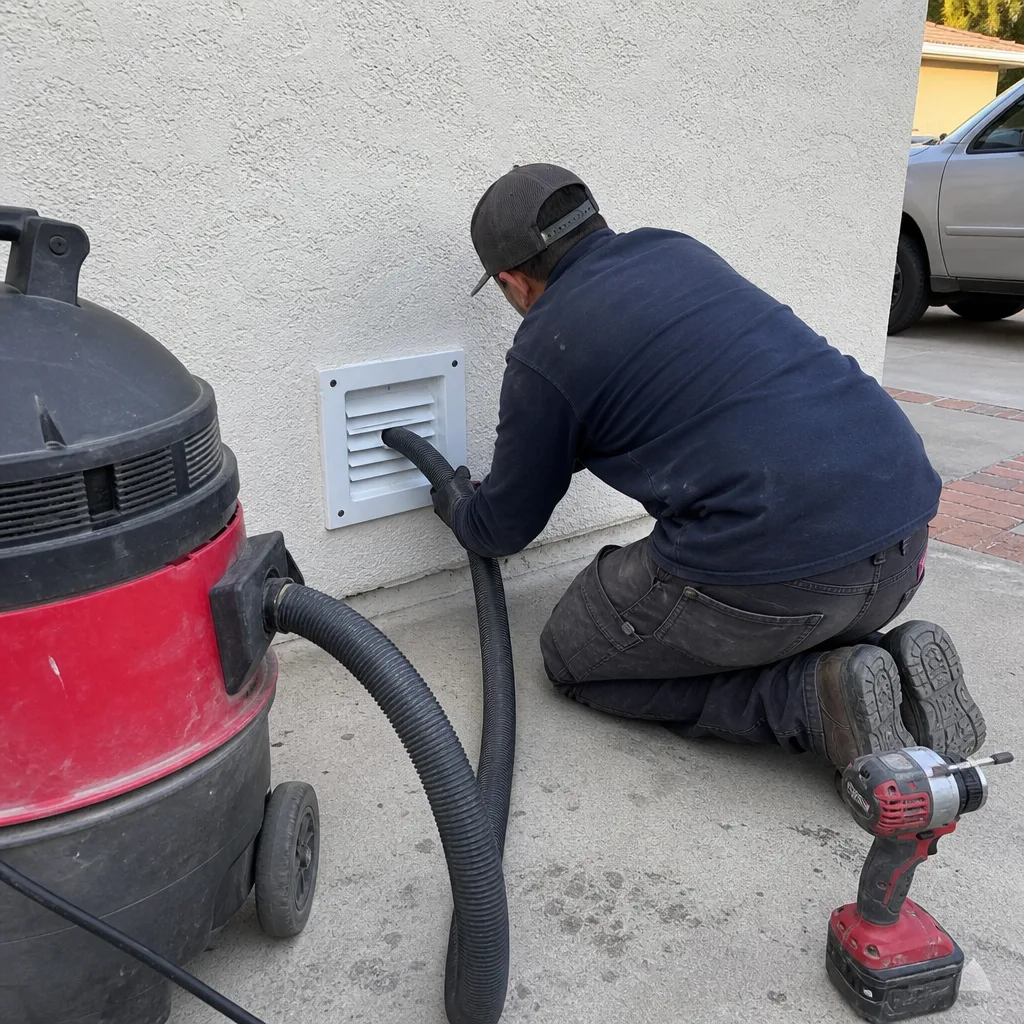
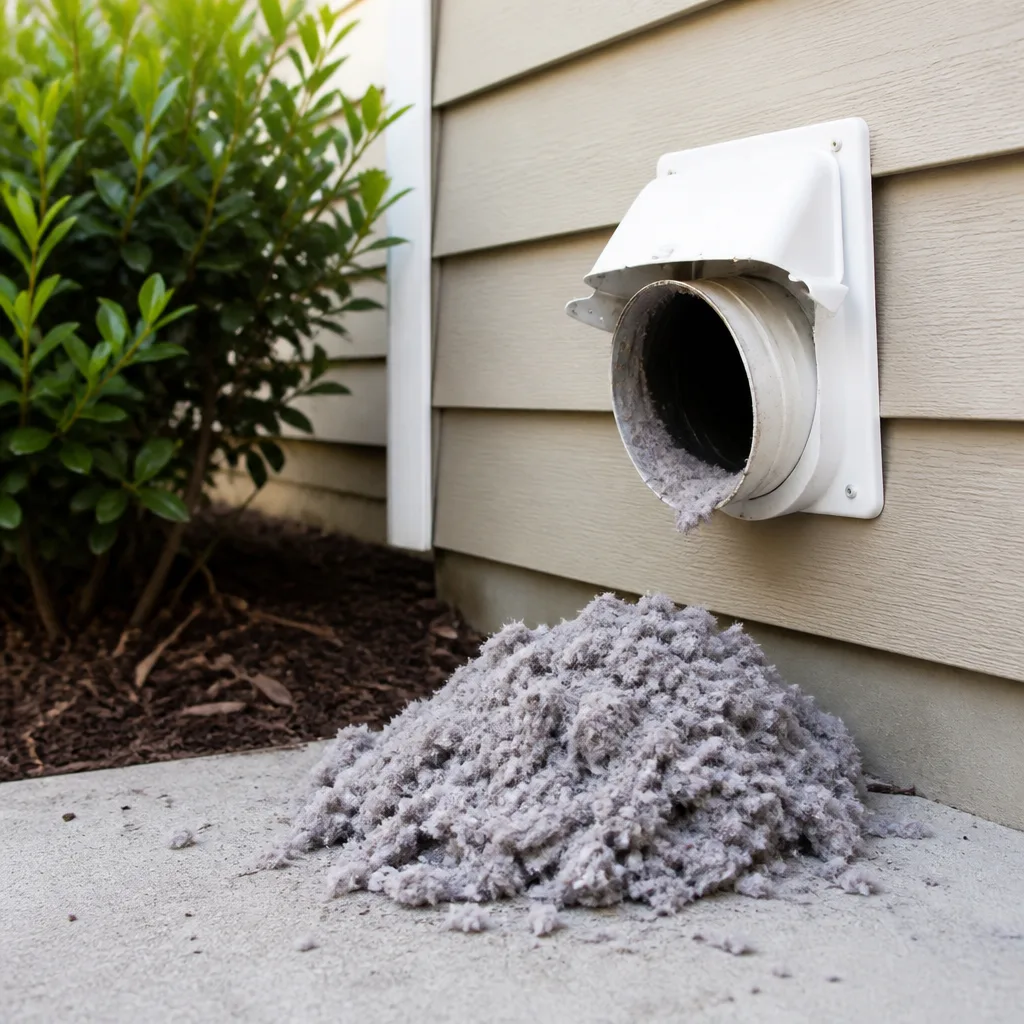 Dryer vent cleaning
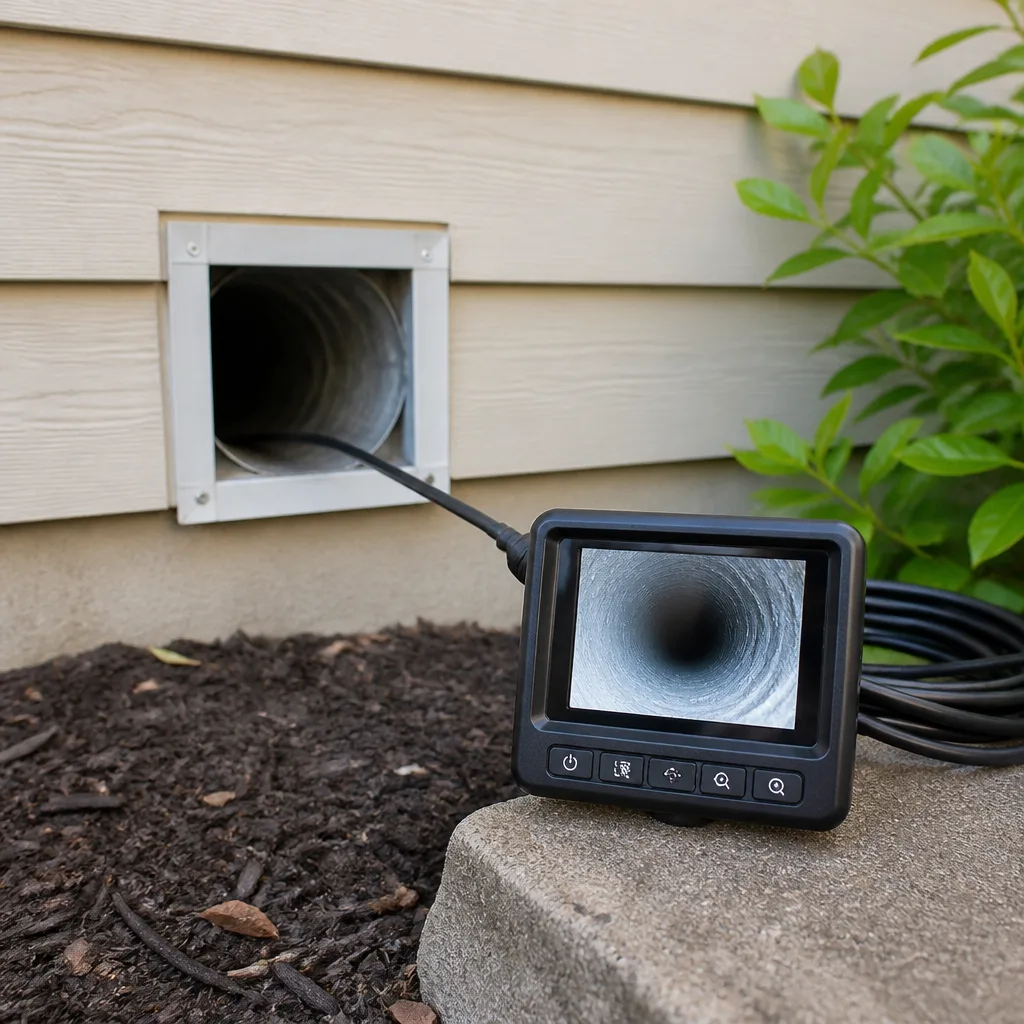 Camera inspection
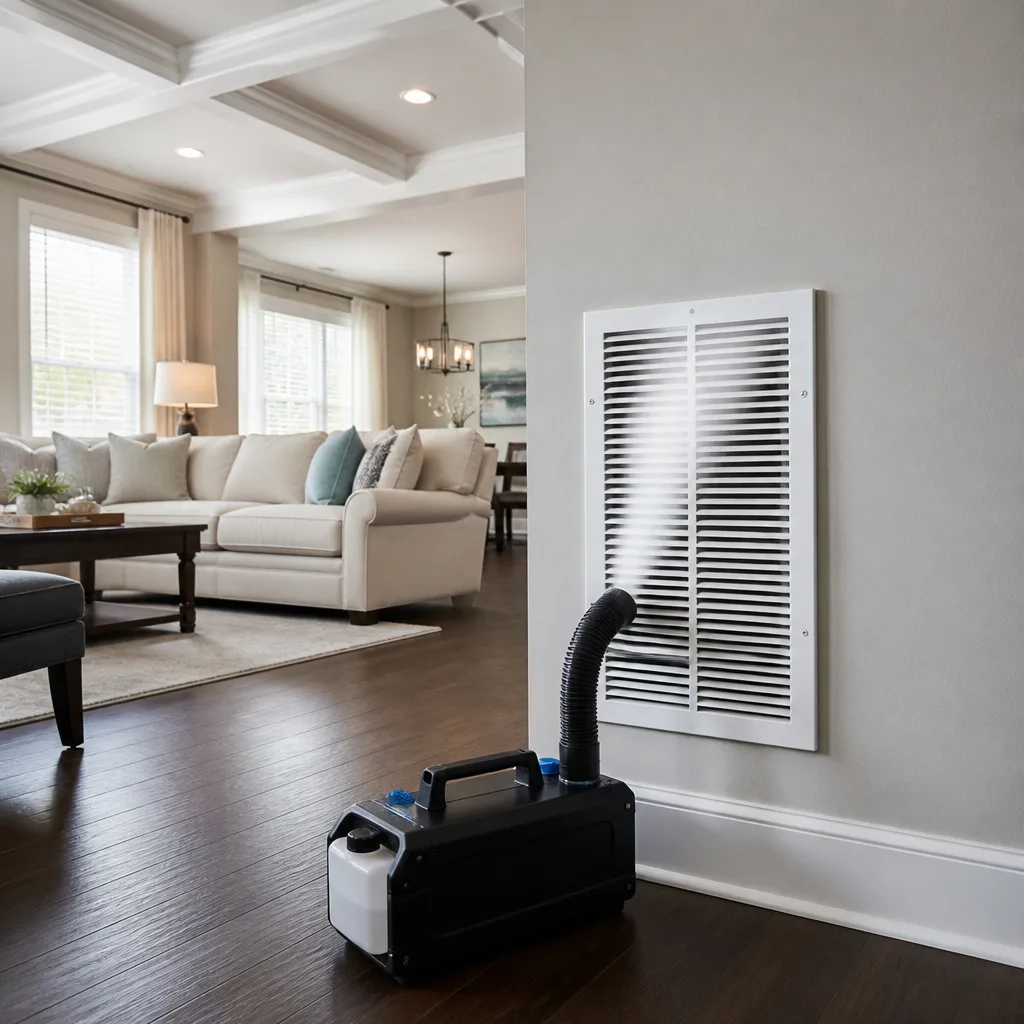 Sanitizing & deodorizing
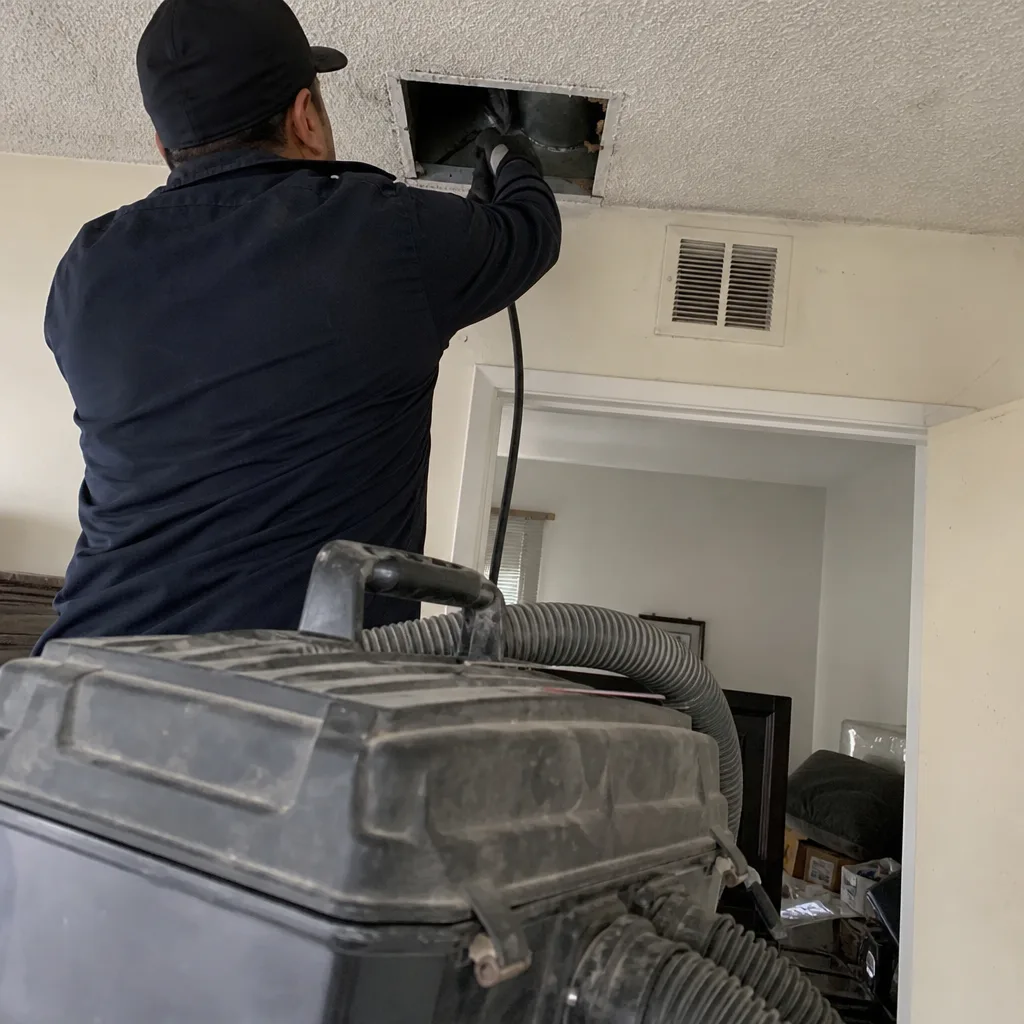
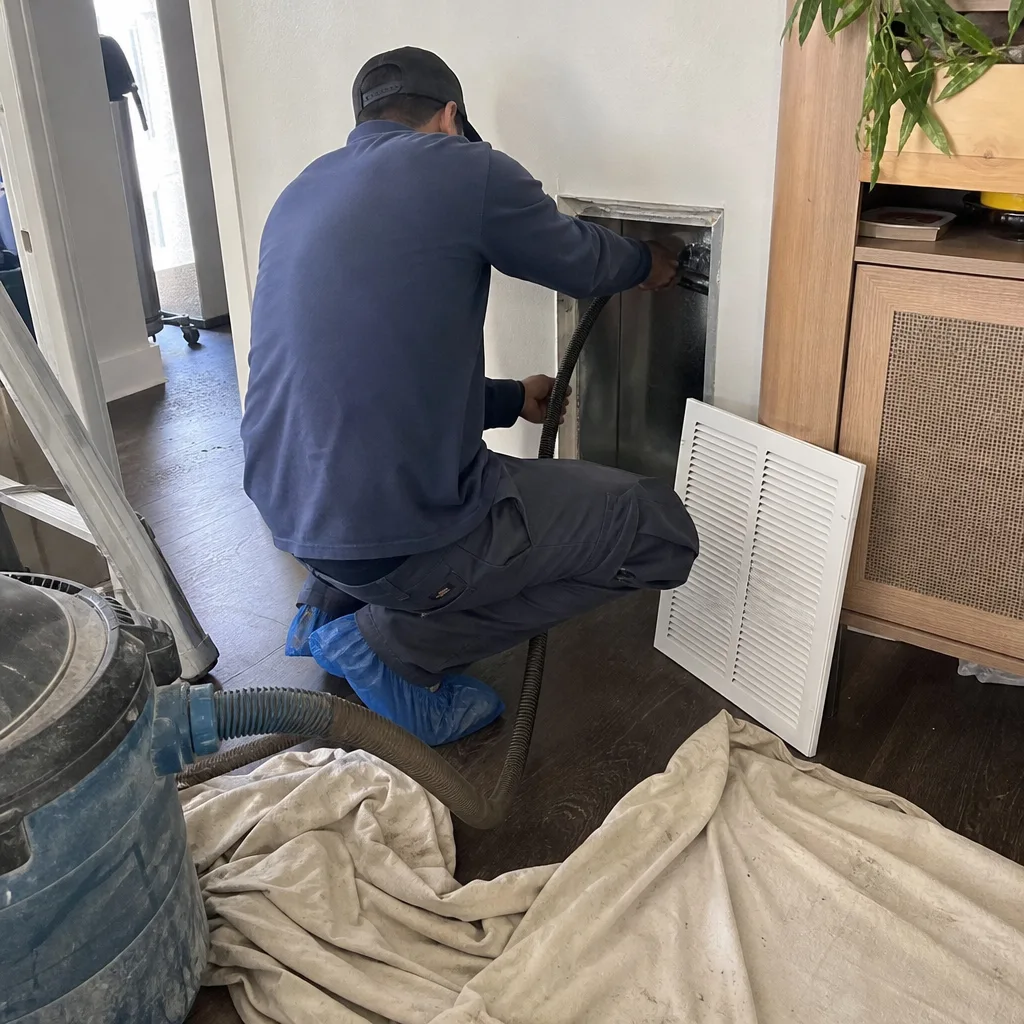
Whole-system duct and dryer vent check with before-and-after photos - you see exactly what came out of your vents
That "$99 whole-house special" is a bait ad - the real number appears once they are in your hallway, or the "clean" is a shop-vac at the register. We photograph the inside of your ducts before and after instead.
Air Duct Cleaning Emergency Preparedness Guide for Carson Homes
After the 2020 and 2021 wildfire smoke events, HVAC systems in LA County homes that ran during peak AQI days accumulated measurable fine particulate in duct liner that standard MERV-8 filtration did not prevent. Most homeowners in Carson never addressed it, and that particulate is still there, waiting to recirculate every time the blower kicks on. This guide covers the three emergency scenarios Carson homeowners face most, how to respond during an active air quality event, what a real post-emergency duct cleaning involves, and how to build a plan before the next one hits. For ongoing maintenance between emergencies, see our Air Duct Cleaning Maintenance Checklist for Carson Homeowners.
Styles & brands we work with
- Whole-home duct cleaning
- Dryer vent cleaning
- Camera inspection
- Sanitizing & deodorizing
Quick Answer
Air duct cleaning emergency preparedness for Carson homes means knowing when to shut your HVAC system down, how to document contamination for insurance, and when to call a professional for a post-emergency cleaning. In a wildfire smoke event, you shut the system down when AQI exceeds 150 and switch to portable HEPA filtration. After a flood, fire, or major construction project, you need a cleaning that uses HEPA containment and negative-air setup, not a routine maintenance visit. Duct Cleaning Carson handles all three core services: Air Duct Cleaning services, dryer vent cleaning, and air duct repair. Call (866) 569-6170 for a free estimate.
Table of Contents
- Three Carson-Specific Emergency Scenarios That Demand Immediate Duct Response
- What to Do With Your HVAC System During an Air Quality Emergency
- How to Document Post-Event Duct Contamination for Insurance
- Emergency Cleaning vs. Routine Cleaning: What Actually Changes
- Building a Practical Emergency Plan for Your Carson Home
- What a Realistic Professional Response Timeline Looks Like in the South Bay
- Common Mistakes to Avoid
- When to Call a Professional
- Frequently Asked Questions
- The Bottom Line
Three Carson-Specific Emergency Scenarios That Demand Immediate Duct Response
Carson sits in a unique position within LA County. The city borders industrial corridors along the 405 and 710 freeways, sits downwind of refinery activity in Wilmington and Torrance, and experiences the same wildfire smoke intrusions that blanket the South Bay during Santa Ana wind events. That geography shapes the three emergency scenarios we respond to most often in Carson homes.
1. Wildfire Smoke Intrusion During System Runtime
When smoke blankets Carson during a wildfire event, the instinct is to close windows and run the AC. That instinct protects temperature but compromises air quality. A standard residential HVAC system with a MERV-8 filter captures larger dust particles but lets fine particulate, the PM2.5 that makes wildfire smoke dangerous, pass straight through into the ductwork. Over hours of runtime, that particulate embeds in duct liner, accumulates on coil surfaces, and settles in low-velocity sections of trunk lines. Once the smoke clears, the system becomes a reservoir that reintroduces those particles every time it cycles. We’ve inspected systems in Carson neighborhoods like the 210 corridor and the Avalon Village area where a single smoke season left visible gray residue inside return plenums, months after the event.
2. Post-Flood Moisture Contamination in Attic Duct Runs
Flooding in Carson rarely looks like the dramatic images from the Gulf Coast. It looks like rain-soaked drywall, a slab leak, or a backed-up drain line that sat unnoticed in an attic for a weekend. When moisture enters attic duct runs, either through a roof leak or condensation on poorly insulated flex duct, it creates conditions that no homeowner wants inside their air stream. Water-soaked fiberglass duct liner supports microbial growth within 48 to 72 hours. The problem compounds in Carson’s marine-layer humidity, which slows natural drying and extends the window for contamination. We see this most often in older Carson homes built before current attic ventilation standards, where bathroom exhaust fans vent into attic spaces and push moisture directly against duct surfaces. If you’re dealing with water-damaged ductwork after a leak or flood, the fix often involves Air Duct Repair in Manhattan Beach level work: section replacement, sealing, or liner remediation, not just cleaning.
3. Construction Dust from Permitted Renovation Work
Carson’s housing stock includes a significant number of mid-century homes now undergoing permitted renovations: kitchen remodels, room additions, ADU construction. Any project that involves drywall sanding, flooring removal, or demolition generates fine dust that a running HVAC system actively distributes through the entire duct network. The mistake most homeowners make is covering vents only in the room being renovated. Dust enters the returns in adjacent rooms, gets pulled through the blower, and deposits throughout the system. We’ve cleaned systems after renovation projects where drywall dust filled the evaporator coil to the point that airflow dropped by over 30 percent. A pre-renovation HVAC shutdown plan is as important as the post-renovation cleaning.
What to Do With Your HVAC System During an Air Quality Emergency
The critical decision during a smoke event is not whether to clean your ducts, it’s whether to run your system at all. Here’s the framework we recommend to Carson homeowners.
AQI Thresholds That Should Dictate Your Actions
- AQI 0-50 (Good): Normal operation. No action needed.
- AQI 51-100 (Moderate): Normal operation is acceptable. If you have a MERV-11 or higher filter installed, you’re doing better than most neighbors. Consider running the fan on low continuous to filter air (if equipped with a media filter, not a standard 1-inch fiberglass panel).
- AQI 101-150 (Unhealthy for Sensitive Groups): If anyone in the home has asthma, COPD, or cardiovascular conditions, shut the system down and switch to portable HEPA air purifiers. If you must run it, upgrade to the highest-efficiency filter your system can handle without starving airflow (typically MERV-13 for modern systems).
- AQI 151-200 (Unhealthy): Shut the HVAC system down. The blower is now actively distributing outdoor contaminants more effectively than it filters them unless you’re running a true HEPA bypass system, which most residential homes do not have.
- AQI 201+ (Very Unhealthy to Hazardous): Shut the system down. Tape over supply registers if smoke odor is detectable inside. Use portable HEPA units with activated carbon stages for the rooms you occupy. This is the threshold where running a standard system is counterproductive.
The Filter Reality Check
A standard 1-inch fiberglass or pleated filter in the 1- to 4-inch slot does highway-speed filtration. It protects the equipment, not the people. Fine particulate passes through. When Carson air quality drops during fire season, the single most impactful thing a homeowner can do is install a high-MERV media cabinet filter, like the Aprilaire 213 or similar, that increases surface area and captures sub-micron particles without choking airflow. Our familiarity with Aprilaire and Honeywell air-quality products comes from servicing homes that have already made that upgrade, and from seeing the difference inside their ductwork during inspections.
After the Event: System Restart Protocol
- Replace the filter before the first post-event startup. It is saturated regardless of visual appearance.
- Inspect supply registers for visible soot or residue. Photograph any you find.
- Run the fan on high for 20 minutes with windows open (if outdoor AQI has returned below 100) to flush loose particulate.
- If you detect a smoke odor that persists more than a week after the outdoor air clears, you likely have particulate embedded in duct liner or on coil surfaces. That is not a filter problem. That is a cleaning problem.
- Schedule an inspection if the system ran for more than 48 cumulative hours during AQI 100+ conditions. The inside of the ductwork tells a story filters don’t.
How to Document Post-Event Duct Contamination for Insurance
Insurance claims after wildfire smoke or flood events in Carson require evidence. Adjusters are not going to accept a verbal description of “the air feels different.” Here’s what creates a defensible record.
Before You Call Anyone: Evidence Collection
- Photograph the filter. Remove it carefully. Photograph both sides against a white background. Date-stamp the photos. A filter that was new before the event and is gray or brown afterward tells a clear story.
- Photograph supply register interiors. Use your phone’s flash. Look for gray or brown streaking on the register blades and inside the first six inches of the duct opening. This is where visible deposition shows up first.
- Wipe test. Take a clean white cloth or paper towel and wipe the interior of a supply register. Photograph the result. If you see gray or black residue, you have documented particulate in the airstream.
- Record the dates and AQI readings. Note which days your system ran during the smoke event, for how long, and what the AQI was. NOAA and EPA historical AQI data for Carson are publicly available and make your timeline verifiable.
- Save furnace runtime data if you have a smart thermostat with usage history. Some Ecobee and Nest models log runtime. This establishes that your system was actually running during the event window.
When to Request a Pre-Clean Particle Count Assessment
For significant claims, particularly after flood damage or when a home has occupants with documented respiratory conditions, a pre-cleaning particle count can establish the baseline contamination level. This involves a technician using a calibrated laser particle counter at the supply registers to measure particulate concentrations in the airstream before work begins. We use this data to compare against post-cleaning measurements, which creates an objective improvement record. For insurance purposes, this documentation is far more persuasive than photos alone. Not every claim requires it, but for smoke events where the system ran for days, or post-flood scenarios where odor is present, it’s worth requesting.
For context on what a thorough cleaning actually involves in nearby areas, see our guide on Air Duct Cleaning in Manhattan Beach, where we describe the full process from inspection to post-clean air sampling.
Emergency Cleaning vs. Routine Cleaning: What Actually Changes
A routine duct cleaning is a maintenance procedure. An emergency cleaning is a contamination response. The difference is not marketing language, it’s methodology. When we respond to a smoke or flood event in Carson, the setup changes because the stakes change.
Pre-Cleaning HEPA Containment Setup
Routine cleaning uses the existing HVAC system’s filter as the primary particulate barrier. Emergency response uses Abatement Technologies negative-air and HEPA filtration equipment to establish active containment. A negative-air machine is positioned at a point in the system or at a cut-in access point, and it pulls air through HEPA-grade filtration before exhausting it. This prevents the cleaning process itself from redistributing the very contaminants we’re removing. Think of it this way: a routine cleaning is sweeping a floor. An emergency cleaning is doing asbestos abatement on that floor. The floor is the same. The process is not.
Technician PPE
During a routine cleaning, our technicians wear basic work gear. During an emergency response, the PPE level steps up to include P100 respirators (not N95s, which are a minimum for occupants, not sufficient for technicians actively disturbing contaminated material), full-body suit protection, and sealed eye protection. If the job involves post-flood contamination, gloves and surface decontamination after each entry and exit point become standard protocol. This is not theatre. It reflects what our technicians are actually being exposed to while agitating and removing contaminants from duct surfaces.
Negative Pressure Isolation of Living Areas
In severe contamination cases, typically post-flood where microbial growth is confirmed or suspected, the work area is isolated using negative pressure differentials. The duct system is sealed at registers in occupied rooms, the cleaning access points are in an isolated zone, and the negative-air machine maintains inward airflow at any opening. This is the same principle used in hospital isolation rooms and mold remediation projects. The reason most Carson homeowners don’t see this on a routine job is because a routine job doesn’t require it. When the contamination is bad enough that it does, the price difference is not a scam, it’s a scope difference.
The equipment that makes this possible is not optional for emergency work. We run Nikro duct cleaning systems with rotating brush agitation, paired with Abatement Technologies negative-air and HEPA units for containment. This combination, contractor-grade tools designed for restoration work, is what transforms a duct cleaning from a surface-level vacuum pass into an actual contaminant removal process. We name our equipment because it matters which tools go into your home.
Building a Practical Emergency Plan for Your Carson Home
Emergency preparedness is not about buying a generator and waiting. It’s about making a handful of small decisions in advance so that when the AQI spikes or water shows up where it shouldn’t, you’re not making decisions under stress. Here’s the plan we recommend for Carson homeowners.
The 10-Step Emergency Action Plan for Duct and Air Quality Events
- Identify and store N95 or P100 masks in a known location. Buy a box of NIOSH-approved N95 respirators now, before the next fire season. Store them in a labeled container in a hall closet. When you need them, you don’t want to be searching parking lots in Gardena or Torrance with everyone else.
- Know your HVAC shutdown switch. Locate the circuit breaker for your furnace and air handler. Label it clearly. In a smoke emergency, you will use this switch to shut the system down completely.
- Pre-purchase high-efficiency replacement filters. Keep at least two MERV-11 or higher (MERV-13 if your system handles them) filters on hand. You’ll install one during the event and one after.
- Buy a portable HEPA air purifier for the primary bedroom. One unit is enough. It’s the room you’ll retreat to when air quality degrades. We recommend units with a true HEPA filter and a carbon stage for odor control.
- Photograph your filter and registers now. Create a baseline visual record before any event. This is the “before” that makes your “after” evidence decisive in an insurance claim.
- Record your duct cleaning date. If you’ve never had your ducts cleaned in the time you’ve owned the home, note that too. A system that starts an emergency event already contaminated is much harder to remediate effectively.
- Identify your HVAC service contact. Save Duct Cleaning Carson home in your phone and note the number: (866) 569-6170. Do this now. After an event, you won’t want to research service providers.
- Know the AQI thresholds. Print the table from this guide and put it on the fridge. Under 100: run as normal. 100-150: restrictive operation. Over 150: shut down.
- Understand your dryer vent status. If you haven’t had your dryer vent cleaned in the last two years, schedule it. A lint-blocked vent is a fire risk independent of any emergency event, and dryer vent cleaning is a fire-prevention job, not a bonus service. See our dedicated Dryer Vent Cleaning in Manhattan Beach page for details.
- Set a calendar reminder for the start of fire season. In Southern California, that’s early September. Use the reminder to check your supply of masks, filters, and to do a quick visual check of your system.
Who to Call and What to Say
When you call a duct cleaning company after an emergency event, the first words out of your mouth should be: “I need a post-emergency cleaning.” That phrase signals a different service call than a routine maintenance booking. Then describe the event: what happened, how long the system ran, what you’ve observed (odor, visible residue, water stains), and any insurance documentation you’ve started. A company that asks about containment, PPE, and negative-air setup is a company that understands the scope. A company that says “we can be there in 45 minutes with a special coupon” is not the company you want for this job.
What a Realistic Professional Response Timeline Looks Like in the South Bay
After a major smoke or flood event in the South Bay, demand for duct cleaning services spikes. Every company in the region, from Long Beach to El Segundo, is getting the same calls. Here’s what an honest professional timeline looks like, not what a discount operator promises.
Days 0-3: Assessment and Triage
For the first 72 hours after a major event, reputable companies are triaging. They’re prioritizing homes with documented flood damage, medically vulnerable occupants, or severe smoke exposure over routine cleanings. Your call will be returned, but if your situation does not involve water or confirmed contamination, understand that a one to two week wait is normal during peak demand. If a company offers immediate same-day service during a regional emergency, that’s a red flag. It means they have no active customer base to serve.
Days 3-10: Inspection and Documentation
Within the first week to ten days, a technician should be able to inspect your system, document the condition, and provide a written scope of work. This inspection should include visual assessment of the return and supply registers, filter evaluation, and, if required, a particle count baseline. The written scope matters because it locks in pricing and defines what the work includes before any hoses come off the truck.
Days 10-21: Cleaning and Post-Clean Verification
The cleaning itself is a single-day job for most homes. But scheduling may push it out to the two to three week mark during sustained demand. After the cleaning, the technician should do a post-clean visual inspection or particle count comparison. You should receive documentation covering what was removed, what was found, and the post-clean measurements. If you’re in a multi-family building or a particularly large home in the Victoria Park or Caroldale neighborhoods of Carson, the job may span two days.
What Delays Are Normal and What Delays Mean “Find Another Company”
A one to three week wait during a regional event is normal. A company that cannot provide a written scope of work within a week is understaffed. A company that cannot explain its containment and PPE protocol is not equipped for the job. A company that charges a significantly lower price than the market range for post-emergency work is likely skipping the containment step entirely. Your ducts move air through every room. What’s in them matters.
Common Mistakes to Avoid
- Running the HVAC system during AQI 150+ conditions. This is the cardinal error. Your system is inhaling smoke and exhaling it into every room. Shut it down at 150.
- Assuming a new filter solved the problem. A filter captures what passes through it going forward. It does nothing for the particulate already embedded in duct liner and coil surfaces.
- Hiring a “blow-and-go” company because they could arrive tomorrow. Post-emergency work requires containment equipment and trained technicians. The discount operator with immediate availability is treating your emergency like a routine vacuum job.
- Skipping documentation because “insurance probably won’t cover it anyway.” Many Carson homeowners discover their policy does cover duct cleaning after a covered peril like fire or water damage. The deciding factor is often whether the homeowner documented the condition before cleanup began.
- Ignoring the dryer vent during smoke events. Your dryer pulls air from the laundry room and exhausts it outside. During heavy smoke, it pulls contaminated air through the dryer drum. Lint accumulations absorb those particles. Dryer vent cleaning after a smoke event is as relevant as duct cleaning.
- Assuming post-construction dust is harmless. Drywall dust is alkaline and irritating. If your system ran during a renovation, it is now in your ductwork. “It’s just dust” is the phrase we hear before finding coils clogged with construction debris.
- Confusing a routine cleaning price with an emergency cleaning price. They are not the same scope. Emergency work includes containment, PPE, and often post-clean testing. If someone quotes routine pricing for emergency response, ask what they’re skipping.
When to Call a Professional
Call a professional when any of these conditions are present: your system ran for more than 48 hours during AQI 100+ conditions, you can see visible gray or brown residue on supply registers, you smell smoke or musty odors coming from vents that persist more than a week after the triggering event, you had water intrusion anywhere near attic duct runs or the air handler, you completed a renovation that involved drywall sanding or flooring removal, or you’ve never had your ducts cleaned and just experienced any of the above. Duct Cleaning Carson offers free estimates in Carson. Call (866) 569-6170 to schedule an inspection, and ask specifically about whether an emergency response scope is appropriate for your situation.
Frequently Asked Questions
Emergency air duct cleaning in Carson typically costs $600 to $1,200 for a standard single-family home when containment and HEPA setup are included, compared to $350 to $650 for routine cleaning without those measures. The range depends on system size, number of supply and return runs, accessibility of the ductwork, and whether post-clean verification testing is required. Call (866) 569-6170 for an exact quote after a brief description of your system and recent events. Estimates are free.
No. Smoke particulate embeds in duct liner and on coil surfaces where no consumer equipment can reach. You can replace the filter, wipe accessible register surfaces, and run a portable HEPA purifier in the living space, but those actions address surface symptoms, not the contaminant load inside the ductwork. A professional cleaning with agitation equipment and HEPA containment is the only process that removes embedded particulate without redistributing it through the home.
Wait until outdoor AQI has returned below 100 for at least several consecutive days before scheduling a cleaning. Cleaning during an ongoing smoke event is counterproductive because the system will pull contaminated outdoor air during the process. Once air quality stabilizes, schedule within two to four weeks. Particulate that sits for longer than that does not become harder to remove, but it does mean you’re living with a contaminated system longer than necessary.
Many Carson homeowners discover their policy covers duct cleaning when smoke or water damage is a covered peril and the contamination can be documented. Coverage depends on your specific policy: some require a minimum claim amount, some have separate coverage for “smoke damage” that includes HVAC systems, and some exclude it entirely. The strongest claims include photographic evidence, AQI date logs, and ideally a pre-clean particle count. Document before you call the adjuster.
Cleaning removes contaminants from existing duct surfaces. Repair addresses damage to the ductwork itself: separated joints, crushed flex runs, water-damaged insulation, or compromised connections. After flood events, many systems need both. We find damage during cleaning that a cleaning alone cannot fix, and because we offer Air Duct Repair as a standalone service, we can address it in the same visit instead of referring you to a second vendor.
A complete emergency cleaning with containment setup, agitation cleaning, HEPA filtration, and post-clean verification takes 4 to 8 hours for an average single-family home in Carson, depending on system size and number of registers. This includes setup and breakdown of containment equipment, not just active cleaning time. A routine cleaning for the same home might take 2 to 3 hours. The time difference reflects the additional containment and verification steps, not inefficiency.
The Bottom Line
Carson’s geography, between industrial corridors and wildfire drift zones, makes duct contamination events more frequent here than most homeowners assume. The difference between a problem handled correctly and a problem that lingers for years comes down to three decisions: knowing when to shut your system down during an air quality event, documenting contamination before anyone cleans anything, and hiring a company that brings containment equipment and gets the scope right the first time. Contractor-grade equipment, residential pricing. Your ducts move air through every room. What’s in them matters.
Written by the team at Duct Cleaning Carson, serving Carson since 2011.
See the difference
 Before
 After
 Before
 After
 Before
 After