
Last updated November 2, 2026
 Whole-home duct cleaning
 Dryer vent cleaning
 Camera inspection
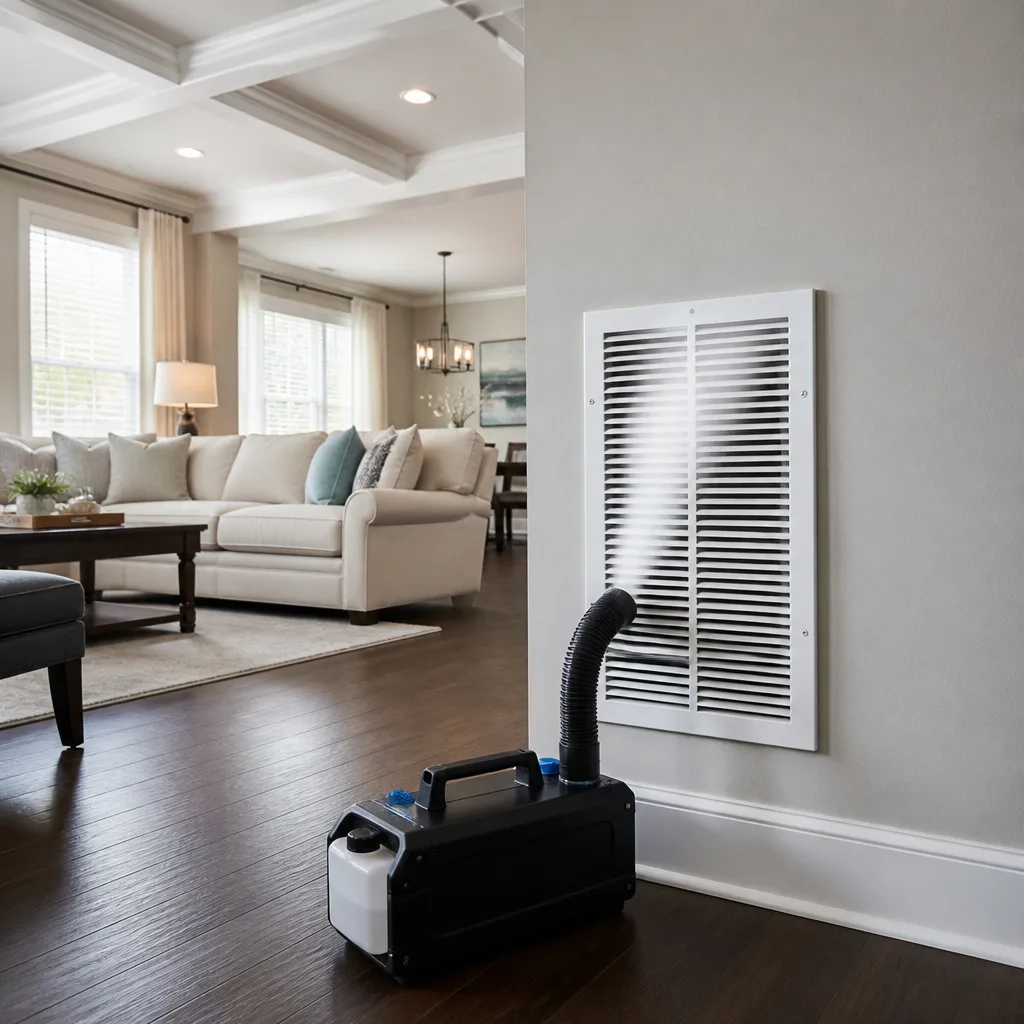 Sanitizing & deodorizing
Whole-system duct and dryer vent check with before-and-after photos - you see exactly what came out of your vents
That "$99 whole-house special" is a bait ad - the real number appears once they are in your hallway, or the "clean" is a shop-vac at the register. We photograph the inside of your ducts before and after instead.
DIY vs Professional Air Duct Cleaning: The Carson Homeowner’s Decision Guide
A consumer-grade HEPA shop vac at full suction generates roughly 80 CFM. A truck-mounted duct cleaning unit generates 4,000 to 16,000 CFM. That ratio, somewhere between 50-to-1 and 200-to-1, is the entire DIY versus professional conversation in one number. This guide walks through what homeowner equipment can legitimately accomplish in a Carson home, where the physics break down, and how to decide whether a weekend project or our Air Duct Cleaning services are the right call for your system.
Quick Answer
DIY air duct cleaning in Carson can handle register faces, accessible flex duct within a few feet of a grille, and dryer vent clearing. It cannot replicate the core professional method: source removal with contact vacuuming at every access point while maintaining whole-system negative pressure. For anything beyond surface-level register cleaning, professional equipment from Rotobrush or Nikro paired with Abatement Technologies HEPA filtration produces results no consumer setup can match.
Styles & brands we work with
- Whole-home duct cleaning
- Dryer vent cleaning
- Camera inspection
- Sanitizing & deodorizing
Table of Contents
- What DIY Duct Cleaning Can Actually Do in a Carson Home
- Where the Physics Break Down for DIY
- What Professional Equipment Does That No Consumer Setup Can Replicate
- Carson-Specific Conditions That Push the Decision Toward Professional
- The Legitimate Hybrid: What to Do Between Professional Cleanings
- DIY Dryer Vent Cleaning: The One Area Where Homeowner Effort Pays Off
- What Each Path Costs in Carson: A Realistic Breakdown
- Common Mistakes to Avoid
- When to Call a Professional
- Frequently Asked Questions
What DIY Duct Cleaning Can Actually Do in a Carson Home
Let’s be straight about what a homeowner with a shop vac, a soft brush, and a flashlight can accomplish. In our experience working on duct systems throughout Carson, the legitimate DIY scope covers three areas.
First, register face cleaning. Removing the grille covers from floor or wall registers, vacuuming the visible interior surfaces, and wiping down the grille itself. This addresses dust accumulation that sits right at the opening, the stuff you can see when you look down. It’s real work and it helps, but it’s the top 15% of the system’s total debris load. The rest sits deeper.
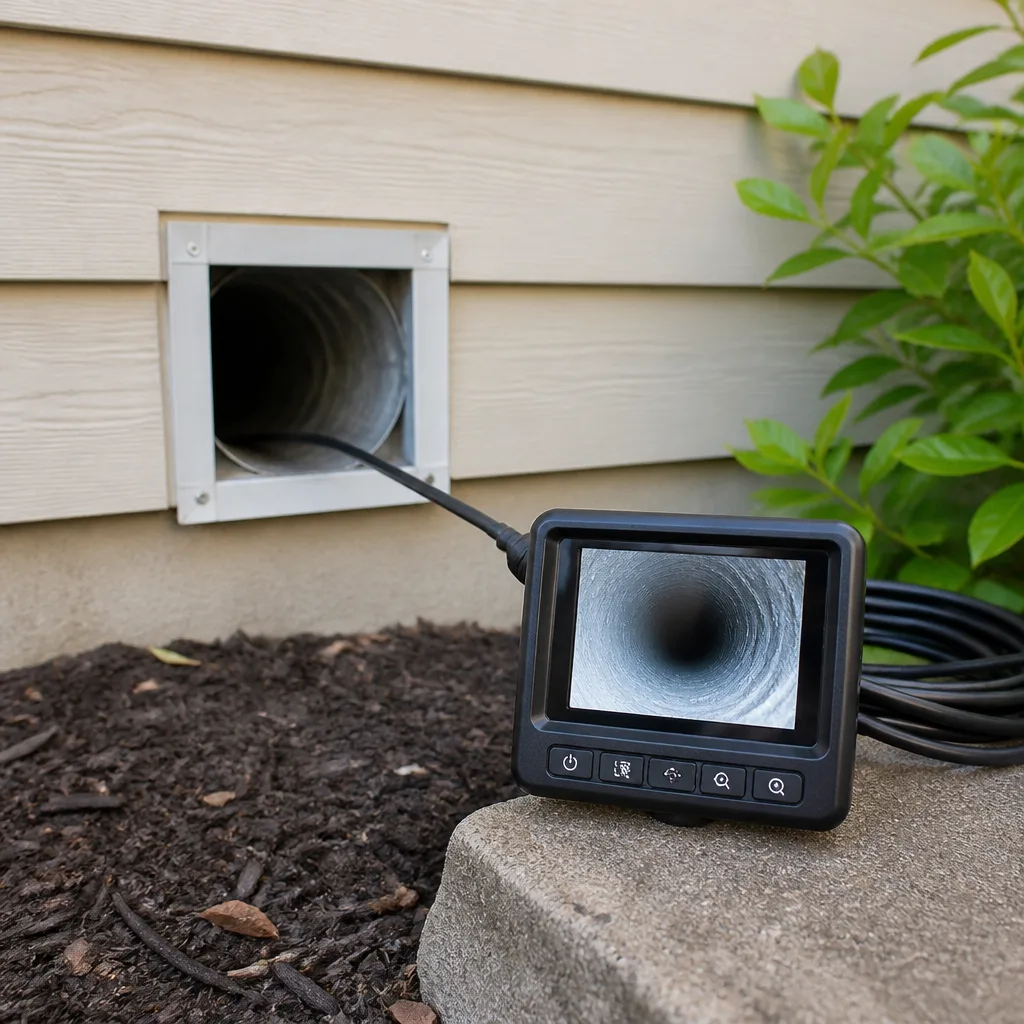
Second, accessible flex duct sections within three to four feet of a grille. In many Carson homes, especially single-story ranches built from the 1950s through the 1980s, the flex duct runs from the register boot are short enough that a vacuum hose with an extension wand can reach into the initial bend. If you own an inspection camera or a borescope that connects to your phone, you can see what you’re dealing with before and after.
Third, dryer vent cleaning. This is the one area where a focused homeowner with the right brush kit can do real work. More on that in its own section below.
What DIY cannot do: reach the main trunk line, clean the return air drop, access the plenum, or address the supply branches that run through walls and attic spaces. Those sections hold the majority of accumulated debris in a typical Carson home. The air handler cabinet itself is also off-limits for most homeowners, and for good reason.
Where the Physics Break Down for DIY
The failure point for DIY duct cleaning is not effort. It’s airflow physics. A shop vac works by pulling air through a small-diameter hose at high velocity. That works great for picking up debris from a surface the hose can touch directly. It does not work for cleaning the interior of a duct system, and here’s why.
When you agitate debris inside a duct, either by shoving a brush down it or by running a vacuum hose into one opening, you dislodge particles that were previously sitting still. Some of those particles get sucked into your shop vac hose. The rest, and this is usually the majority, get pushed further down the duct by the turbulence. Without a negative pressure environment holding the entire system in a constant state of suction, agitating debris disperses it rather than extracts it.
Think of it like this. If you take a leaf blower to dust on a garage floor, the dust doesn’t disappear. It moves around the garage and settles somewhere else. A shop vac in a duct opening is doing a version of the same thing. You’re stirring up debris that will resettle deeper in the system, and some of it will eventually make its way back into your living space.
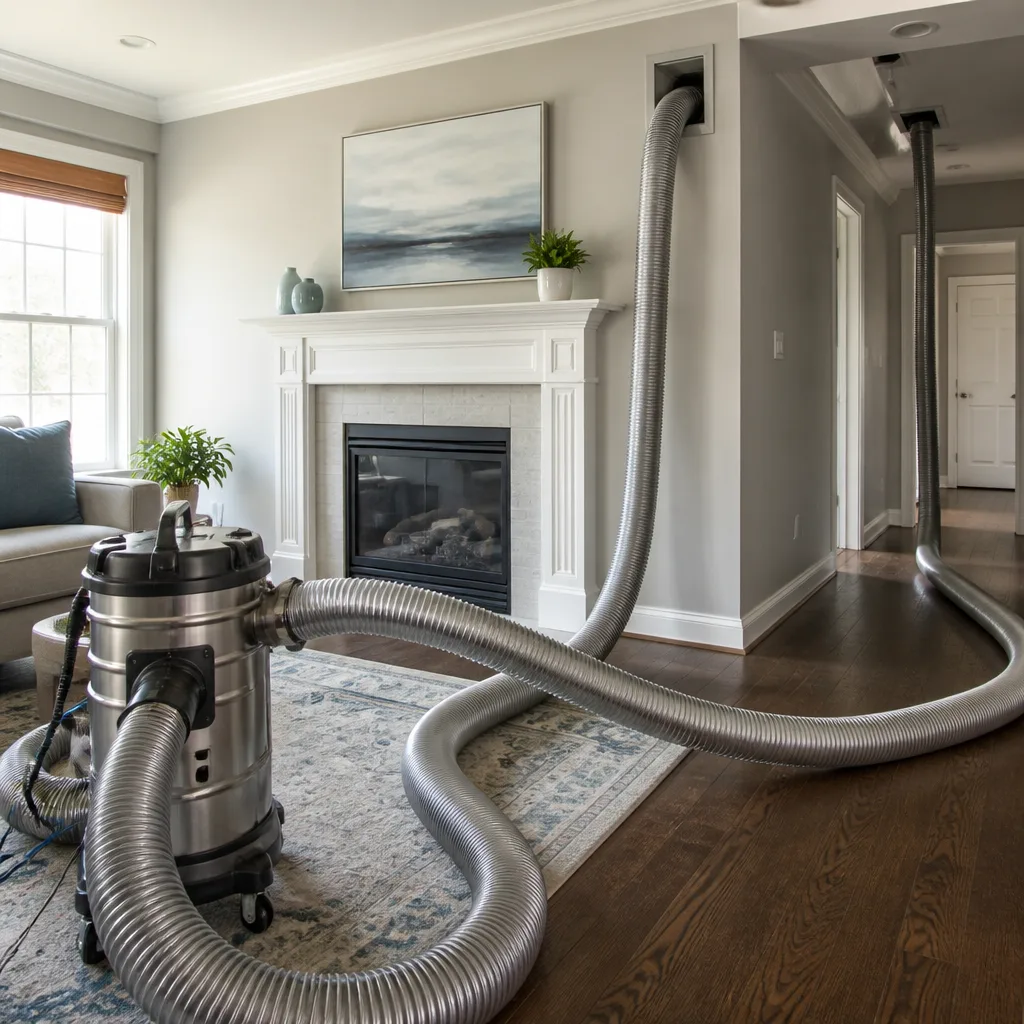
Professional cleaning solves this with simultaneous negative pressure containment. The entire duct system is placed under vacuum while cleaning tools work inside it. Debris that gets dislodged has nowhere to go except into the collection system. That’s the difference between cleaning a duct and just moving dust around inside one.
What Professional Equipment Does That No Consumer Setup Can Replicate
We name our equipment because it matters which tools go into your home. The machines used by Duct Cleaning Carson home are not upgraded consumer gear. They’re purpose-built duct cleaning systems, and understanding what they do explains the whole professional advantage.
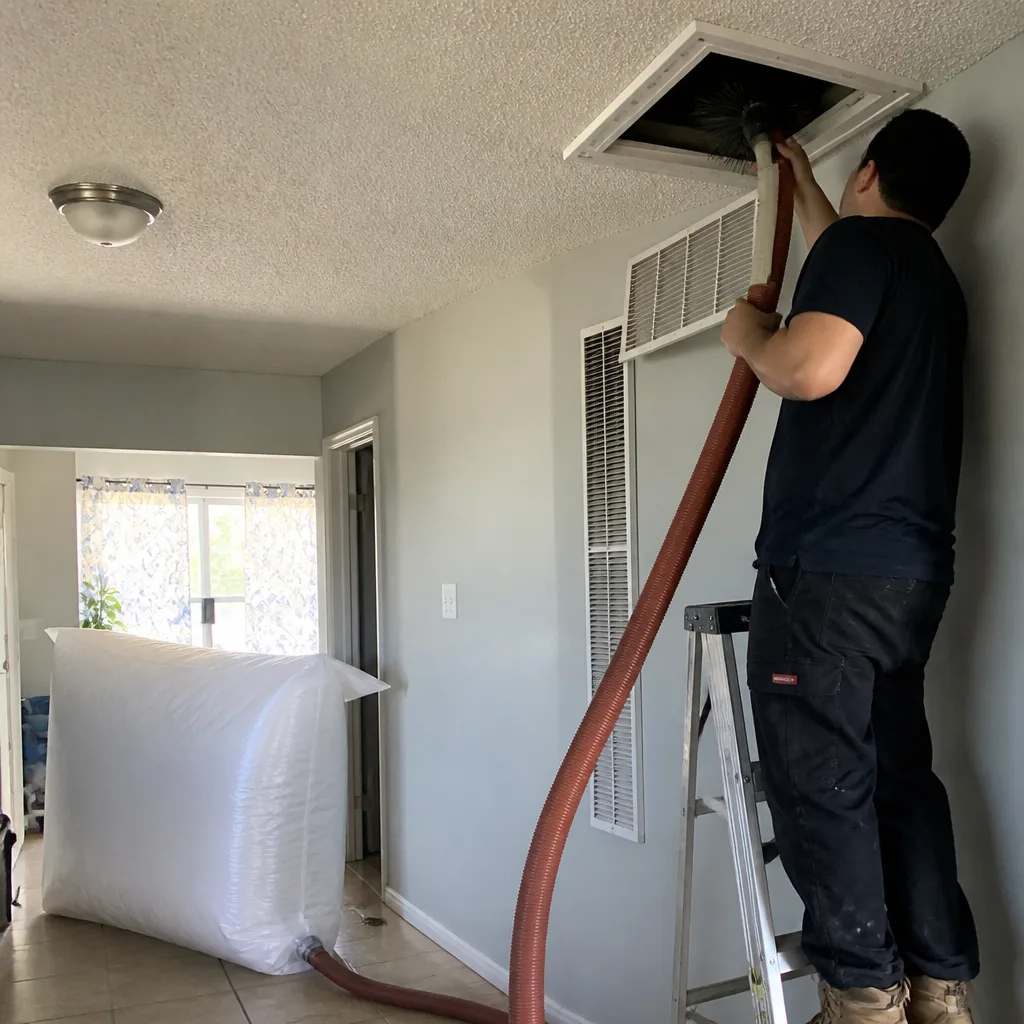
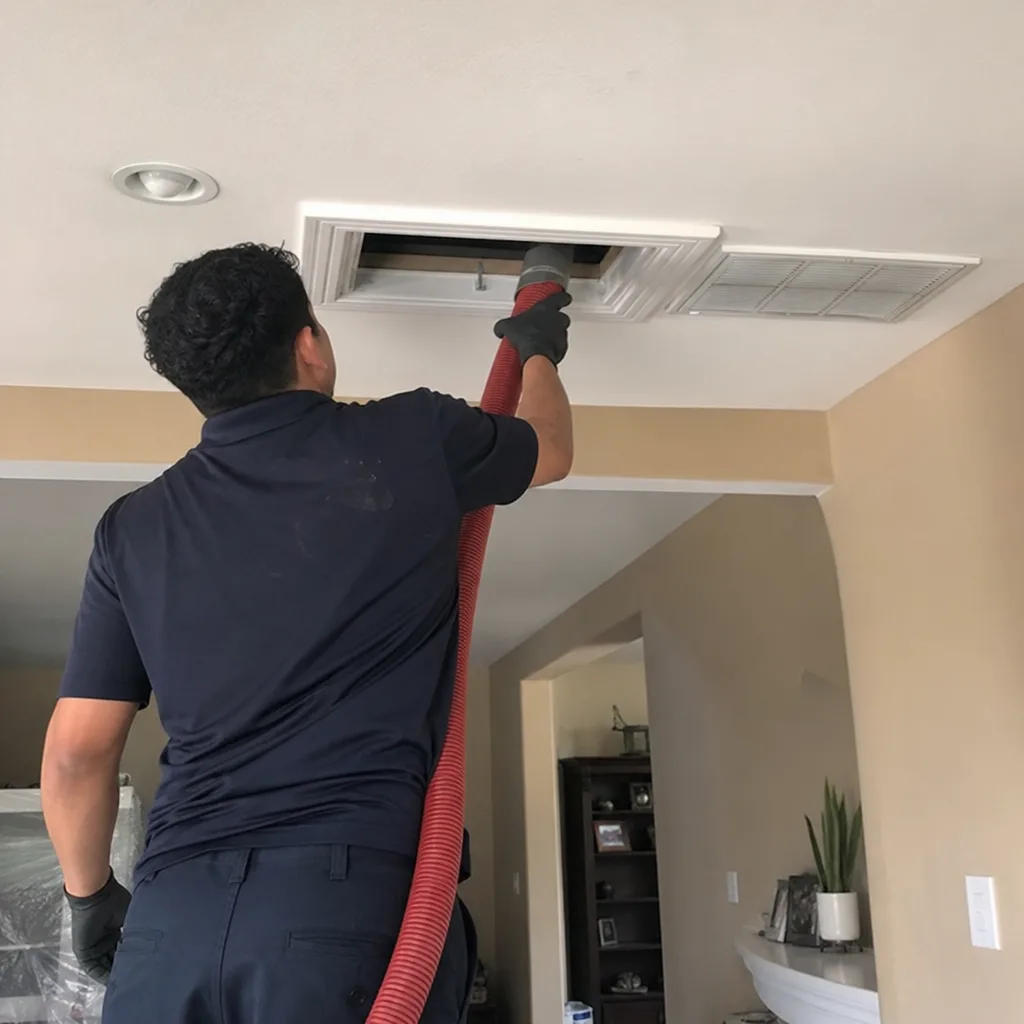
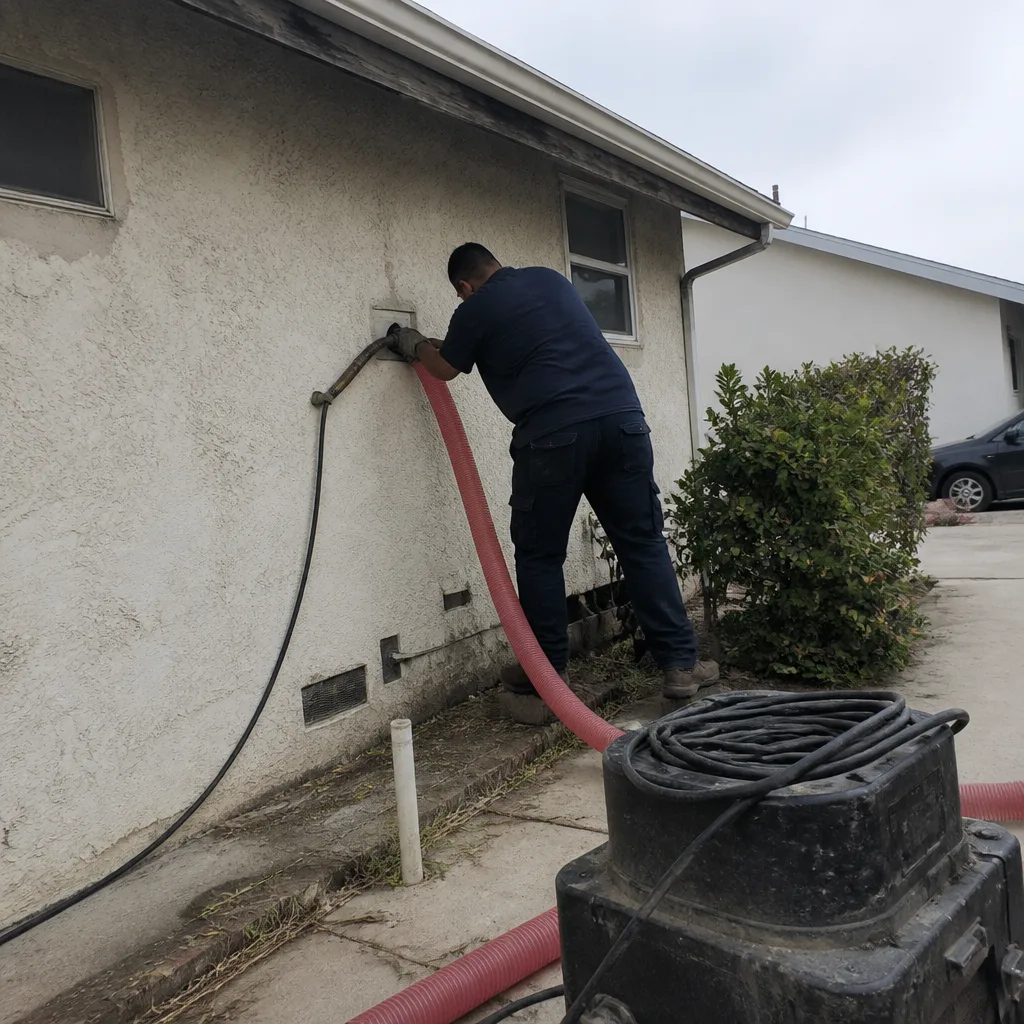
A Rotobrush or Nikro system operates on a source removal principle. The system connects to the main trunk and plenum through access points cut into the ductwork specifically for cleaning. A rotating brush head travels through each run, physically scrubbing the interior walls while a high-velocity vacuum extracts loosened debris at the point of contact. Contact vacuuming means the debris is removed at the source, not chased down the line.
Simultaneously, an Abatement Technologies negative-air machine holds the entire system under negative pressure. This is the same category of machinery deployed in mold and contaminant remediation. It captures airborne particles during agitation so they don’t escape into the home. The setup matters: every register is sealed except the one being worked, the vacuum pulls from the main trunk, and the negative air machine scrubs the ambient air in the work area.
The result is a system that is physically cleaner when we leave than when we arrived. Not just the registers. The main trunk, the branches, the return drop, the plenum. All of it. That’s what 4,000 to 16,000 CFM buys you. A shop vac physically cannot create that condition.
Carson-Specific Conditions That Push the Decision Toward Professional
Carson has its own set of circumstances that influence how quickly duct systems accumulate debris and how hard that debris is to remove without real equipment. Three situations come up repeatedly in our work around the city.
Post-renovation dust is the first. Carson’s housing stock includes a substantial number of homes built between 1950 and 1985. When those homes get renovated, whether it’s a kitchen remodel off Avalon Boulevard or a room addition south of Carson Street, drywall particulate finds its way into the duct system. Drywall dust is adhesive. It bonds to duct liner and flex duct walls. A shop vac brush won’t remove it. It needs mechanical agitation with contact vacuuming.
Pet-heavy occupancy is the second. Dander is tiny, oily, and electrostatic. It mats into flex duct liner over years, especially in return air drops where air velocity slows. If you’ve lived in a Carson home with multiple shedding dogs for five or more years and never had the ducts cleaned, the return side of the system is carrying a significant organic load. This is not something a register-face wipe can address.
Visible mold at register faces is the third. Carson sits in a coastal basin with periods of high humidity, especially in late summer. Mold visible at the register face means the interior of the duct run needs evaluation. This is not a DIY situation, and we’d advise any homeowner who sees mold at a register to have the system inspected rather than scrubbing the visible portion and assuming the problem is solved.
The Legitimate Hybrid: What to Do Between Professional Cleanings
There’s a sensible middle path here. Professional duct cleaning is not an annual service for most homes. Every four to seven years is a reasonable interval for a Carson residence, depending on occupancy factors. Between professional cleanings, homeowner maintenance makes a genuine difference. For more guides & resources on upkeep between visits, see our blog. Here’s what that looks like.
- Filter discipline. Inspect your HVAC filter monthly during cooling season. Replace it when it shows visible dust accumulation, even if the manufacturer says it’s rated for 90 days. A clogged filter lets bypass air carry dust around the filter and into the supply side. If you run a Honeywell or Aprilaire media cabinet, the filter change interval matters even more because those systems are designed to trap particulates, which means they load up faster.
- Register maintenance. Vacuum every register face in the home quarterly. Remove the grille, wipe it down, and vacuum the first few inches of the boot by hand. This takes fifteen minutes for an average Carson home and keeps the visible portion of the system clean.
- Return air grille care. The return grille is the dustiest single spot in most homes. Vacuum it monthly. If it has a washable filter behind it, clean it monthly too. Many Carson homes run a single central return, which means all the air in the house passes through that one opening.
- Dryer vent clearing. Clear the exterior dryer vent cover monthly, and monitor drying times. If a load that used to dry in 45 minutes now takes 70, the vent is telling you something. See the section below for what you can do about it yourself.
- Visual inspection. Every few months, look at the flex duct runs visible in your attic or crawlspace. Check for kinks, disconnected joints, and obvious dust accumulation at seams. Finding a separation early is the difference between a simple repair and a call for Air Duct Repair in Manhattan Beach that involves reconditioning a section of the system.
These five tasks are the legitimate owner-maintenance scope. They extend the interval between professional cleanings and keep the system running efficiently. They do not replace professional cleaning, any more than vacuuming your car’s interior replaces taking it through a full detail.
DIY Dryer Vent Cleaning: The One Area Where Homeowner Effort Pays Off
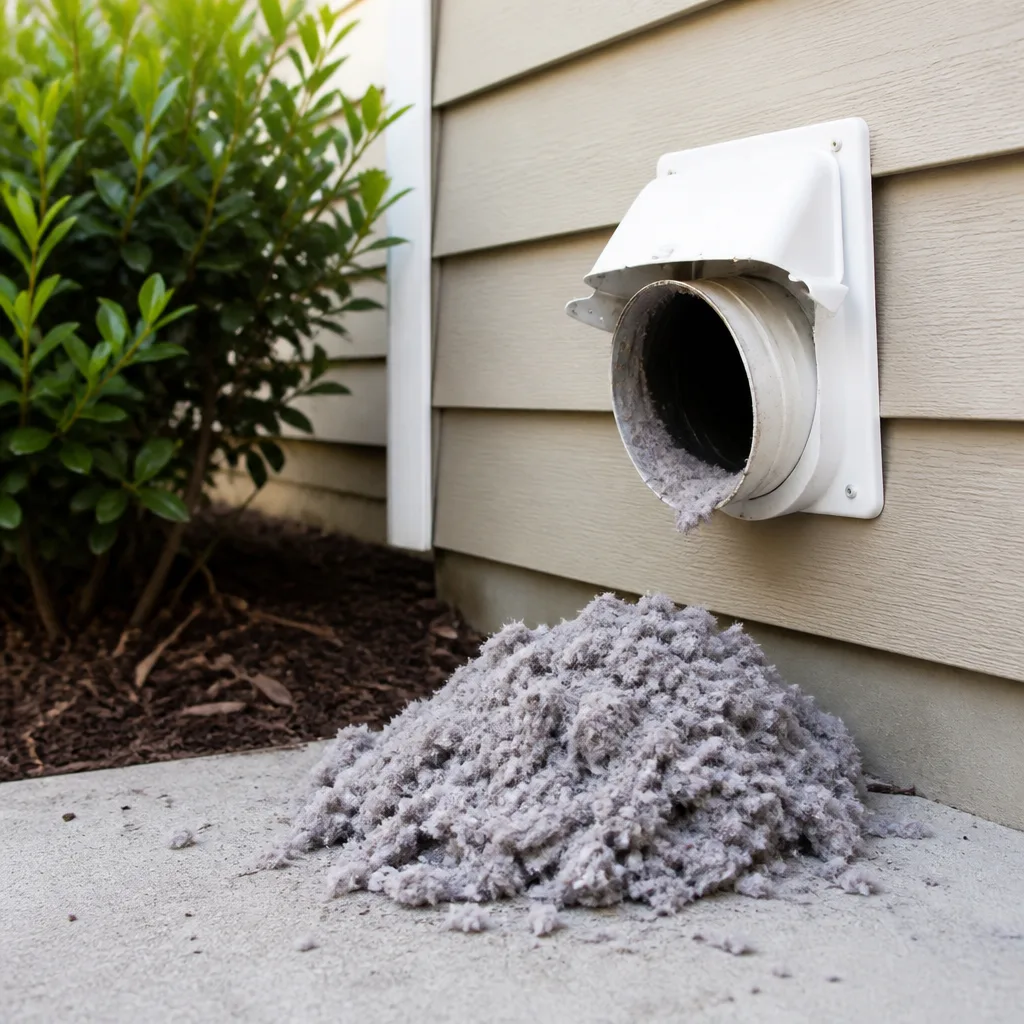
Dryer vent cleaning deserves its own section because it’s the one duct-related task where a homeowner with the right tools can do comparable work to a professional. The reason is simple: dryer vents are single-run pipes, usually four to eight inches in diameter, that go from the dryer to an exterior wall. There’s no branching, no trunk line, no negative pressure containment requirement. It’s a straight shot, or close to it.
Lint-blocked exhaust venting is the leading cause of residential dryer fires. That’s not a scare statistic from an equipment manufacturer. It’s the reason building codes mandate rigid metal venting and limit total run length. Your dryer pushes air past a lint screen that catches most lint but not all of it. What gets through settles on the vent walls, restricted by every elbow in the run. Over two or three years, the opening shrinks. The dryer runs hotter. Drying times stretch. That’s a fire risk, not just an inconvenience.
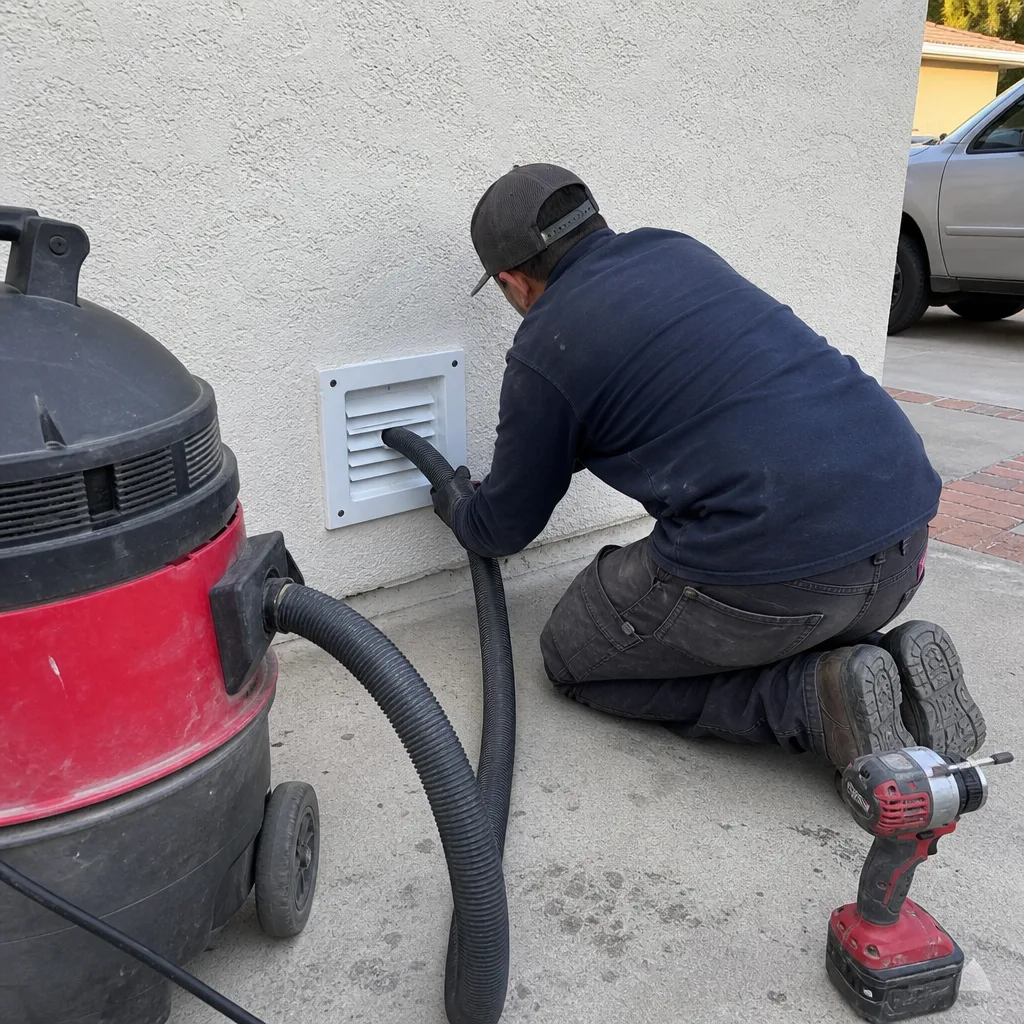
A homeowner can do this job with a vent brush kit and a cordless drill. The kit comes with flexible rods that screw together and a brush head sized to the vent. You disconnect the vent from the back of the dryer, run the brush through the full length, and reconnect. It takes 30 to 45 minutes for a typical Carson single-story home. You should also clear the exterior vent cover while you’re at it.
The catch is access. If your dryer sits on an exterior wall with a short vent run, this is a very doable DIY job. If your dryer is in the center of the house with a 25-foot run making three turns, it’s a different story. Those long runs often have hidden restrictions or separations inside walls that a brush won’t fix. Our Dryer Vent Cleaning in Manhattan Beach service deals with those cases on a regular basis. The decision comes down to the length and complexity of your specific run.
What Each Path Costs in Carson: A Realistic Breakdown
Let’s talk about money without the bait-and-switch games that plague this trade. Here’s a realistic picture of what each path costs for a typical Carson home, which we’ll define as a three-bedroom, two-bath, single-system house with 10 to 14 registers.
DIY path:
- Shop vac with HEPA filter and bags: $80 to $200 if you don’t already own one
- Extension wands and soft brush attachments: $30 to $75
- Inspection camera or borescope for phone: $40 to $120
- Dryer vent brush kit with flexible rods: $25 to $60
- Total typical investment: $175 to $455
What you get for that money: register face cleaning, visible boot cleaning, maintenance between professional visits, and the ability to clean a simple dryer vent run. The air flowing through your system will not be measurably cleaner, and the debris load in the trunk and branches won’t move.
Professional path:
- Whole-system air duct cleaning for a typical Carson single-family home: $450 to $900, depending on system size, access difficulty, and condition
- Standalone dryer vent cleaning: $129 to $249 depending on run length and accessibility
- Air duct repairs discovered during cleaning: quoted per repair, agreed before work proceeds
What you get for that money: source removal cleaning of the entire system, HEPA-filtered negative air throughout the process, and a visual inspection of every accessible section. This is the industry’s dirty secret about pricing: the companies that quote $99 whole-house cleanings are running a vacuum hose through a single register and calling it done. That’s why the industry has the reputation it does. One flat price per system, agreed before work starts, with the scope defined in writing. That’s how this should work.
For a full breakdown of what professional cleaning involves from a company that runs contractor-grade equipment, see our Air Duct Cleaning in Manhattan Beach service page. The equipment and method are the same ones we run in Carson.
Common Mistakes to Avoid
- Believing a shop vac is a duct cleaning system. It’s not. It’s a surface vacuum. A shop vac cannot create negative pressure in a duct system, cannot reach beyond the first few feet of a flex run, and cannot agitate bonded debris off duct liner. It’s the right tool for register maintenance and the wrong tool for system cleaning.
- Falling for the $99 whole-house special. A crew that charges $99 to “clean” your entire system is not cleaning your system. They’re running a vacuum hose into one register, maybe two, taking pictures, and leaving. The invoice always grows once they’re in the house. This bait-and-switch model is the number one reason homeowners in Carson are skeptical of duct cleaning altogether, and it’s a fair skepticism.
- Cleaning visible mold at a register without inspecting the run behind it. Mold you can see is mold you can prove exists. The visible portion is almost never the whole story. Scrubbing the grille and moving on leaves the problem in the duct, where it keeps producing spores.
- Using a leaf blower or reverse airflow to “blow out” the ducts. This is the worst DIY idea that keeps circulating. Blowing debris out of the registers without extraction at the other end means everything goes airborne in the house. Don’t do this.
- Ignoring filter upgrades in favor of more frequent cleaning. A high-quality media filter from Honeywell or Aprilaire can trap more particulate before it enters the system, extending the interval between professional cleanings. The filter is the first line of defense, not the vacuum.
- Assuming all ducts are clean because the registers look clean. The visible portion of a duct system is roughly 10 to 15% of its total surface area. What’s happening in the trunk, branches, and return drop is invisible from the living space, and that’s where the debris accumulates.
- Putting off dryer vent cleaning because the dryer “still works.” A dryer that takes 75 minutes to dry a normal load is not working normally. It’s telling you the vent is restricted. Longer dry times mean higher operating temperatures, and higher temperatures mean increased fire risk.
When to Call a Professional
Call a professional when your system has not been cleaned in more than seven years and you can’t verify the last cleaning was a real source-removal job. See How to Hire an Air Duct Cleaning Contractor in Carson: A Step-by-Step Guide to know what to ask. Call when you’ve completed renovations that generated drywall dust, and your HVAC system ran during the work. Call when you see mold at any register face. Call when a previous cleaning left you uncertain whether anything was actually done, which is a feeling more common than it should be. And call when you’ve moved into a Carson home that had pets or occupants whose habits you can’t know. Your ducts move air through every room. What’s in them matters. Duct Cleaning Carson offers free estimates in Carson. Call (866) 569-6170 to schedule one.
Frequently Asked Questions
For a typical three-bedroom Carson home with one HVAC system and 10 to 14 registers, expect to pay between $450 and $900 for a legitimate whole-system cleaning using contractor-grade equipment. The factors that move the price: total system size, number of access points required, attic versus crawlspace access, and system condition. Be suspicious of quotes under $200. They are almost always bait-and-switch operations. Call (866) 569-6170 for an exact quote. Estimates are free.
Yes, as maintenance, not as replacement. Vacuuming register faces, cleaning return grilles, and maintaining your filter are legitimate tasks that extend the interval between professional cleanings. They address the visible 15% of the system. The other 85% requires equipment a homeowner doesn’t own and shouldn’t rent without knowing how to use. Think of DIY as the weekly tidy-up and professional cleaning as the deep clean.
Ask for before-and-after photos from inside the duct, not just at the register face. A real cleaning crew will show you the main trunk and branch interiors. If the company can’t produce interior photos, they probably didn’t do interior work. Also ask what equipment they used. If the answer is a shop vac or a portable unit they carried in by hand, the work was surface-level regardless of what they charged. Our crews photograph every access point before and after.
Every four to seven years for most homes. The interval shortens if you run your system year-round, have multiple pets, live near a busy road where particulate blows in, or have completed renovations since the last cleaning. Homes on the western side of Carson, closer to the 110 and 405 corridors, tend to accumulate road dust faster than homes further east. Your filter tells the story: if it’s clogged after 30 days when it used to last 90, the system is carrying more particulate than it should.
Odors in ducts come from physical material: organic debris, pet dander, cigarette residue from previous occupants, or moisture. Source removal cleaning eliminates the material that holds the odor, which resolves the smell in most cases. If odor persists after cleaning, the source is elsewhere, possibly a leak in the return pulling air from an unconditioned space, or moisture in the duct liner that needs evaluation. Neither is a DIY fix.
Duct cleaning removes accumulated debris from inside the system. Duct repair fixes physical problems: separated joints, kinked flex runs, holes in the trunk, disconnected boots. The two often overlap because damage is frequently discovered during cleaning, especially in older Carson homes where flex runs have sagged or separated over decades. If you schedule a professional cleaning and the crew finds a separation, you want a company that can fix it on the spot rather than handing you a referral to another vendor. Found during cleaning, fixed the same visit. That’s how it should work. Call (866) 569-6170 to discuss what your system needs.
The Bottom Line
The DIY versus professional decision on air duct cleaning comes down to physics, not effort. A homeowner with a HEPA shop vac and good intentions can clean register faces, maintain filters, and handle a simple dryer vent run. Those things matter and should be done regularly. But no consumer setup can produce the negative pressure containment and point-of-contact source removal that actually cleans a duct system from trunk to register. In a Carson home with renovation dust, years of pet dander, or debris you can’t account for, the effective answer is contractor-grade equipment. Whether you call us or not, ask any company you consider what equipment they’re bringing and whether they’ll show you photos from inside your ducts. The answers will tell you everything.
Written by the team at Duct Cleaning Carson, serving Carson since 2011.
See the difference
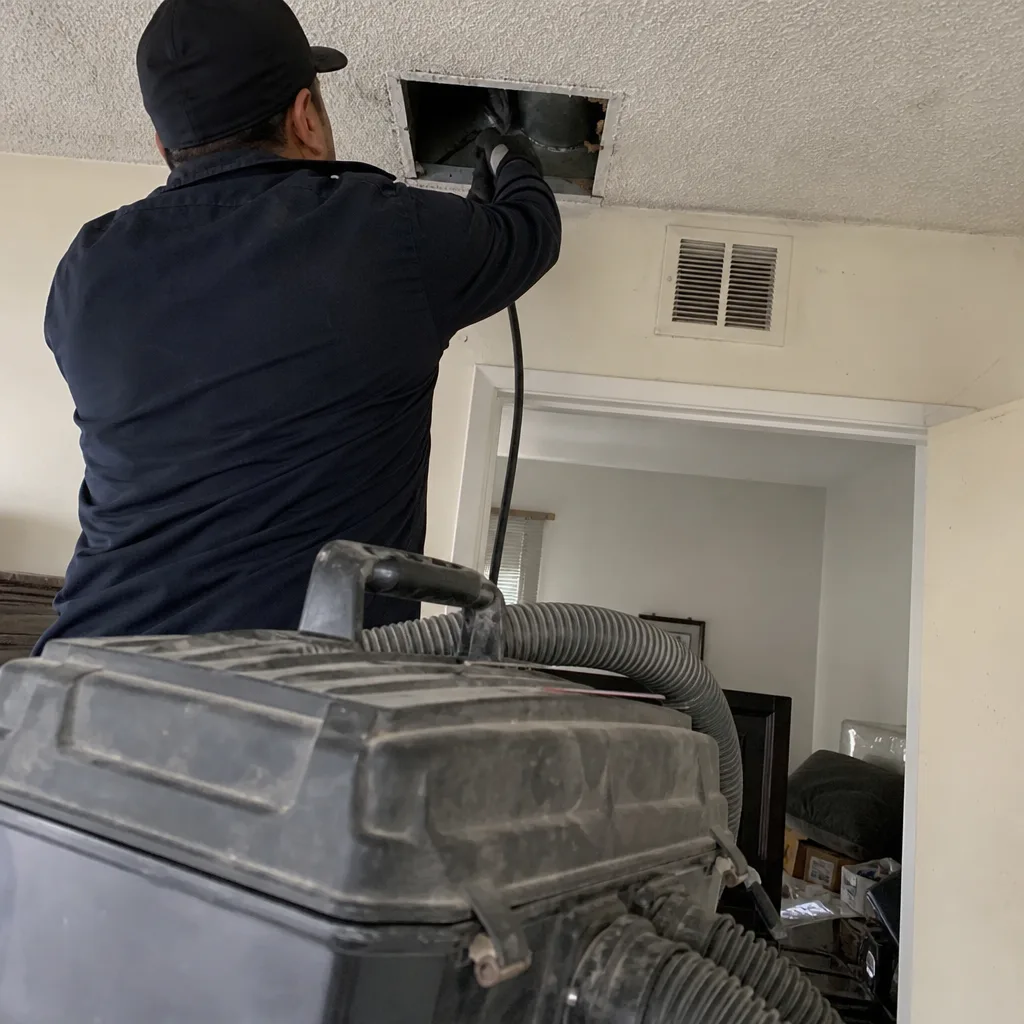 Before
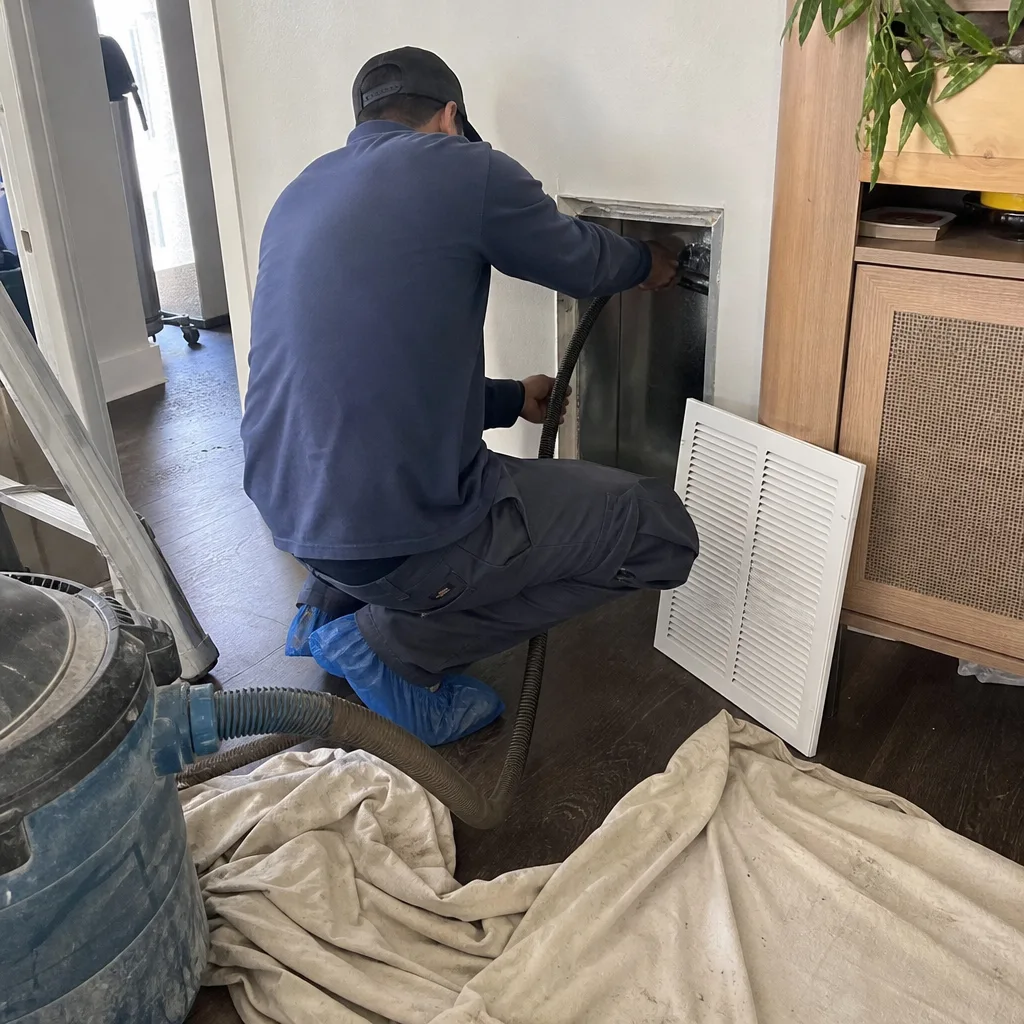 After
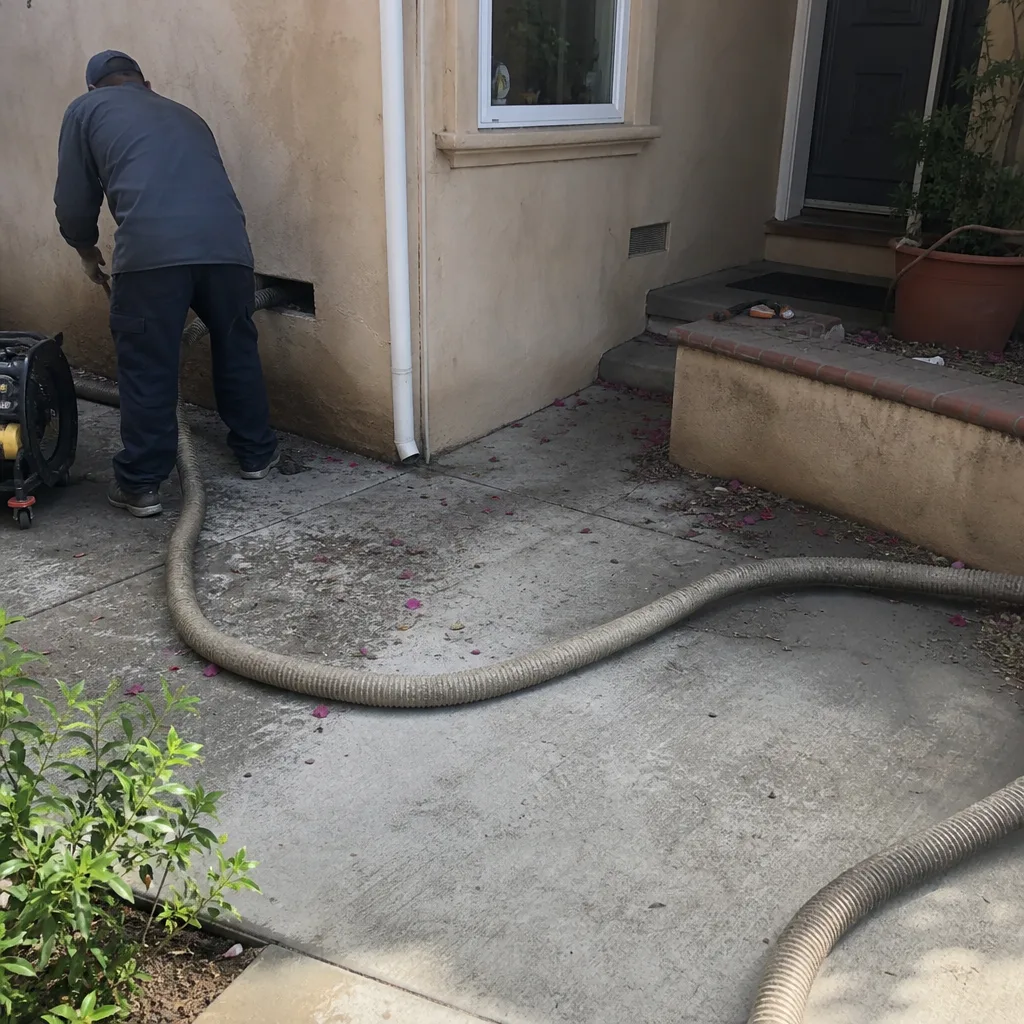 Before
 After
 Before
 After