
Last updated November 2, 2026
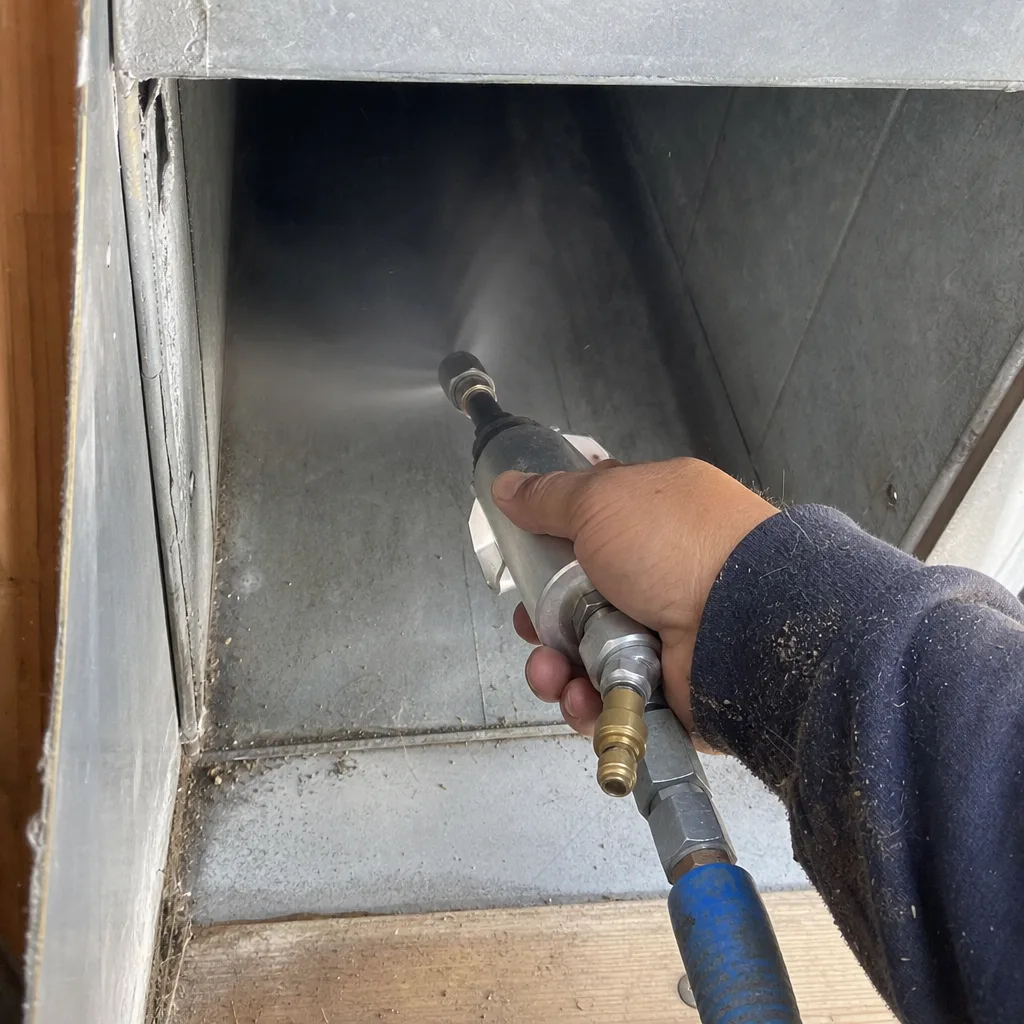
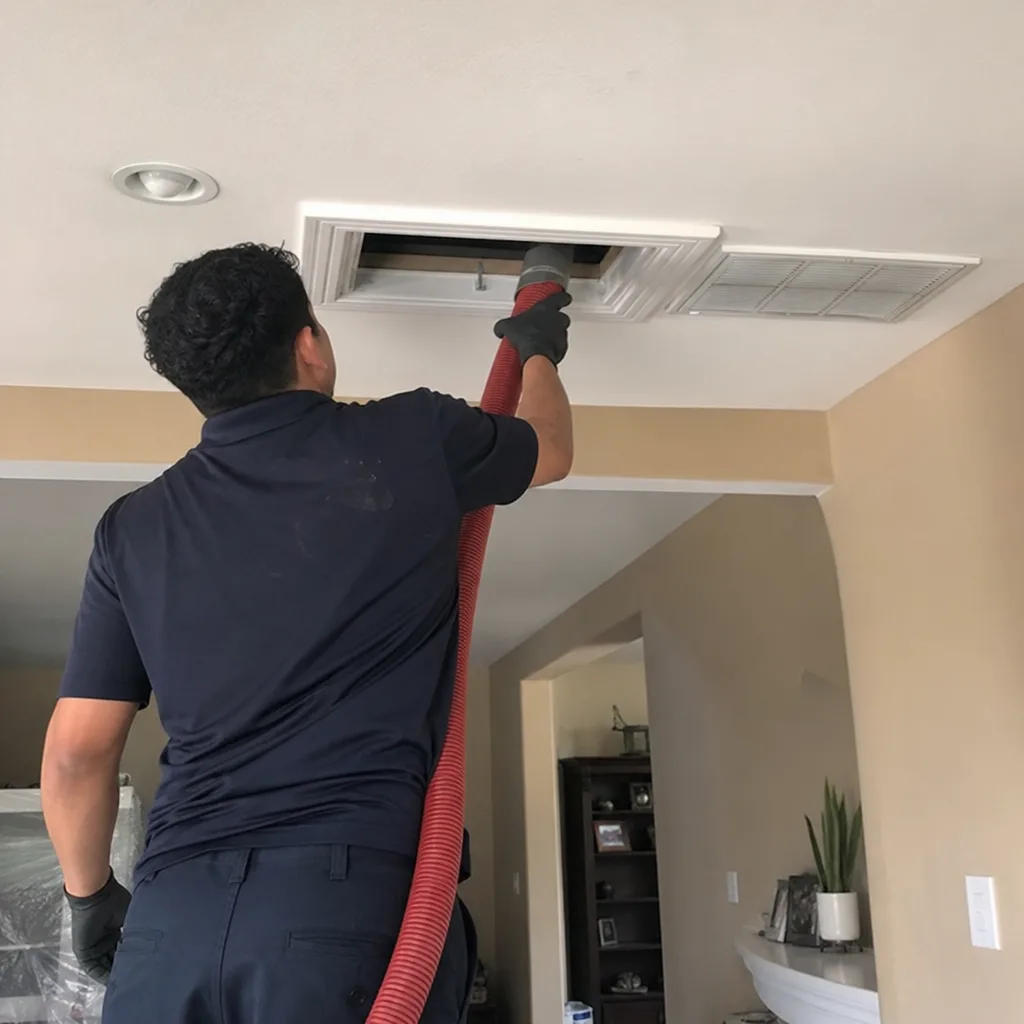
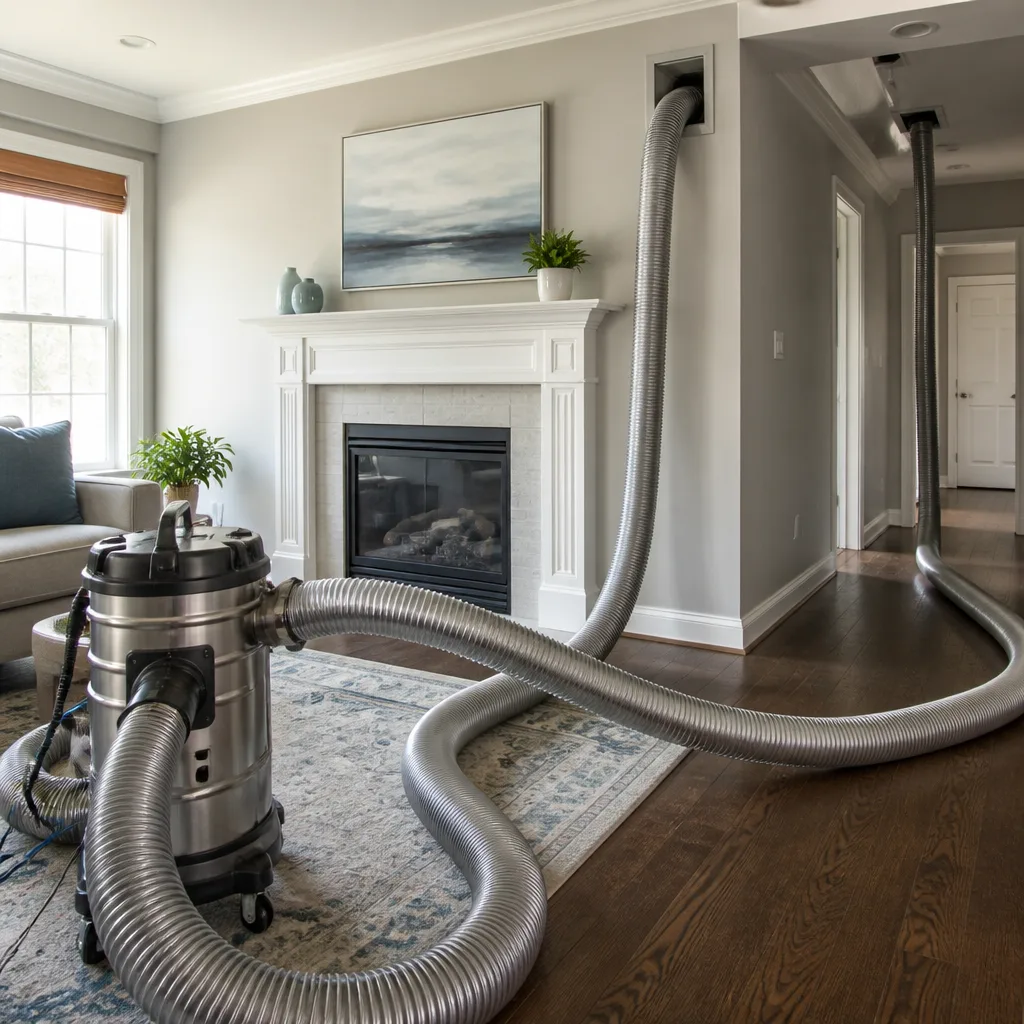 Whole-home duct cleaning
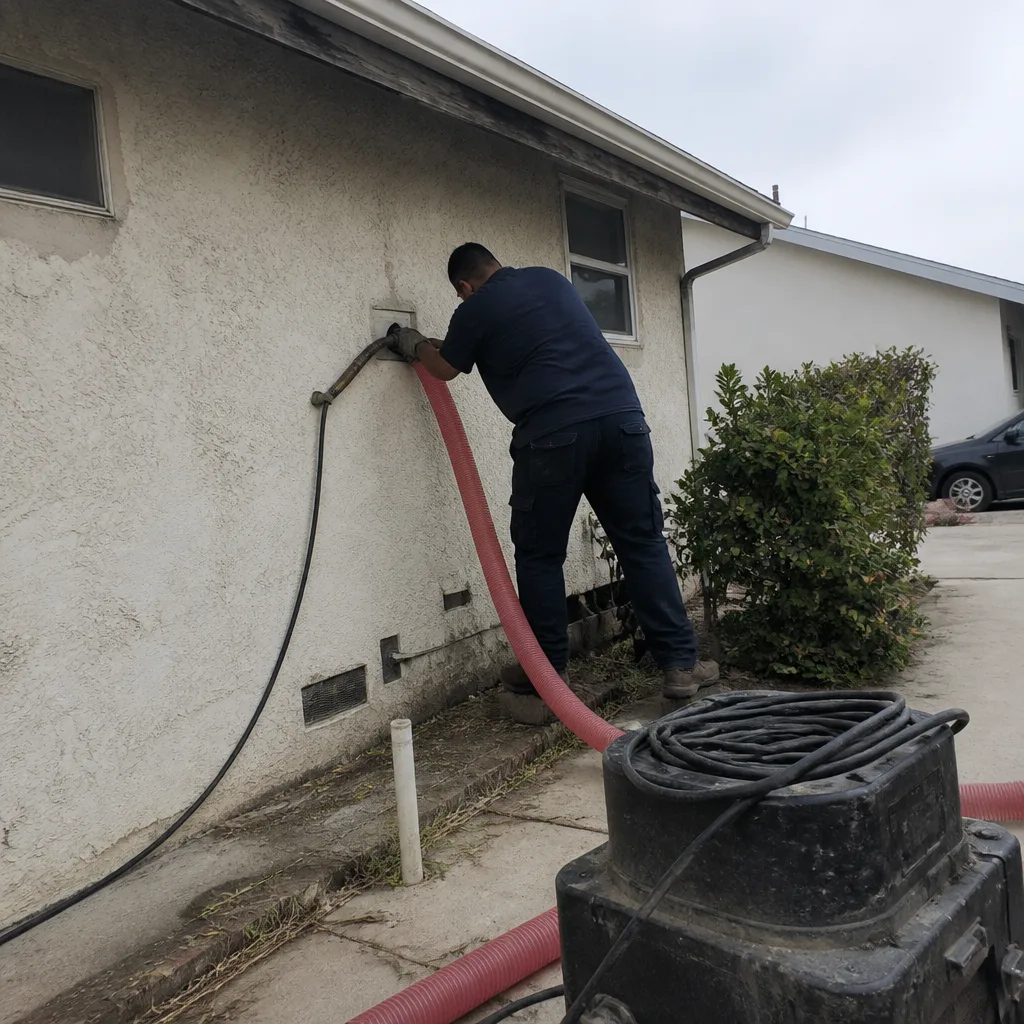
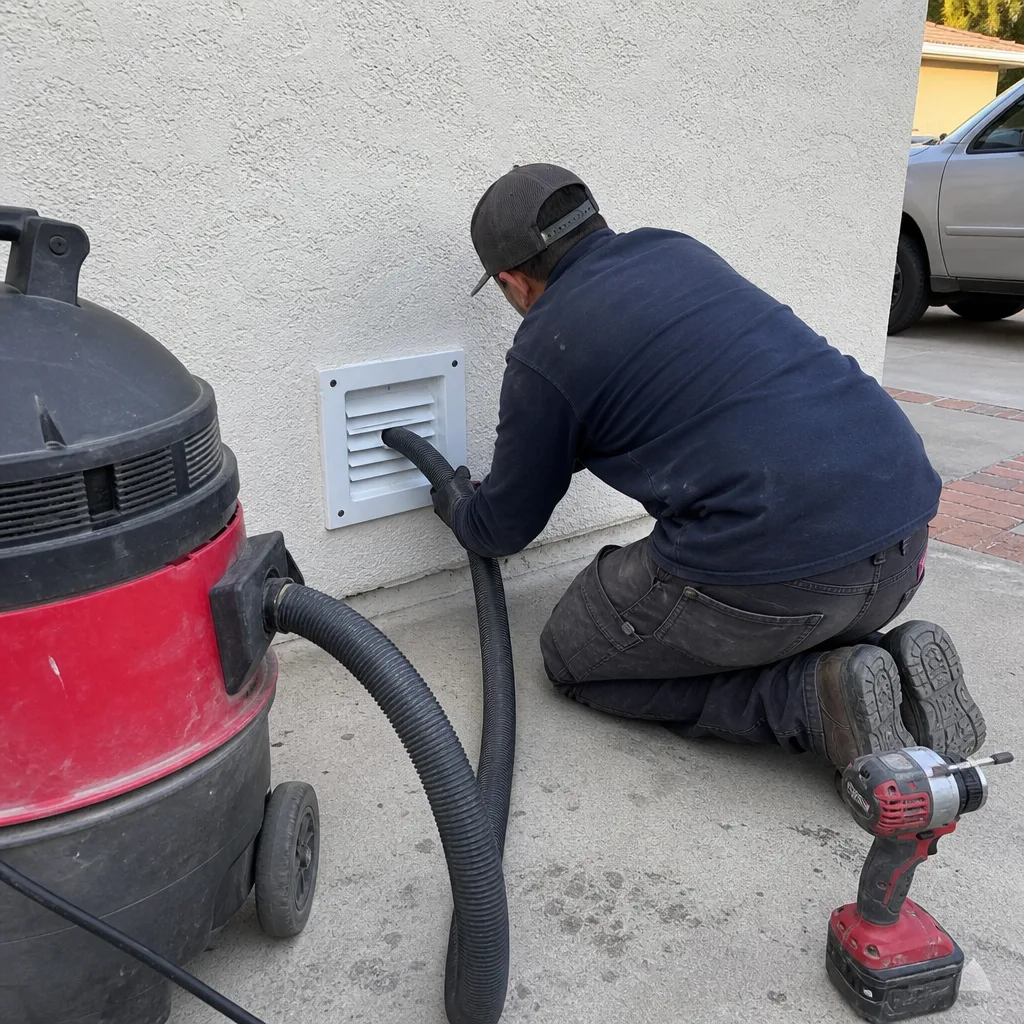
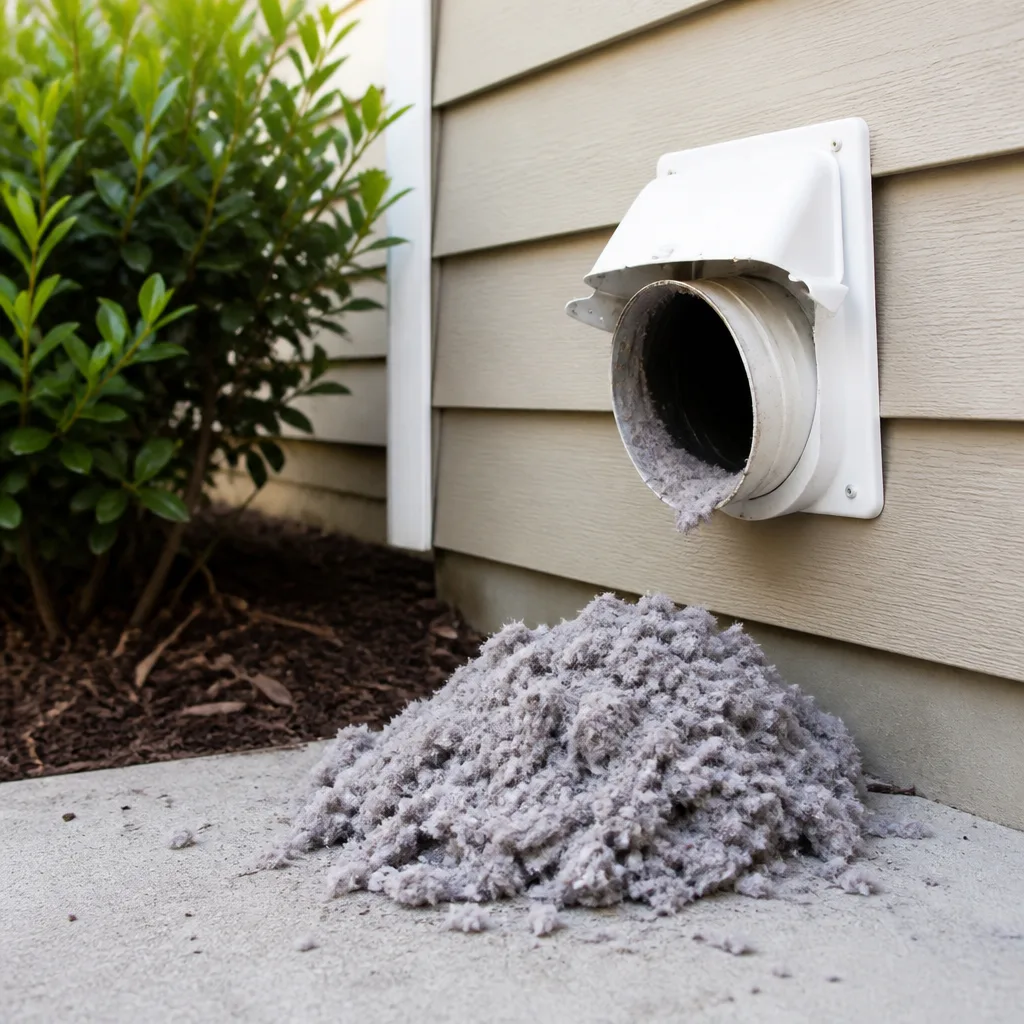 Dryer vent cleaning
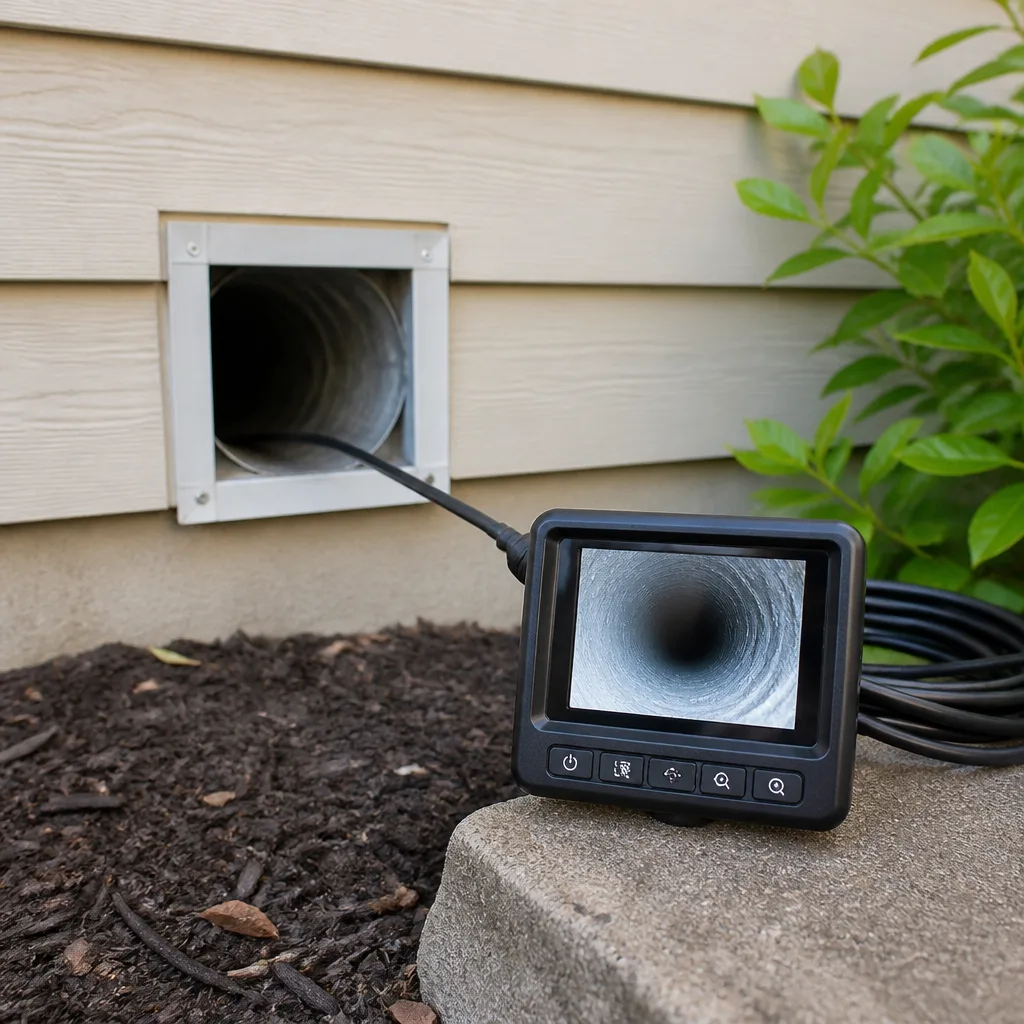 Camera inspection
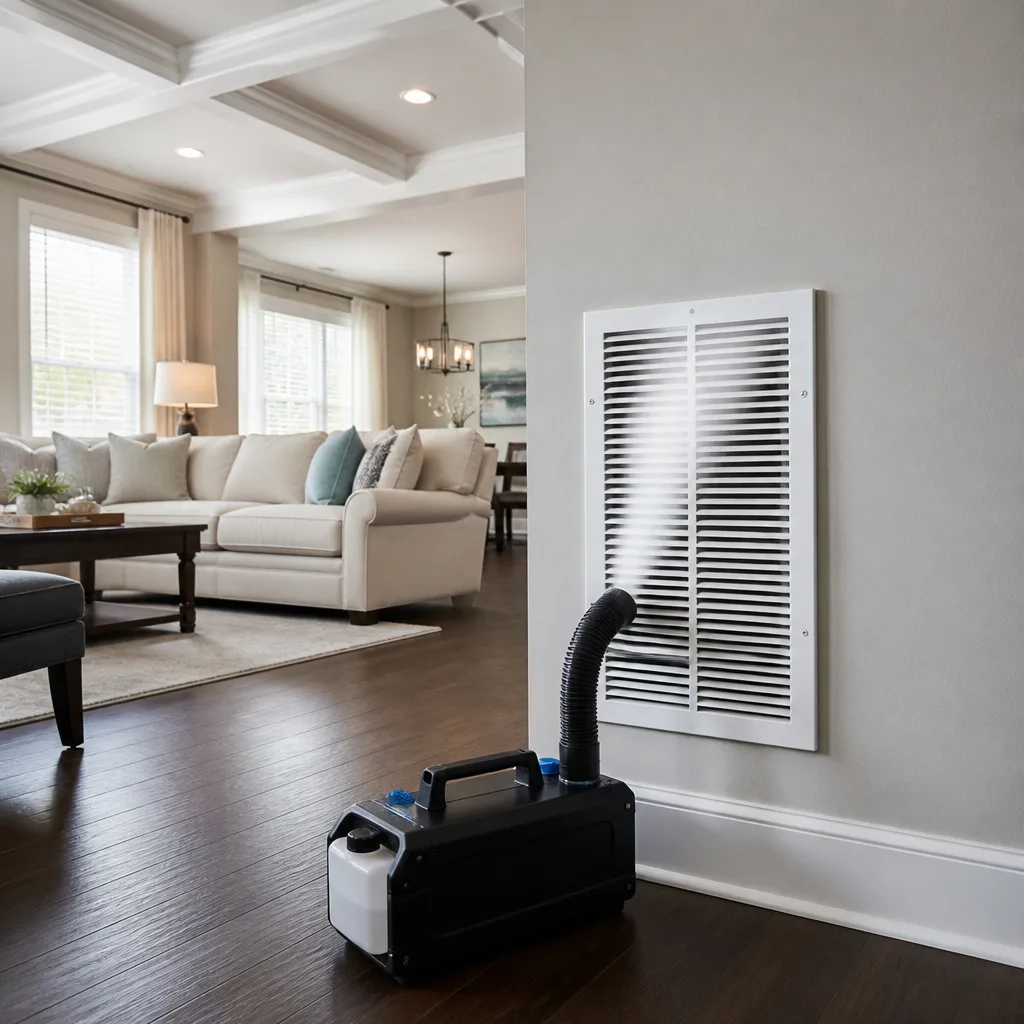 Sanitizing & deodorizing
Whole-system duct and dryer vent check with before-and-after photos - you see exactly what came out of your vents
That "$99 whole-house special" is a bait ad - the real number appears once they are in your hallway, or the "clean" is a shop-vac at the register. We photograph the inside of your ducts before and after instead.
Air Duct Cleaning Warning Signs: A Carson Homeowner’s Reference Guide
We see a pattern in Carson homes that costs residents real money. A system that’s short-cycling, running long, or heating unevenly gets blamed on the furnace or AC unit roughly 60% of the time when the actual restriction is in the duct path. The fix is typically a $300 to $500 duct cleaning, but the misdiagnosis sends homeowners toward a $3,000 equipment replacement instead. This guide walks you through the warning signs that point specifically to your ductwork, how to measure them yourself, and when the problem is something else entirely. For a deeper dive, see The Complete Air Duct Cleaning Guide for Carson Homeowners. If you live in Carson and your HVAC acts up this summer, you’ll know exactly what to check before calling anyone.
Styles & brands we work with
- Whole-home duct cleaning
- Dryer vent cleaning
- Camera inspection
- Sanitizing & deodorizing
Quick Answer
The most reliable warning signs that your air ducts need cleaning in Carson are: visible dust discharge from supply registers, a filter loading from white to gray within two weeks, noticeable airflow differences between rooms, a musty smell at startup, and black ghosting around register openings. Any two of these occurring together strongly suggests duct restriction or contamination. A professional Air Duct Cleaning inspection with camera verification confirms the condition before any work begins.
Table of Contents
- Airflow Asymmetry: Measuring Register Output Room by Room
- Filter Loading Rate: The 30-Day Diagnostic Most Homeowners Miss
- Odor Mapping: Three Smells That Mean Three Different Things
- Black Ghosting Around Registers: Particle Size and What It Tells You
- Carson-Specific Odor Intrusion: Return Air Leaks and Garage VOCs
- Dust Return After Cleaning: Why You’re Still Seeing Particles
- Energy Bill Spikes and Runtime Increases: The Duct Connection
- Common Mistakes to Avoid
- When to Call a Professional
- Frequently Asked Questions
- The Bottom Line
Airflow Asymmetry: Measuring Register Output Room by Room
Your duct system is designed to deliver roughly balanced airflow throughout the house. When one room stays cold in summer or hot in winter while another feels like a wind tunnel, the HVAC equipment is often doing its job. The restriction is in the duct path feeding that specific room. Airflow asymmetry is one of the clearest duct-level warning signs, and you can measure it with a $20 anemometer app and a smartphone.
Here’s the step-by-step method we recommend to Carson homeowners before they call us:
- Set your system’s fan to run continuously (fan “On” at the thermostat, not “Auto”).
- Close all exterior doors and windows throughout the house.
- Go room by room and hold the anemometer at each supply register, about 6 inches from the grille face.
- Record the velocity reading (feet per minute or meters per second) for every register on the same floor.
- Compare the numbers. A variance of more than 20% between the highest and lowest register on the same floor is your threshold for concern.
- Repeat the test with the system off for 10 minutes, then on again. If the same rooms stay low, the issue is static, not transient.
What do the numbers mean? In our experience, a 20% to 35% variance points to partial duct restriction: dust accumulation on duct walls, a damper that’s drifted shut, or a flex duct that’s sagged or kinked. Beyond 35%, you’re almost certainly looking at a significant blockage or a duct separation somewhere in the branch line. In Carson homes built in the 1960s through the 1980s, we frequently find riser ducts and branch lines that have never been cleaned since original construction. Five decades of dust loading changes the interior diameter of a 6-inch round duct enough to cut airflow by a third.
One note: if the airflow imbalance exists only when the system first starts and gradually evens out, that points to a damper or zone control issue, not duct contamination. If it’s consistent, the duct path is your prime suspect. Our Air Duct Repair in Manhattan Beach work regularly starts with this exact diagnostic because a separated branch duct produces the same symptom as a blocked one. The camera tells us which. For more on our full service area, start at the Duct Cleaning Carson home page.
Filter Loading Rate: The 30-Day Diagnostic Most Homeowners Miss
A standard MERV-8 filter in a Carson home should last about 30 days before it reaches the gray, loaded state that signals replacement. If yours is turning gray in two weeks, that’s a diagnostic data point. Your filter is the first surface in the duct path that air hits, and the rate at which it loads tells you how much particulate is circulating through the return side of your system.
Here’s what the loading rate indicates:
- Gray in 30 days: Normal operation. Your filter is doing its job catching ambient household dust. No duct concern.
- Gray in 14 to 21 days: Elevated particulate load in the return air. This is the early warning range. The source is often accumulated dust on duct walls and in the return plenum that keeps re-entering the airstream.
- Gray in 7 to 10 days: Significant upstream contamination. At this rate, duct walls carry a heavy dust layer, and every system cycle disturbs that layer and sends it back through the filter. The filter is catching what the ducts keep releasing.
- Gray in under 7 days with visible debris: Active contamination source. This could be a return air leak pulling from an attic or crawlspace, deteriorated duct liner, or post-construction dust that was never removed. Camera inspection is warranted.
The filter loading rate matters because it’s an objective measure. You’re not guessing whether the ducts are dirty; you’re watching a capture surface fill at a rate that tells you how much particulate the system is handling. When we clean ducts in Carson with our Rotobrush and Nikro equipment, the volume of material removed from homes that reported fast filter loading is consistently high. These are not marginal cleanings. The duct walls are coated, and the return side especially holds a thick, often damp layer of dust that continuously feeds the filter.
If you want to track this properly, mark the date on the filter frame when you install a fresh one. Check it every seven days. When it reaches the gray point, count the days. That number is your home’s particulate load indicator, and it’s far more useful than any generic “change your filter every three months” advice.
Odor Mapping: Three Smells That Mean Three Different Things
Odors in a home are information if you know how to read them. The HVAC system moves air through the entire house, so smells that appear when the fan runs are duct-borne. Smells that appear when the system is off come from somewhere else. In Carson, where many homes run cooling for long stretches between May and October, odor complaints spike in summer because the system moves air constantly, giving residents a daily sample of whatever is in the ducts.
Here are the three most common odor signals and what they mean:
1. Musty Smell at Startup
This is the one most commonly linked to ducts. When the blower starts and you get a damp, organic, mildew smell for the first 60 to 90 seconds, the air is passing across something microbial. In our experience cleaning systems across Carson and the neighboring South Bay, the usual source is dust that has accumulated inside the duct liner or on cooling coils and absorbed moisture during the humid months. The dust holds organic material. The moisture activates microbial growth. The blower pushes that odor into the living space every time it starts. This is a duct and air handler issue, not an equipment failure, and it typically resolves with a thorough cleaning of the supply and return plenums, the blower housing, and the duct runs.
2. Dusty Burn Smell
If you smell a hot, dusty, faintly burnt odor when the heat fires up for the first few times in fall, that’s usually a season’s worth of dust settled on the heat exchanger. It burns off within a few minutes and should not persist. But if the smell returns every time the heat cycles, or if it persists for more than ten minutes, you have heavier debris coating the heat exchanger or its surrounding ductwork. This is a legitimate signal that the accumulated material is not just surface dust. A cleaning of the supply side and the heat exchanger area is the fix, and in Carson’s fall shoulder season, we see this complaint frequently from homes near the 405 and 110 corridors where fine road dust settles into systems.
3. Persistent Chemical or Fuel Smell
This is the one you take seriously for a different reason. A persistent combustion smell, or a chemical odor that does not fade, is not a duct issue. It signals a cracked heat exchanger, a gas leak in the appliance area, or a combustion byproduct being pulled into the return air path. Do not attempt to diagnose this yourself. Shut the system down, ventilate the house, and call a licensed HVAC technician. Our scope covers air duct cleaning, dryer vent cleaning, and air duct repair, not gas appliance repair or combustion system work. We want Carson homeowners to understand the difference because treating a combustion problem as a cleaning job wastes time and risks safety.
Black Ghosting Around Registers: Particle Size and What It Tells You
Dark streaks or shadowing on the wall or ceiling around supply registers is called ghosting. Some homeowners assume it’s smoke damage or a sign of something burning. Usually, it’s neither. Ghosting is a particle deposition pattern, and the size of the particles doing the depositing tells you a lot about the condition of your ducts.
Here’s the mechanism. As conditioned air exits a supply register at velocity, it creates a low-pressure zone near the register perimeter. Fine particles in the airstream drop out of suspension in that low-pressure zone and deposit on the wall. The smaller and lighter the particle, the more readily it deposits. The dark color comes from the type of particulate, not from heat. Candle soot, cooking aerosols, and ultra-fine road dust carried in through return air leaks are the usual pigment sources.
What does it mean for your ducts?
- Ghosting present with normal filter loading: The particles are coming from inside the house, not through the filter. Candle use, gas cooking, or frequent outdoor air infiltration are likely sources. Duct cleaning is not going to stop this. The ducts are not the source.
- Ghosting present with fast filter loading: The system is carrying a high fine-particle load, and that load is in the duct path. Ultra-fine dust that makes it through a MERV-8 filter deposits on walls. Cleaning the ducts and, if the system is on the older side, upgrading to a higher-efficiency filter with proper static pressure consideration, addresses the source.
- Ghosting only on one register with weak airflow: That register’s branch line is partially blocked, and the reduced velocity makes particle dropout worse. The duct restriction and the deposition are connected. Cleaning that specific branch run is the fix.
- Ghosting paired with visible duct leakage signs in the attic or crawlspace: Return air leaks pull unfiltered particulate from unconditioned spaces into the system. The ghosting is a symptom of leakage, not a dirty duct. Our air duct repair scope covers sealing these leaks so the return path stops pulling attic and crawlspace air.
The point here is that ghosting is a diagnostic sign, not a standalone problem. You need the context: what’s the filter doing? What’s the airflow doing? What’s the source of the particles? In Carson, homes near the refineries and freeways see more ultra-fine particulate in general, which is why filter loading and ghosting patterns matter more here than in cleaner coastal microclimates.
Carson-Specific Odor Intrusion: Return Air Leaks and Garage VOCs
Carson has an industrial geography that most South Bay cities don’t. Refinery operations to the west, the 405 and 110 freeways cutting through the city, warehousing and trucking routes along Alameda Street, and older single-family stock with attached garages. All of this means that the air in your crawlspace, attic, or attached garage is not neutral. It carries VOCs from stored paint and solvents, exhaust residue from the garage, and ambient industrial odors that drift in from outside.
Here’s the duct connection. Return air ducts in many Carson homes run through attics and crawlspaces. Sheet metal duct sections, if not sealed properly, pull air from these unconditioned spaces through gaps and joints. The return side of your HVAC system runs under negative pressure, so any opening becomes an intake. When the system runs, it’s actively pulling whatever air surrounds those ducts into your home’s breathing air. You may notice a smell without being able to place it, or a persistent chemical odor when the system runs that fades when it stops.
Duct pressurization testing is how we confirm this. The test isolates the duct system, pressurizes or depressurizes it to a specified level, and measures leakage in cubic feet per minute. A home with a sealed duct system might test at 5% to 10% leakage. A Carson home with original 30-year-old duct connections can easily test at 25% to 40% leakage. That means a quarter to nearly half of the air moving through the return path is not coming from your return grilles. It’s coming from the attic, the crawlspace, or the wall cavity adjacent to the garage.
This is not a cleaning job. This is a repair job. The fix is sealing the return duct path so the only air entering the system comes through the filter. This is exactly the intersection where our three services overlap. We find the leak during a cleaning or inspection, we repair it same visit, and the homeowner keeps their indoor air separated from whatever’s in the garage or crawlspace. For homes in the Dominguez and Central Carson neighborhoods where the housing stock is older, this return air leak issue is one of the more common findings we document.
Dust Return After Cleaning: Why You’re Still Seeing Particles
We hear this from Carson homeowners regularly: they paid for a duct cleaning, and within two months the dust is back. Or they see dust settling on furniture at the same rate as before. The assumption is that the cleaning didn’t work. Sometimes that’s true. Often, the issue is that the previous cleaning never addressed the actual source.
Here are the three reasons dust returns after a cleaning:
- Return air leaks were never sealed. If the return path pulls dust from the attic or crawlspace, cleaning the ducts just empties the pipe. The leak keeps refilling it. Any thorough cleaning should include a leakage check on the return side. In our process with negative-air equipment from Abatement Technologies, we see return leaks clearly because the negative pressure setup makes leak points obvious.
- The blower housing and coil were never cleaned. Duct cleaning that only addresses the main trunk and branch lines leaves the dust load in the air handler untouched. The blower wheel and the evaporator coil hold significant dust, and every cycle redistributes that material into freshly cleaned ducts. A complete job includes the coil, the blower, the plenums, and the branch lines.
- Return grille locations are undersized or poorly placed. Some Carson homes have return air paths that simply don’t pull enough volume through the filter. The result is that much of the household dust never reaches the filter and settles on surfaces instead. This is a duct design issue, not a cleaning failure, and we address it through an evaluation of return sizing and register placement during our inspection.
If you’ve had a cleaning and the dust returned, the most useful next step is a camera inspection of the return side and the air handler. That tells you in thirty minutes whether the issue is unresolved leakage, residual contamination in the blower section, or something structural. We’ve done enough re-cleanings in Carson to say this with confidence: a properly executed cleaning with the right equipment produces a measurable change in filter loading rate within the first month. If that measurement doesn’t move, something else is feeding the system.
Energy Bill Spikes and Runtime Increases: The Duct Connection
When your summer electric bill in Carson climbs and the AC unit is the same age and in the same condition, the usual culprits are: refrigerant charge issues, a failing compressor, or the duct path. That last one gets ignored because it’s invisible. But a restricted duct system makes the entire HVAC assembly work harder for the same temperature drop.
Here’s the logic in concrete terms. A properly sized and sealed duct system for a 1,600-square-foot Carson house moves roughly 1,200 to 1,600 cubic feet per minute of air when the system runs. If duct walls carry a heavy dust layer, interior diameter shrinks. If flex ducts are kinked or sagging, the effective open area drops further. If return air is leaking, the system pulls hot attic air in summer and tries to cool it, adding load that has nothing to do with the living space. All three conditions extend runtime. Your system runs longer to reach the same setpoint, or it never quite reaches it on the hottest days.
There’s a measurable signature. Watch your smart thermostat data or utility records in summer. If June-to-August runtime hours climb year over year with no equipment change, and the system was last cleaned or inspected more than five years ago, duct restriction is a reasonable suspect. The same logic applies in reverse in winter for gas heating costs. A heat pump or furnace pushing air through a partially blocked duct path loses efficiency at the register.
Duct cleaning alone doesn’t fix every efficiency problem. If the blower motor is failing or the coil is undersized, cleaning won’t move the needle. But in Carson homes where the duct path has never been touched since construction and the filter loading rate has been elevated for years, a full cleaning with pressure-side and return-side equipment often drops runtime by a measurable margin in the first cooling season. It’s one of the few HVAC interventions with a direct observable before-and-after, and it’s why we tell people to check filter loading and register airflow before spending on equipment replacement.
For those across the county line, our Air Duct Cleaning in Manhattan Beach page covers the same diagnostic approach for coastal homes, where the salt air and humidity create a different set of duct conditions.
Common Mistakes to Avoid
- Blaming the equipment before checking the duct path. Most HVAC failure calls in Carson are not equipment failures. Before authorizing a compressor replacement or a blower motor swap, get a duct inspection. A $200 inspection can reveal a blockage that makes the equipment look sick when it’s actually starved for air.
- Trusting a visual register glance as a duct condition check. You cannot see duct contamination from the grille. The inside of a 25-year-old branch line can be heavily coated while the visible six inches looks clean. Camera inspection is the only way to see the condition.
- Using the smell test as a filter replacement timer. By the time you smell must or dust, the duct contamination is established. Track filter loading by date instead. That gives you an early warning signal weeks or months before an odor becomes noticeable.
- Accepting a coupon-price cleaning without verifying scope. A $99 whole-house cleaning cannot include the air handler, the coil, the blower, both plenums, and all branch lines. It can’t, because the time and equipment required exceed the price. Know what’s included at that price point and what’s being deferred.
- Putting off return air leak sealing. Clean ducts with leaking returns will re-contaminate within months. If a cleaning doesn’t include a leakage assessment, the job is incomplete. The leak is as important as the dust.
- Ignoring dryer vent symptoms while focusing on HVAC ducts. A dryer that takes two cycles to dry clothes, or a laundry room that heats up during operation, is a vent restriction signal. In Carson, where many laundry areas sit in attached garages or interior closets with longer vent runs, the fire risk of lint accumulation is real. Our Dryer Vent Cleaning in Manhattan Beach service exists precisely because this is a separate problem with separate equipment and separate safety considerations.
- Waiting until the symptom is impossible to ignore. By the time the dust volume is visible on furniture within days of cleaning, or the airflow difference between rooms is obvious without a meter, the problem has been building for years. The cheapest intervention point is the earliest one.
When to Call a Professional
Call a professional when your own measurements cross the thresholds we’ve described: a filter loading from white to gray in under 14 days, register airflow variance above 20% between rooms on the same floor, a musty odor at startup that persists, or ghosting patterns paired with any of the above. These are not conditions that resolve on their own, and they don’t improve by ignoring them. Duct Cleaning Carson offers free estimates in Carson. Call (866) 569-6170 and we’ll run the diagnostics: camera inspection, airflow measurement, and a condition report on what’s actually in your ducts. No charge for the estimate, no obligation, and no equipment pitch until we’ve shown you the camera footage.
Frequently Asked Questions
Air duct cleaning in Carson typically runs between $300 and $600 for a whole-home system on a standard single-family house, depending on the number of supply and return runs, the presence of a second return, and the equipment access situation. Homes with crawlspace or attic-only access may run higher. We quote one flat price per system, agreed before work starts, with no per-vent pricing and no surprise add-ons. Call (866) 569-6170 for an exact quote. Estimates are free.
Cheaper quotes almost always mean a reduced scope: the air handler, blower housing, and coil are left out, the return side gets a shallow pass, and no leakage testing is performed. The equipment also matters. A shop vac and a spinning brush cannot produce the negative-air capture and agitation that our Rotobrush, Nikro, and Abatement Technologies systems deliver. You’re not comparing the same job. We name our equipment because it matters which tools go into your home.
Ask for camera footage before and after. A thorough company will document the condition on inspection and show you the post-clean recording from the same points in the duct path. If a company cannot or will not show you the before-and-after, you have no way to verify the work. We record every job and provide the footage as part of the service. Your ducts move air through every room. What’s in them matters, and it should be documented.
Every four to six years for most Carson homes, more frequently if you have pets, live near the freeway or industrial areas where fine particulate loads are higher, or have completed remodeling in the past year. The filter loading rate is the honest guide. If a MERV-8 filter grays out in under three weeks consistently, you’re toward the more frequent end of that range. If it lasts a full month, you can extend.
If your filter loading rate is normal, your airflow is balanced, and there’s no odor or ghosting, the ducts are probably fine and cleaning isn’t urgent. The service exists to correct measured problems, not to be a routine ritual. In our experience, Carson homes that have never been cleaned and are past the 10-year mark usually show significant buildup on camera, but the decision to clean should follow from the diagnostic signs, not from a schedule.
Yes. We carry air duct repair as a standalone service, meaning leaks, separations, and damaged sections found during the inspection or cleaning can be fixed the same visit. That’s the “found during cleaning, fixed the same visit” model we run. Most duct-cleaning-only crews will flag the problem and refer you out. We don’t, because a cleaning that leaves a six-inch return leak in place is a partial job.
The Bottom Line
Duct warning signs are measurable, not mysterious. Filter loading rate gives you a particulate count. Register airflow comparison gives you a restriction map. Startup odors tell you what the air crosses before it reaches you. Ghosting patterns tell you about particle size and source. In Carson specifically, where industrial air, older housing stock, and long cooling seasons combine, these signals show up earlier and more clearly than in cleaner, milder climates. None of it requires special training to observe. What it requires is the willingness to look at the ducts as a system instead of blaming the equipment for a problem it never created. Clean the path, seal the leaks, and the equipment does what it was designed to do.
Written by the team at Duct Cleaning Carson, serving Carson since 2011.
See the difference
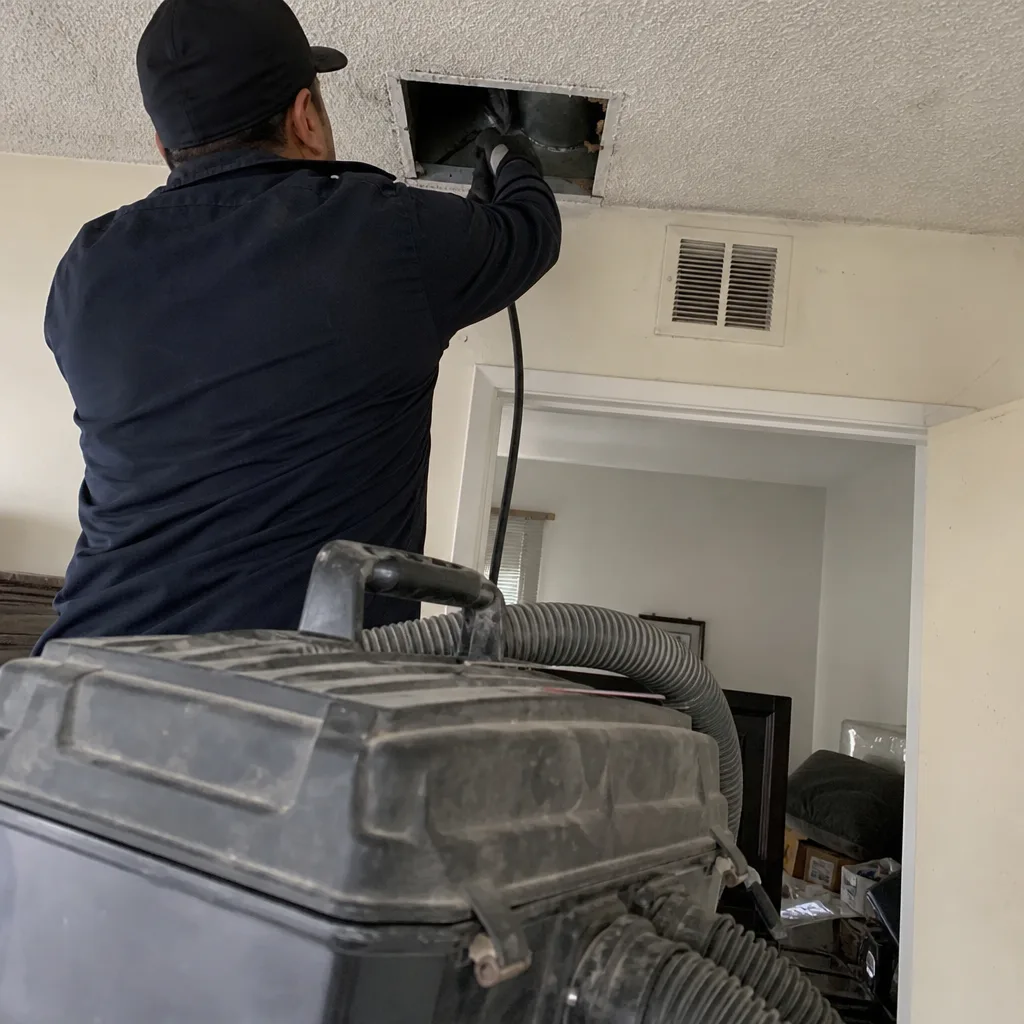 Before
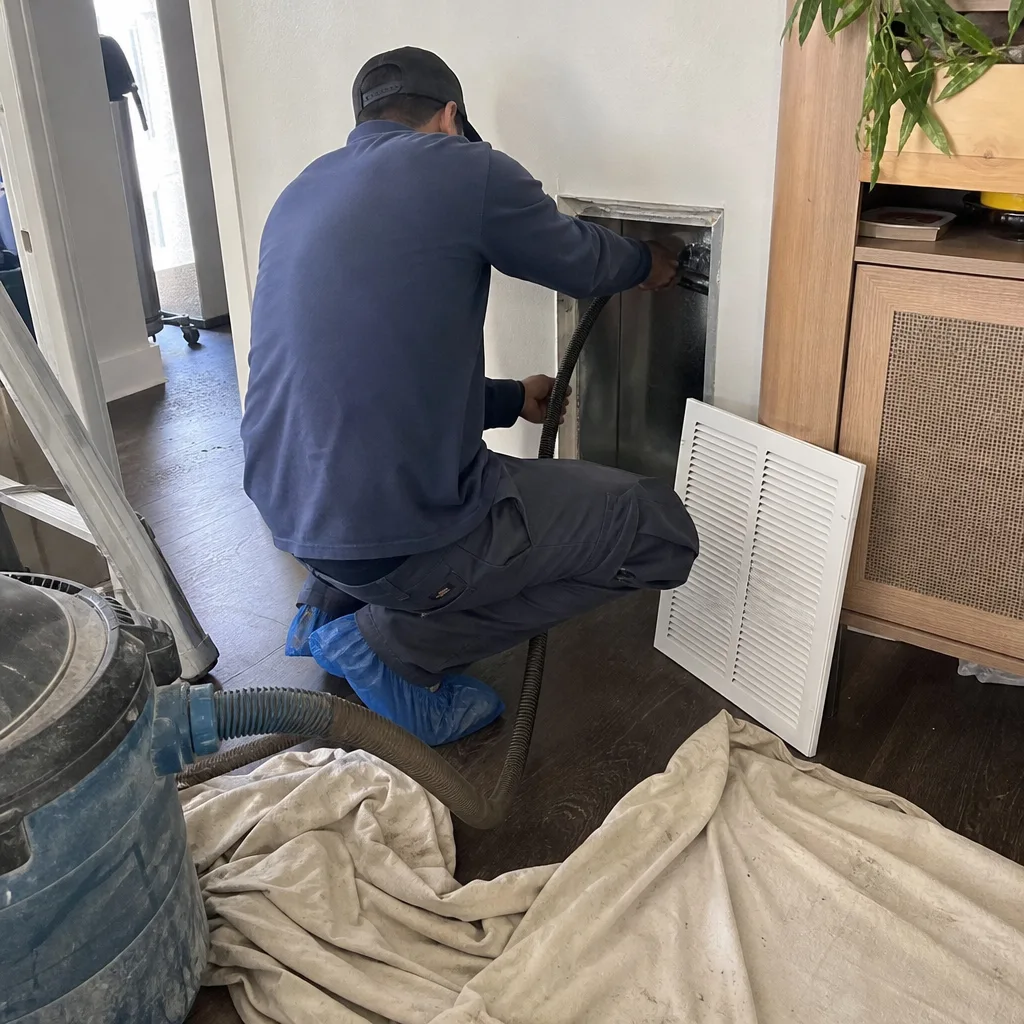 After
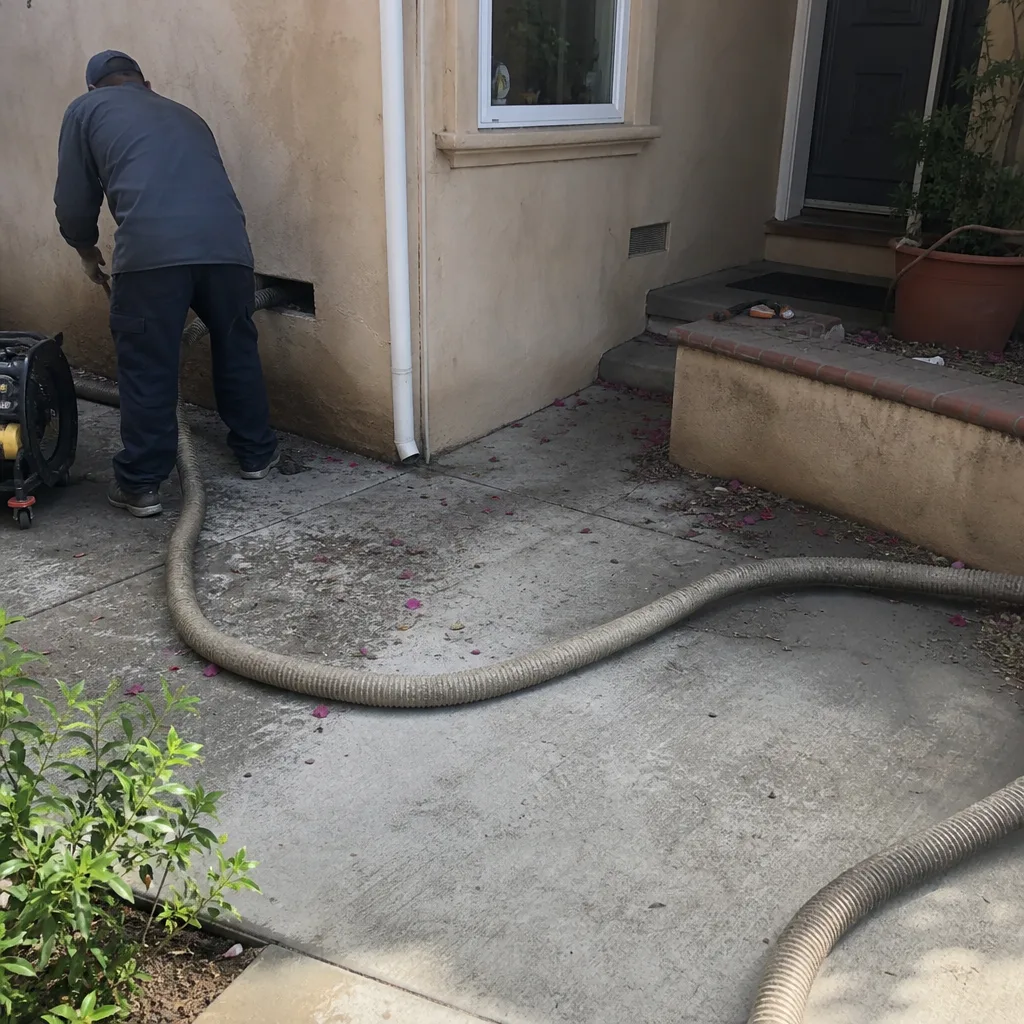 Before
 After
 Before
 After