
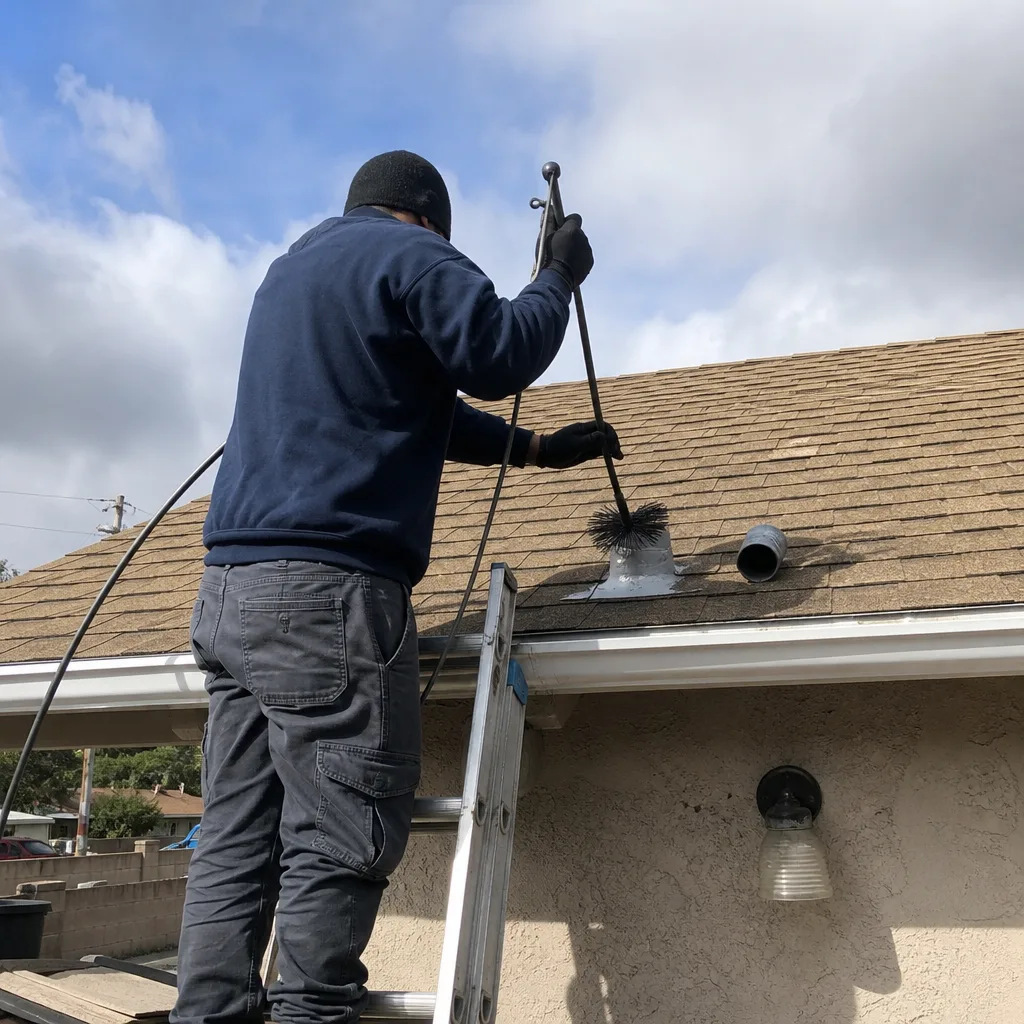
Last updated November 2, 2026
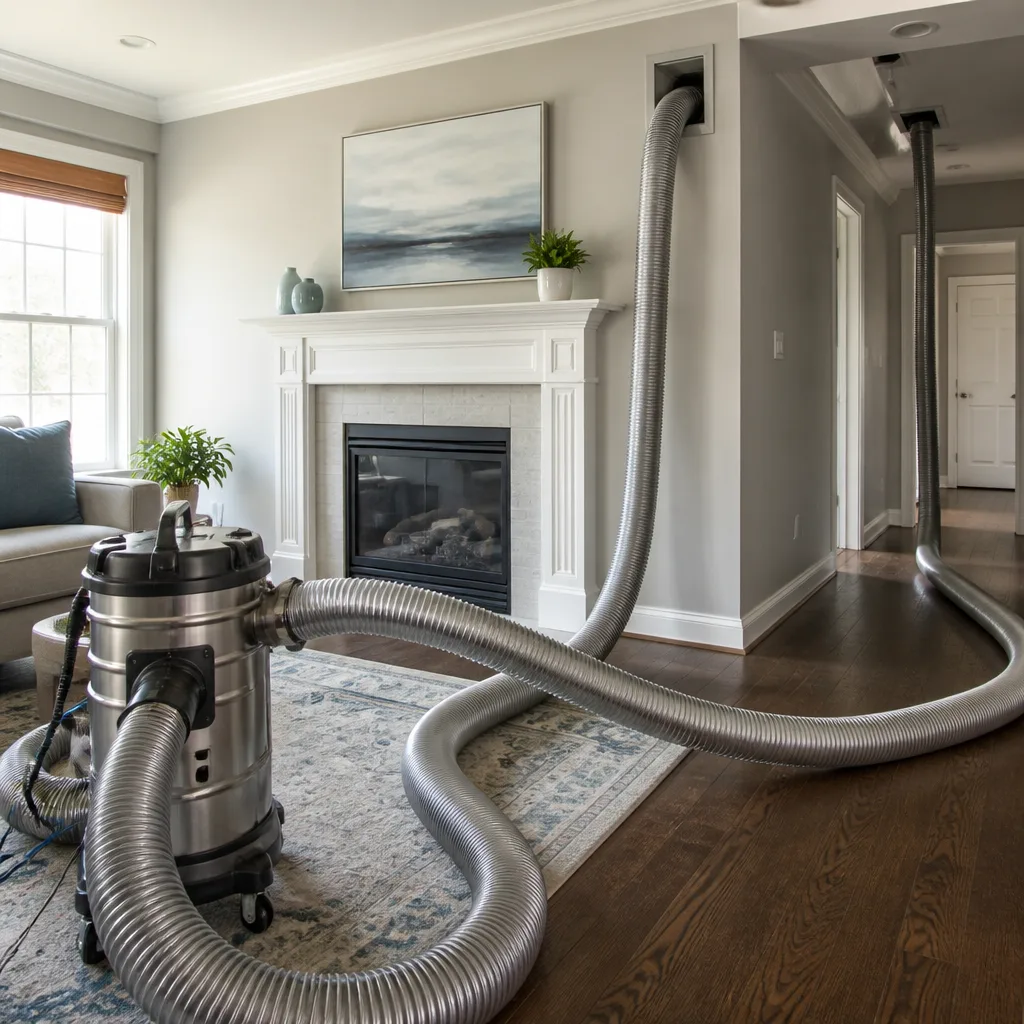 Whole-home duct cleaning
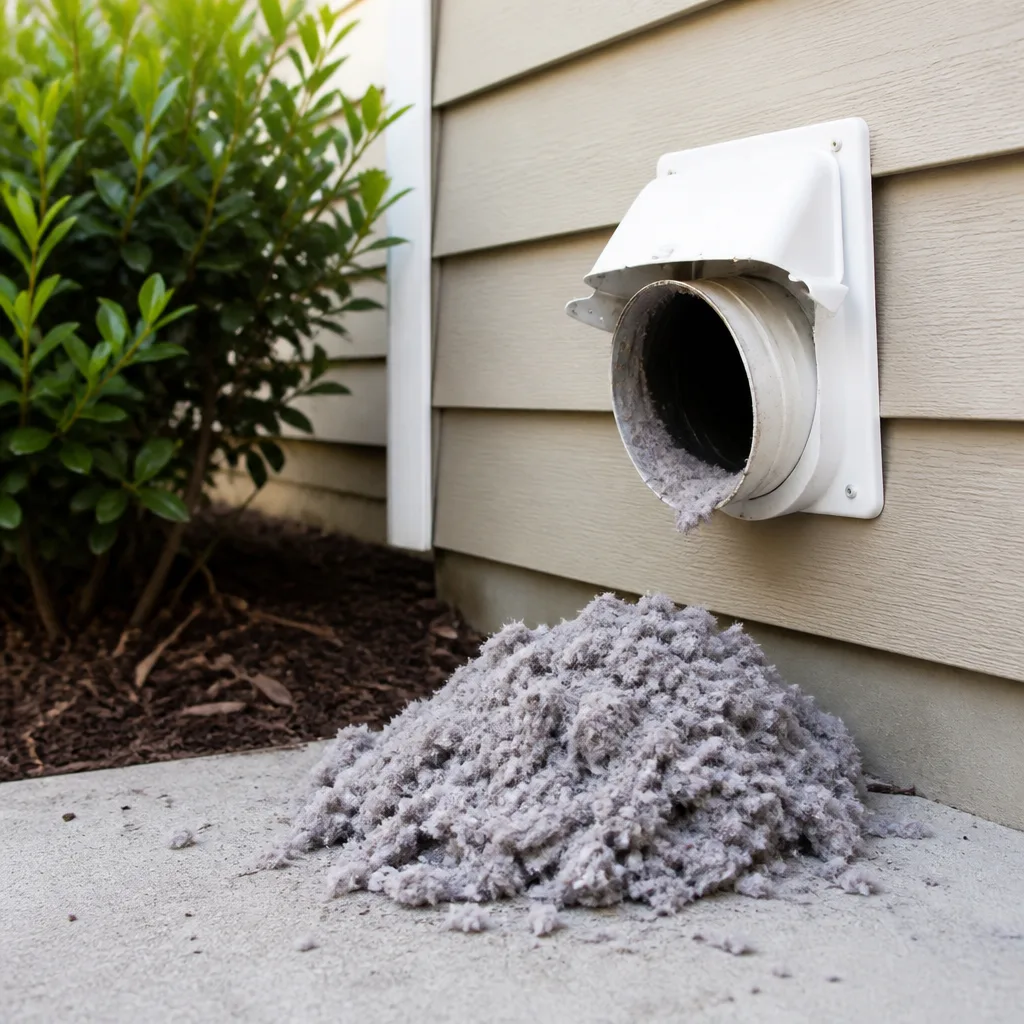 Dryer vent cleaning
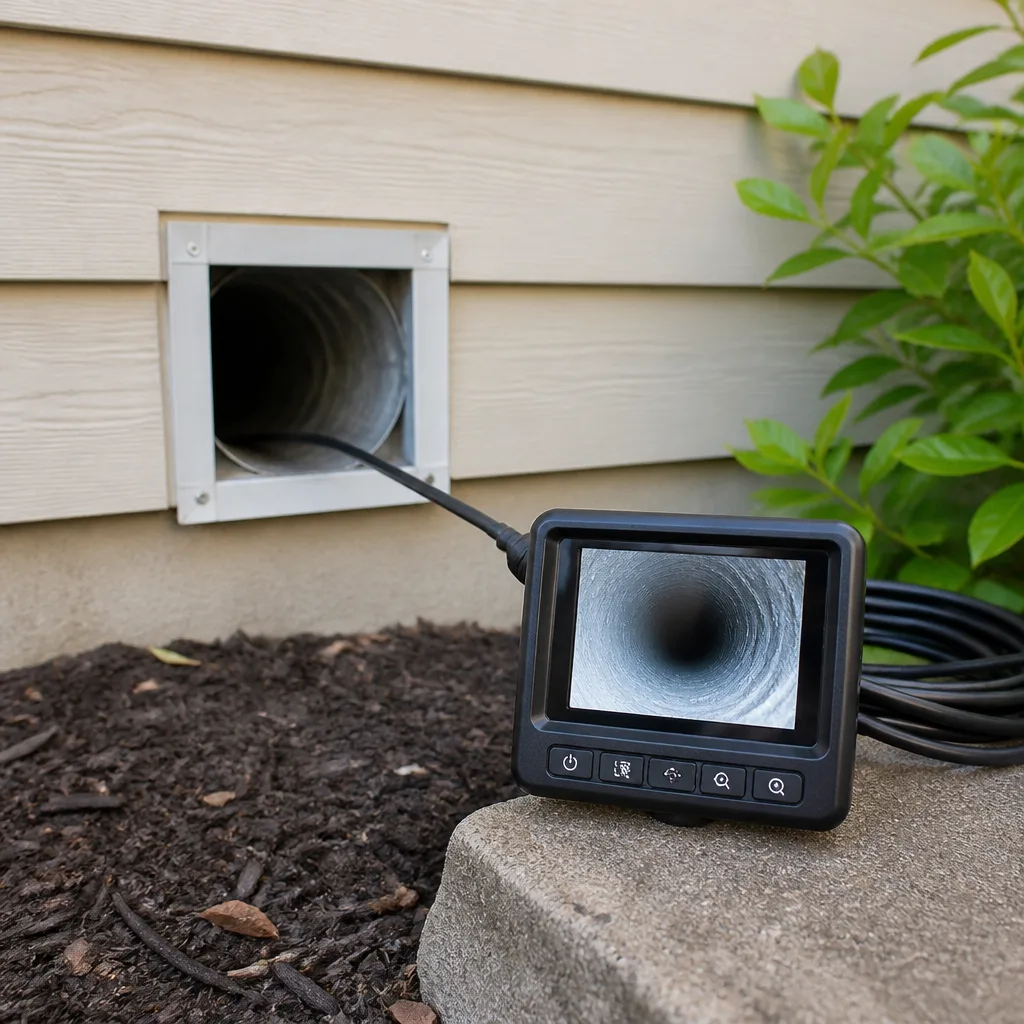 Camera inspection
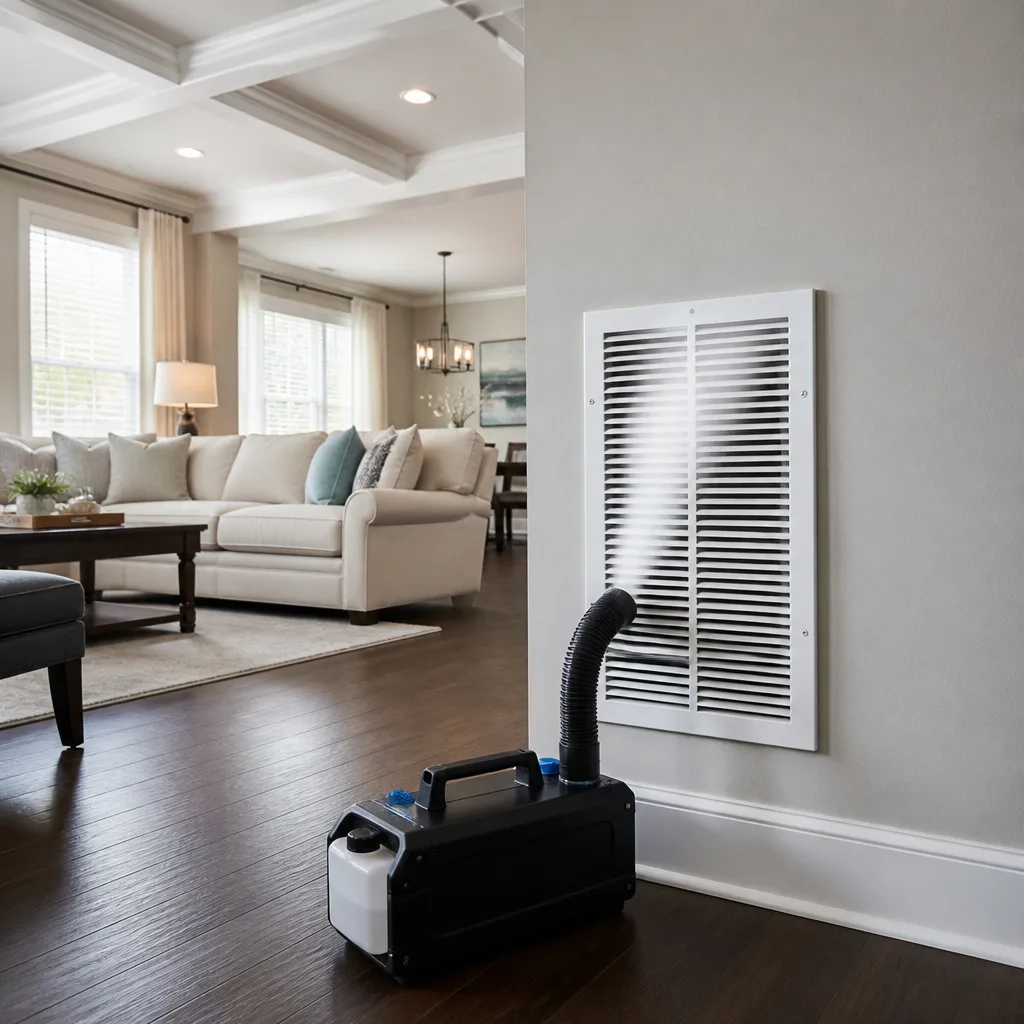 Sanitizing & deodorizing
Whole-system duct and dryer vent check with before-and-after photos - you see exactly what came out of your vents
That "$99 whole-house special" is a bait ad - the real number appears once they are in your hallway, or the "clean" is a shop-vac at the register. We photograph the inside of your ducts before and after instead.
The Complete Air Duct Cleaning Guide for Carson Homeowners
Most Carson homeowners are being told to clean their ducts far more often than the evidence supports. The Environmental Protection Agency has never issued a blanket recommendation for routine duct cleaning on a fixed schedule. Yet the coupons keep arriving. This guide is built to change that dynamic: we’ll show you how to read your own system, identify the conditions that genuinely warrant cleaning, and understand why the equipment used matters more than the price quoted. By the end, you’ll know when to act, when to wait, and how to evaluate anyone who wants to work in the air pathways of your Carson home.
Styles & brands we work with
- Whole-home duct cleaning
- Dryer vent cleaning
- Camera inspection
- Sanitizing & deodorizing
Quick Answer
Air duct cleaning in Carson is worth doing when you have visible mold growth inside ducts, verified vermin infestation, or substantial debris buildup clogging registers and returns. Most homes do not need annual cleaning, but when a legitimate need exists, the job requires negative-pressure equipment with HEPA filtration and mechanical agitation, not a portable vacuum. In Carson specifically, coastal salt particulate and older housing stock mean inspections should focus on return-air pathways and supply-register buildup more than supply trunks.
Table of Contents
- What Duct Cleaning Actually Does (and Does Not Do)
- How Carson’s Coastal Air Affects Ductwork Differently
- How to Inspect Your Own System for Real Problems
- Why Equipment Matters: Negative Pressure, CFM, and HEPA
- What a Legitimate Cleaning Scope Looks Like, Step by Step
- How to Verify a Contractor’s Equipment Claims Before You Book
- Common Mistakes to Avoid
- When to Call a Professional
- Frequently Asked Questions
- The Bottom Line
What Duct Cleaning Actually Does (and Does Not Do)
Duct cleaning removes accumulated debris from the interior surfaces of your HVAC system’s air pathways: supply ducts, return ducts, registers, grilles, the air handler cabinet, and the blower assembly. Done correctly, it extracts the material that has settled there over months or years. Done incorrectly, it stirs that material up and redistributes it through your living space.
What the process does not do is create a permanently clean system. Dust will return. That’s not a failure of the cleaning; it’s physics. Your HVAC system moves hundreds of cubic feet of air per minute when running, and Carson’s ambient particulate load means new material enters the system continuously. The legitimate goal is removal of accumulated contaminant load, not permanent sterility.
The EPA’s position on duct cleaning has been consistent for decades: no evidence exists that routine duct cleaning prevents health problems. But the agency also acknowledges that cleaning is appropriate when ducts contain visible mold, are infested with pests, or are substantially clogged with debris released into the living space. That’s the standard we apply. If your registers show light dust film, that’s normal. If they show matted debris, construction residue, or visible growth, that’s actionable.
In our experience across Carson’s housing stock, from the mid-century ranch homes south of Carson Street to the newer developments near the 110, the systems that benefit most from cleaning fall into three categories: homes that underwent renovation without duct sealing, homes with long return-air runs that accumulate disproportionately, and homes where a previous “cleaning” was performed with inadequate equipment and left material behind.
How Carson’s Coastal Air Affects Ductwork Differently
Carson sits close enough to the Pacific that marine-layer air quality shapes what accumulates inside residential duct systems. This matters because not all dust behaves the same way. The particulate that settles in a Carson duct system is measurably different from what settles in an inland system in Riverside or San Bernardino.
Salt-laden aerosol from ocean air is heavier than typical household dust. It clings to duct surfaces and acts as a binding agent, causing finer particles to adhere in place rather than re-entraining into the airflow. This means deposits in coastal Carson systems often present as a denser, grittier film rather than fluffy dust. A portable vacuum with a brush attachment will not move it effectively. Mechanical agitation from a rotating brush system is required to break the salt-particle bond before extraction can occur.
Humidity is the second variable. Carson’s coastal moisture levels, particularly during June gloom months, mean that organic material inside ductwork stays damp longer than it would inland. Damp organic material is the precondition for microbial growth. This is why return-air pathways in Carson homes should be inspected with particular attention: return air pulls from living spaces, carries skin cells and pet dander, and deposits that organic material on cool metal surfaces. A system in Carson may develop actual microbial growth on return registers where an identical system in Lancaster would stay bone dry and merely dusty.
The practical takeaway: if you’re evaluating whether your Carson system needs cleaning, weight return-register and return-plenum inspection heavily. Those are the locations where coastal conditions create actionable contamination first.
How to Inspect Your Own System for Real Problems
You do not need specialized tools to perform a meaningful initial inspection. You need a flashlight, a screwdriver to remove register covers, and the willingness to look into parts of your home most people never examine. Here is how to read what you see.
Step 1: Remove Supply Registers and Look at the Duct Interior
Supply registers are where conditioned air enters rooms. Remove the cover and shine your flashlight into the first 12 to 18 inches of visible duct. Light dust film is normal and does not warrant cleaning. What warrants action: matted accumulations that obscure the metal surface, visible debris larger than dust particles, or any dark staining that looks organic rather than gray.
Step 2: Check Return Registers Carefully
Return registers pull air from your rooms back to the air handler. These run dirtier than supplies because the air traveling through them has not yet passed through your filter. Remove a return grille and inspect the filter slot and the visible return plenum. Look for matted lint, visible biological growth, or the presence of pest droppings. In Carson’s humid months, this is where you are most likely to find something actionable.
Step 3: Inspect the Blower Compartment
If you can access your air handler cabinet safely, remove the blower access panel with the system powered off at the breaker. Look at the blower wheel vanes. If they show thick accumulation that narrows the air passages, your system is working harder to move less air. This accumulation also becomes airborne source material. Blower inspection is a strong indicator of overall system condition.
Step 4: Evaluate Filter Condition and Type
Check your filter. A fiberglass filter that is visibly clogged after 30 days tells you the system is pulling substantial particulate. Upgrading to a pleated filter with a higher MERV rating captures more of it before it reaches ducts and equipment. If you are already using a quality pleated filter and it loads quickly, the system may be drawing from a dusty return environment, which is itself diagnostic.
What You Are Looking For: A Simple Decision Framework
- Light gray dust film on metal: Normal. No action needed.
- Matted accumulation obscuring the duct surface: Cleaning warranted.
- Dark staining or anything that looks like growth: Cleaning and potential Air Duct Repair evaluation warranted. Do not disturb it yourself.
- Pest droppings, nesting material, or insect casings: Cleaning warranted. Fix the entry point too.
- Construction debris, drywall dust, or loose insulation: Cleaning warranted, especially after renovation work.
- Filters loading solid in under 60 days: System inspection warranted. Something is generating or drawing excessive particulate.
Why Equipment Matters: Negative Pressure, CFM, and HEPA
The defining difference between a legitimate duct cleaning and a surface-level show is the equipment. This is not brand snobbery. It is mechanical reality. If you understand three concepts, you can evaluate any contractor’s claims with confidence.
Negative Pressure is Non-Negotiable
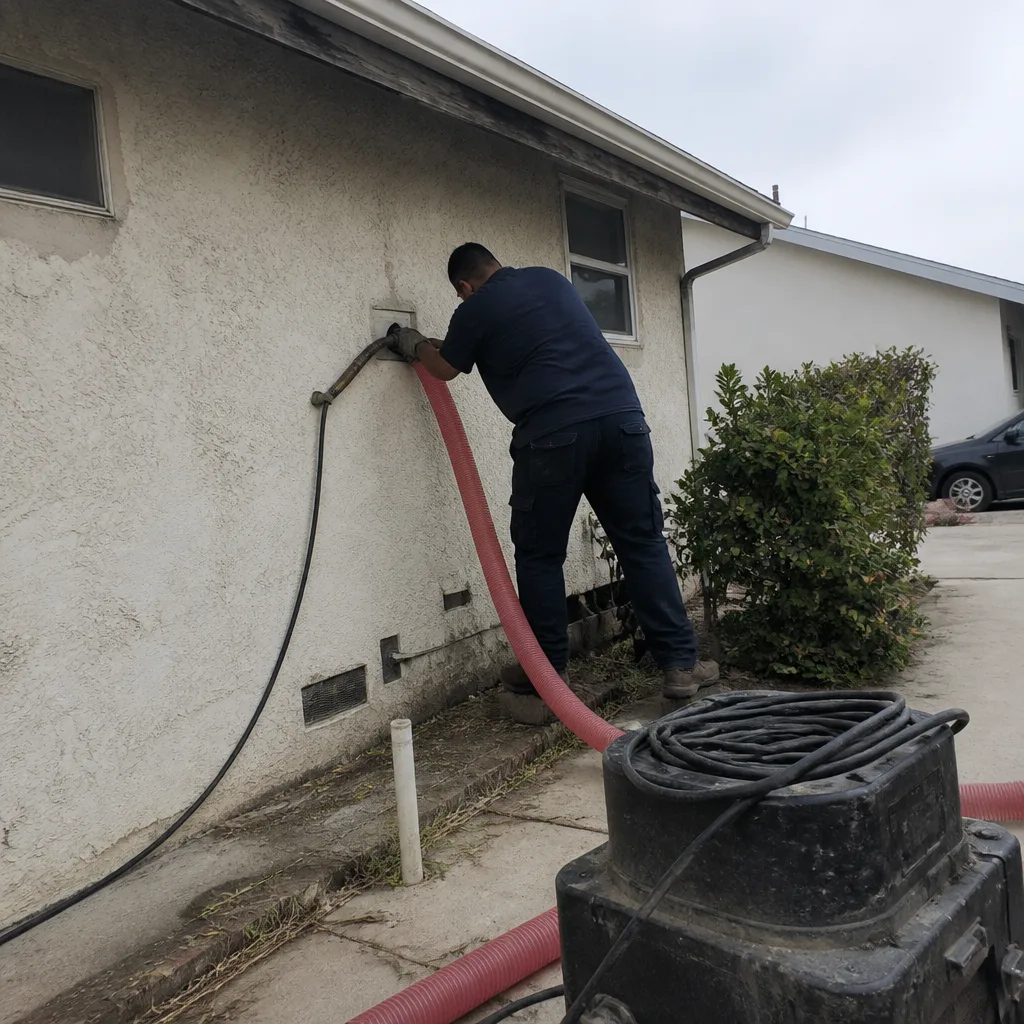
Proper duct cleaning requires the system to be placed under negative pressure during agitation. This means a high-volume vacuum unit pulls air from the ductwork so that any particulate loosened by brushes is captured immediately at the point of disturbance, not pushed further into the system or blown into your rooms. A shop-style vacuum attached to a register does not create system-wide negative pressure. It cleans the few feet it can reach and leaves the rest untouched.
Equipment from manufacturers like Nikro and Rotobrush is engineered for this specific application. These are purpose-built duct cleaning systems with the CFM output and filtration capacity to maintain negative pressure across an entire residential duct run. That’s a meaningful engineering difference from a portable vacuum with an extension hose.
CFM Ratings Explained
CFM stands for cubic feet per minute, a measure of airflow. A typical portable vacuum moves 100 to 200 CFM. A professional negative-air duct cleaning unit moves 2,000 to 5,000 CFM or more. The difference is the difference between suctioning the dust you can see and creating enough airflow velocity inside the duct to transport loosened debris the entire length of the run to the collection point. Low CFM means debris loosened at the far end of a duct run settles back down before it ever reaches the vacuum. You pay for agitation that accomplishes nothing.
HEPA and Filtration Chain
Equipment in the Abatement Technologies category, known for negative-air machines used in contaminant remediation, includes HEPA filtration as a standard component. HEPA filters capture 99.97% of particles at 0.3 microns. Why this matters: a duct cleaning machine without adequate exhaust filtration releases fine particulate back into your home during operation. The larger debris is collected; the fine fraction becomes airborne. This is the unseen failure mode of discount cleanings. The job looks done because the gross debris is gone, but the respirable fraction has been redistributed.
Our crews run contractor-grade Rotobrush and Nikro duct cleaning systems paired with negative-air and HEPA filtration machinery of the category Abatement Technologies produces. We name our equipment because it matters which tools go into your home. A homeowner has every right to know whether the unit arriving at their curb is a repurposed consumer vacuum or a system built for duct remediation.
What a Legitimate Cleaning Scope Looks Like, Step by Step
A legitimate duct cleaning is a defined process, not a technician waving a hose around. Here is what a proper scope of work includes, in sequence. If a contractor describes their process in fewer steps than this, ask what they are skipping.
- System inspection and documentation. Before any equipment runs, the technician should inspect accessible duct runs, the air handler, blower, coils if visible, and register locations. They should identify access points and note any existing damage. If they do not inspect before cleaning, they cannot verify after cleaning.
- Register and grille removal. All supply and return covers come off. They are cleaned separately or replaced if damaged. Cleaning through register openings with covers in place is incomplete by definition.
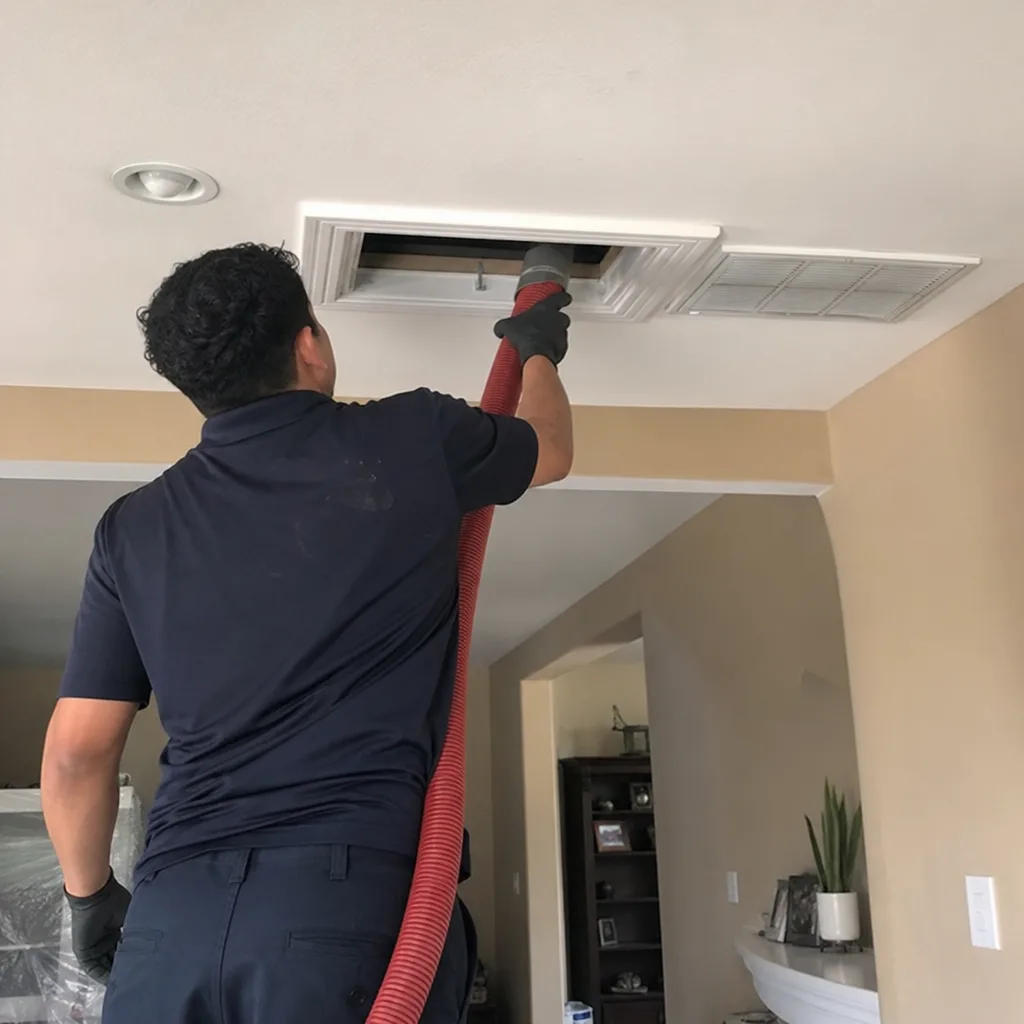
- Access point creation. Professional cleaning requires cutting or opening access into the main trunk lines and often the return plenum. These access points are cut with precision tools, then sealed with removable caps after the job. If a contractor does not create access points, they cannot reach the interior of main trunks.
- Negative-air connection. The high-CFM vacuum unit is connected to the system and brought online before agitation begins. Negative pressure is established and maintained throughout the cleaning.
- Mechanical agitation. Rotating brushes, air whips, or a combination are introduced through each access point and register opening. This is the step that breaks accumulated material free. This is also where equipment quality becomes visible: a rotary brush on a flexible shaft can reach and scrub; a bristle brush on a drill extension cannot reach the far side of a duct run.
- System-wide extraction. With agitation complete, the negative-air unit runs for a final full-system sweep, pulling remaining loosened particulate to the collection point. The air handler blower may be run briefly to clear the blower compartment.
- Component cleaning. The blower wheel, blower housing, and accessible coil surfaces are cleaned using appropriate methods. Not every contractor does this. A system cleaning that skips the blower leaves a primary particulate source untouched.
- Filter replacement and system reassembly. A new quality filter is installed if the existing one is spent. Registers are reinstalled. Access points are capped and sealed.
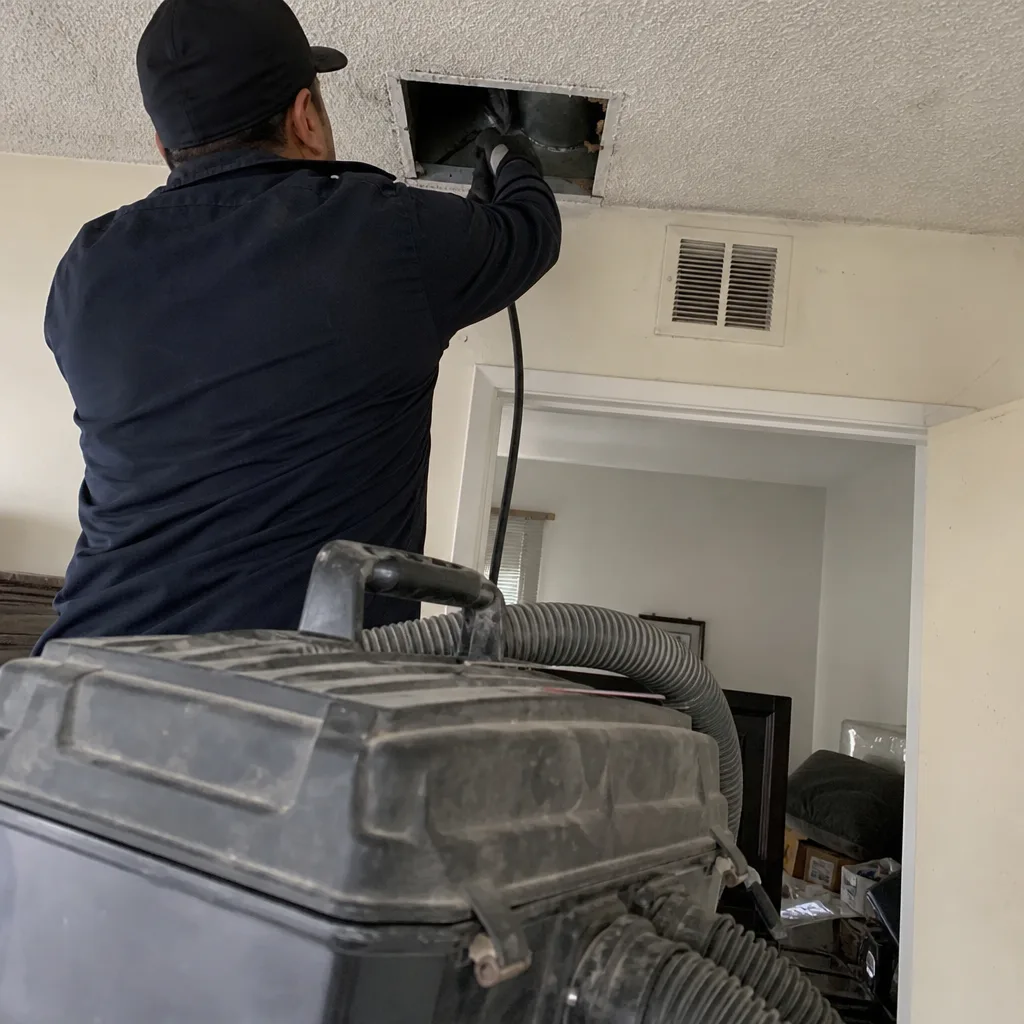
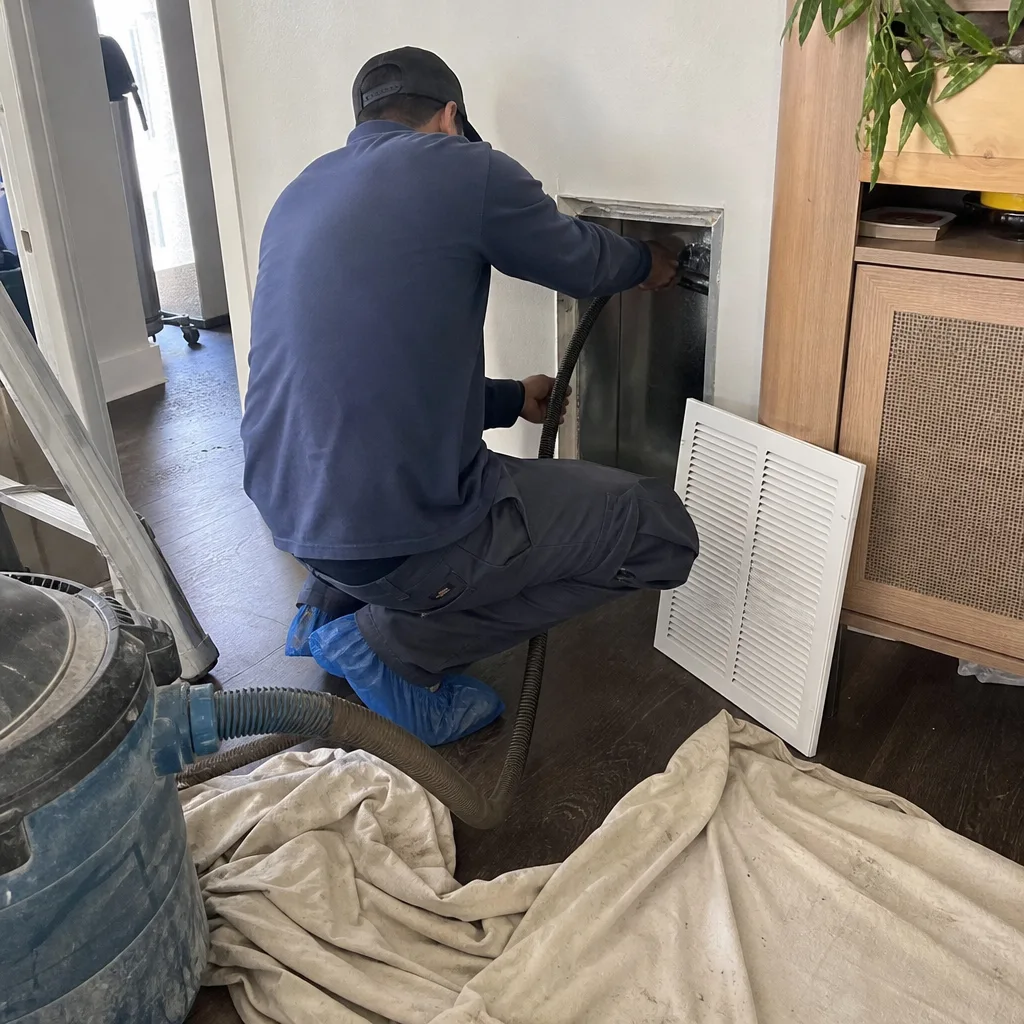
- Post-job verification. The technician should remove an access cap or use the created openings to show you the cleaned interior. Before-and-after photos of the same locations are provided. You should be able to see bare metal where matted debris existed earlier that day.
What this means for you as a Carson homeowner: a legitimate cleaning is a multi-hour job. It involved cutting access into your ductwork. It used a negative-air machine and mechanical agitation. If a quoted price aligns with a 30-minute visit, a vacuum hose, and no access points, the job is fundamentally different from the one described above, regardless of what the invoice says.
How to Verify a Contractor’s Equipment Claims Before You Book
Many contractors list brand names on their websites. Some of them actually own the equipment those brands represent. Some do not. You can close this gap before anyone steps foot in your Carson home by asking the right questions and doing minimal independent verification.
Ask Direct Questions
- “What specific equipment will arrive at my house?” A legitimate operator answers with brand and model without hesitation: a Nikro air sweep, a Rotobrush brush system, an Abatement Technologies negative-air unit. A vague answer means vague equipment.
- “What CFM does your vacuum unit produce?” If they cannot answer, or quote a number under 1,000 CFM, that is a portable unit, not a duct cleaning system.
- “What do you use to agitate the duct interior?” The answer should be a rotating brush system, air whip, or both. A brush on a rod is different from a rotary brush driven by a flexible shaft.
- “What filtration does your extraction unit use?” If the answer is anything other than HEPA, or they do not know what HEPA means in this context, move on.
- “Will you cut access points into the trunks?” If the answer is no, ask how they access the interior of the main trunk lines. There is no good answer to that question without access points.
Cross-Reference Manufacturer Spec Sheets
Manufacturer websites publish spec sheets for their professional systems. A quick search for the model number should surface airflow ratings, filtration specifications, and intended applications. If the contractor names a model that turns out to be a portable consumer-grade unit, you have your answer. This is public information. You do not need technical training to read a CFM number on a spec sheet and compare it to the figures discussed in this guide.
Ask About Repair Capability
One of the most practical screening questions: what happens if the technician finds a separated duct joint, a crushed branch line, or a disconnected return? A cleaning-only crew will note it and leave, because they do not perform repair work. That means you need a second vendor, a second scheduling window, and a second bill. Our scope includes Air Duct Repair as a standalone service precisely because we find damage during cleaning on a regular basis. Found during cleaning, fixed the same visit. That capability is a differentiator that matters. Ask any contractor you are evaluating the same question.
Common Mistakes to Avoid
- Booking based on coupon price alone. Duct cleaning is a low-margin service when done correctly. A $49 whole-house coupon cannot cover the equipment, labor, and time a legitimate cleaning requires. The economics only work if the scope is reduced to fit the price, or the coupon is a loss leader for aggressive upsell. In Carson, where the housing stock spans compact mid-century systems, the discounted scope is almost always the reality.
- Accepting “clean” as an outcome without seeing it. You can be shown before-and-after photos of your own ducts. If a contractor cannot or will not provide them, you have no evidence the work was done. Ask for visual proof from the same access points before and after.
- Assuming a newer home means clean ducts. Newer construction in Carson’s developments often leaves construction debris inside duct runs from the build process itself: drywall dust, cut-offs, occasionally food wrappers. New does not mean clean.
- Ignoring the return side. Many cleanings focus on supply registers because they are visible and easy to access. The return side carries the material from your living spaces to the equipment. Skip it and you are cleaning the exit while ignoring the entrance.
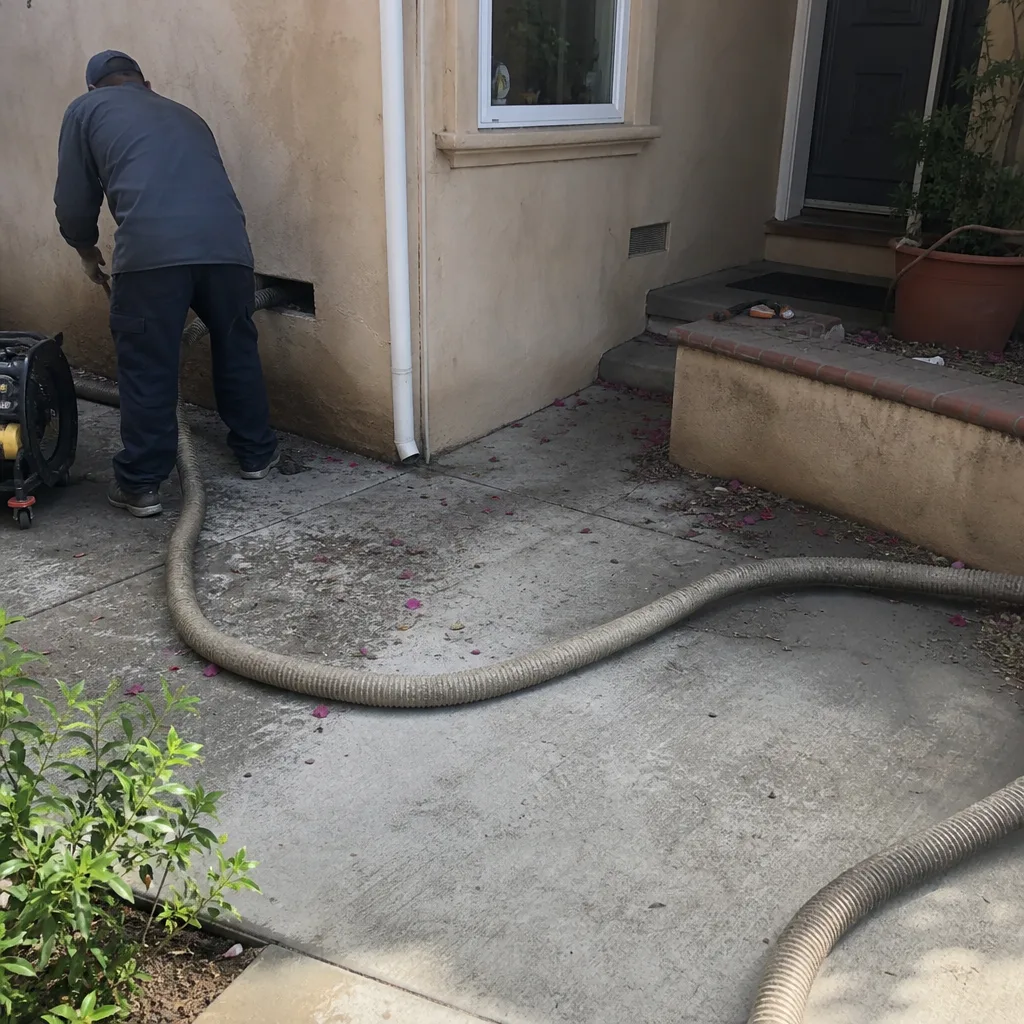
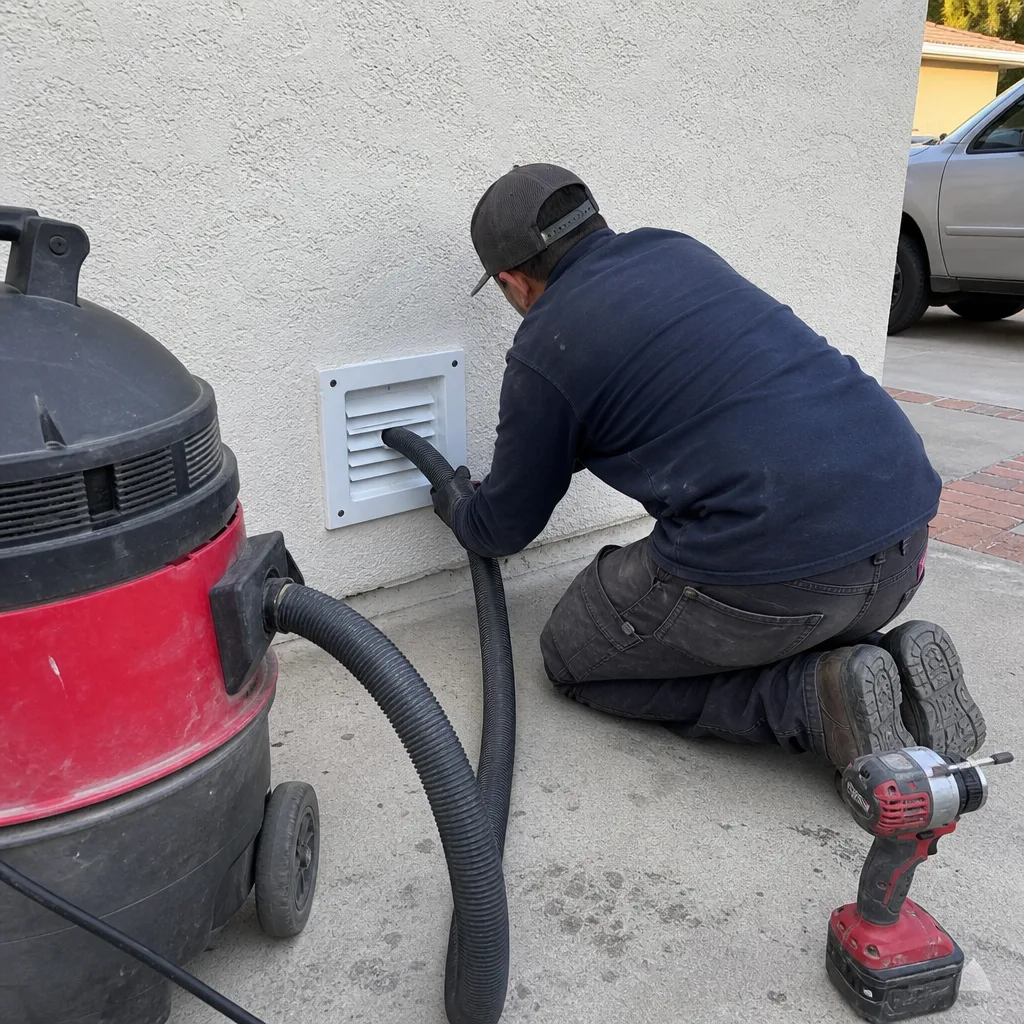
- Treating dryer vents as an afterthought. Lint-blocked dryer exhaust is the leading cause of residential dryer fires. Dryer vent cleaning is not a bonus add-on; it is a separate fire-prevention service with its own methodology. We treat it as such. Ask whether your contractor does too.
- Believing annual cleaning is mandatory. It is not. The EPA has never endorsed a fixed cleaning schedule. A system that was cleaned properly and operates with quality filters may not need attention for years. The condition of your system, not a calendar, is the correct trigger.
When to Call a Professional
Call a professional when your own inspection turns up matted accumulation, visible growth, pest evidence, or construction debris. Call when blower wheel buildup is visible, or when your filters load solid unnaturally fast. Call when you have just completed renovation work and know drywall dust entered the duct system. Call when a previous cleaning left you with doubts about whether the job was real.
If you are in Carson and want an honest evaluation of whether your ducts need work, Duct Cleaning Carson home offers free estimates. We will inspect your system, show you what we find, and give you a recommendation based on the condition of your ducts, not a corporate sales quota. Call (866) 569-6170 to schedule. For our neighbors servicing systems in the South Bay, we also provide Air Duct Cleaning in Manhattan Beach, Dryer Vent Cleaning in Manhattan Beach, and Air Duct Repair in Manhattan Beach.
Frequently Asked Questions
Whole-system duct cleaning in Carson typically ranges from $350 to $750 for a standard single-family home, depending on the number of systems, the linear feet of ductwork, and accessibility. Condos and smaller homes fall at the lower end; two-story homes with multiple zones at the upper end. The price should be quoted as a flat rate per system before work begins, not per vent. If a quote is structured per vent, expect the final number to move. Call (866) 569-6170 for an exact quote based on your system. Estimates are free.
Cheaper quotes reflect reduced scope, reduced equipment, or both. A portable vacuum cannot create system-wide negative pressure, cannot reach the interior of main trunks, and lacks HEPA filtration for fine particulate. The cleaning is surface-level by mechanical limitation. A quote that seems too low is almost always a quote that does not include the access points, agitation equipment, and extraction machinery a legitimate job requires. The difference is not profit margin; it is what physically happens inside your ducts.
Insist on before-and-after photos from the same access points. A legitimate contractor creates access to the main trunk lines as part of the scope, which means they can show you the interior surfaces those openings reveal. Compare the before image showing matted accumulation to the after image showing clean metal. If a contractor cannot provide this documentation, you have no verifiable evidence and no basis for satisfaction. We provide this documentation as standard practice on every job.
There is no fixed interval. A properly cleaned system in a home with quality filtration may go five to eight years before meaningful accumulation returns. A system in a home with fiberglass filters, high occupancy, or pets may need attention in two to three. The correct answer is condition-based, not calendar-based. Inspect your system annually using the framework in this guide, and clean when the inspection identifies actionable accumulation. Anyone telling you it “should” be done annually is selling you a schedule, not a service.
Yes, in two specific ways. First, salt-laden marine aerosol creates deposits that are denser and grittier than inland dust, requiring stronger mechanical agitation to break loose. Second, higher coastal humidity means organic material inside return pathways stays damp longer, increasing the potential for microbial growth on metal surfaces. Return-side inspection matters more in Carson than in drier inland communities. The equipment requirements do not change; the inspection priorities do.
Duct cleaning removes accumulated material that becomes airborne when air moves through the system, which addresses one source of particulate in your living environment. It does not cure allergies, and no legitimate contractor should claim it does. What we can say is this: your ducts move air through every room. If that air is passing over accumulated particulate in the ductwork, the system is distributing that material. Cleaning removes the source. The contribution to indoor air quality is real, but it is not a medical intervention.
The Bottom Line
Most Carson homeowners do not need duct cleaning as often as the industry’s marketing suggests. But when a legitimate need exists, the difference between a real cleaning and a surface-level show is the equipment on the truck and the scope of the work performed. Negative-pressure extraction, mechanical agitation, HEPA filtration, and created access points are not optional frills; they are the defining mechanics of the service itself. Inspect your own system using the register, return, and blower checks in this guide. Ask hard questions about CFM, filtration, and access. Verify equipment claims against public spec sheets. And when the condition of your ducts warrants action, insist on the same scope and documentation you would expect from any other meaningful home service. In Carson’s coastal air, with its heavier particulate and higher humidity, that standard matters more than it does almost anywhere else in Southern California.
Written by the team at Duct Cleaning Carson, serving Carson since 2011.
See the difference
 Before
 After
 Before
 After
 Before
 After