
Last updated November 2, 2026
 Whole-home duct cleaning
 Dryer vent cleaning
 Camera inspection
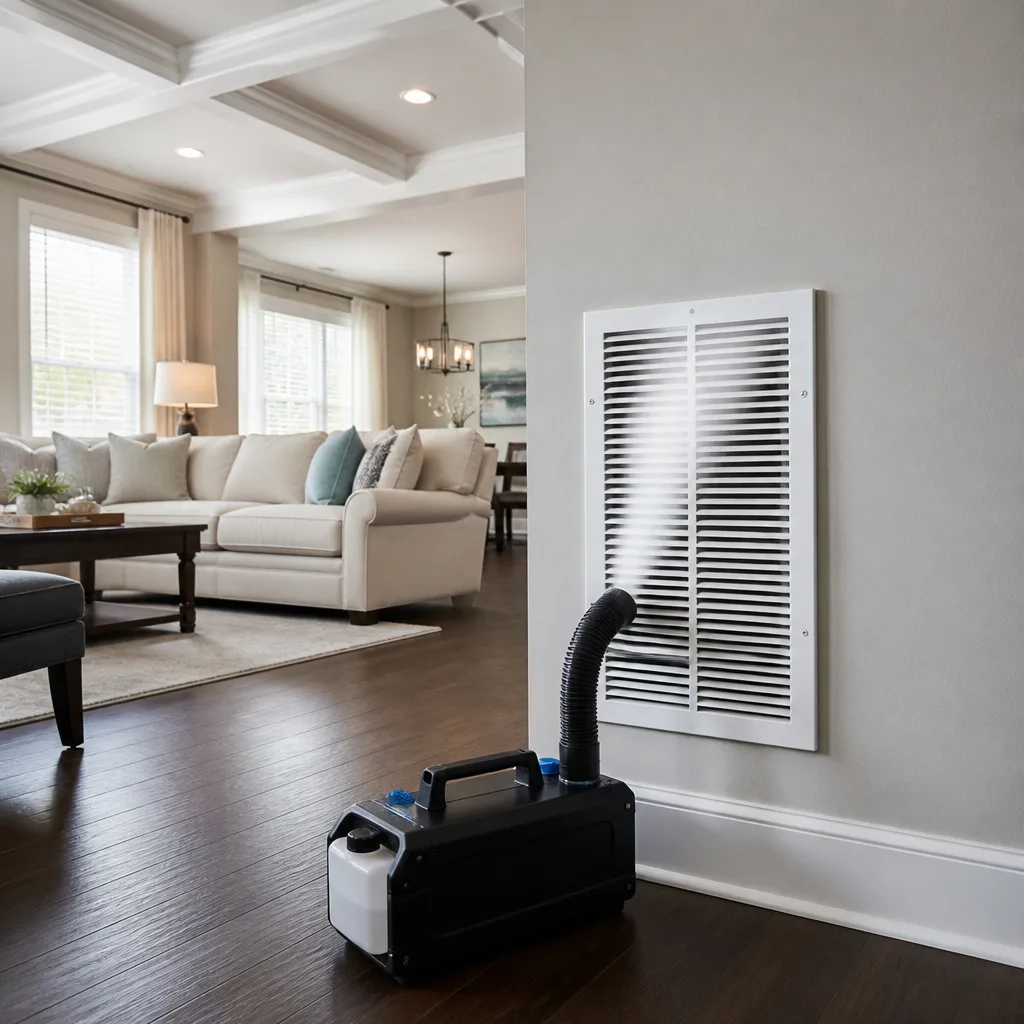 Sanitizing & deodorizing
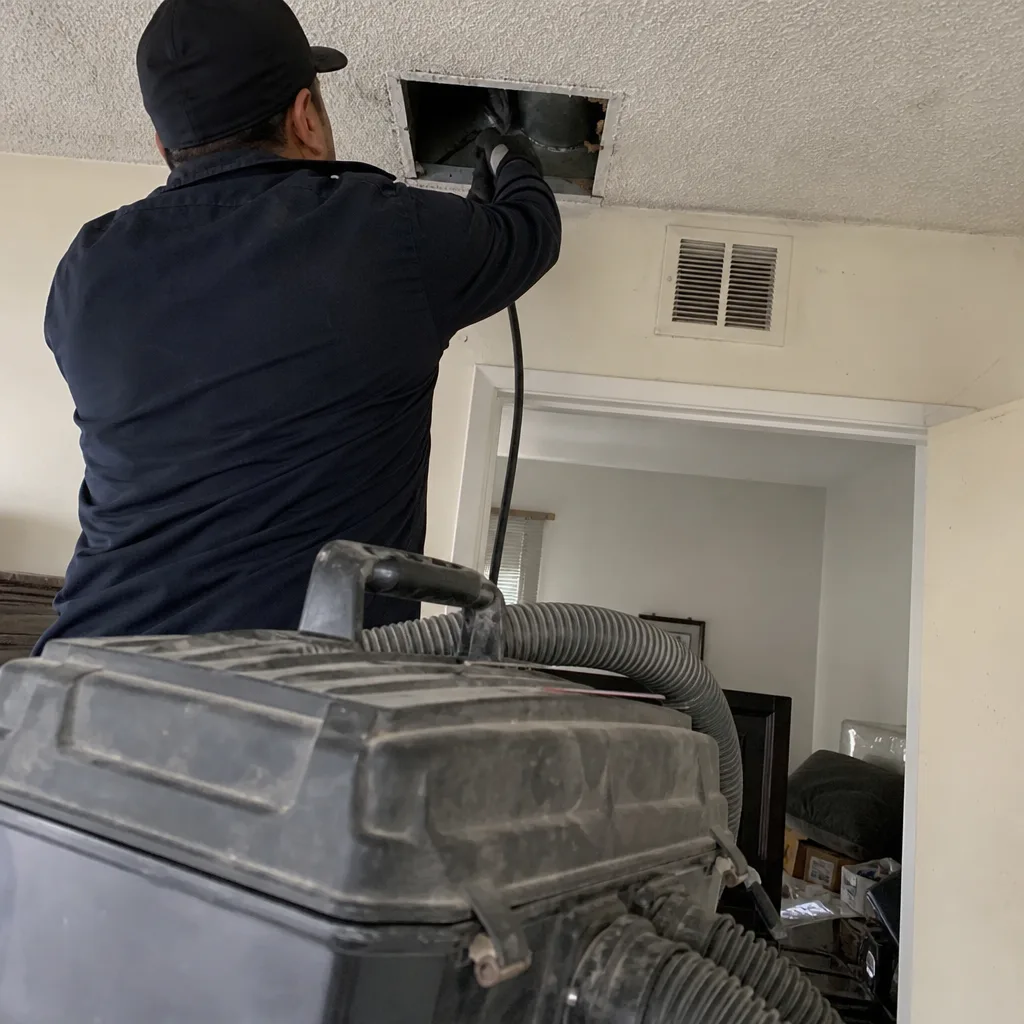
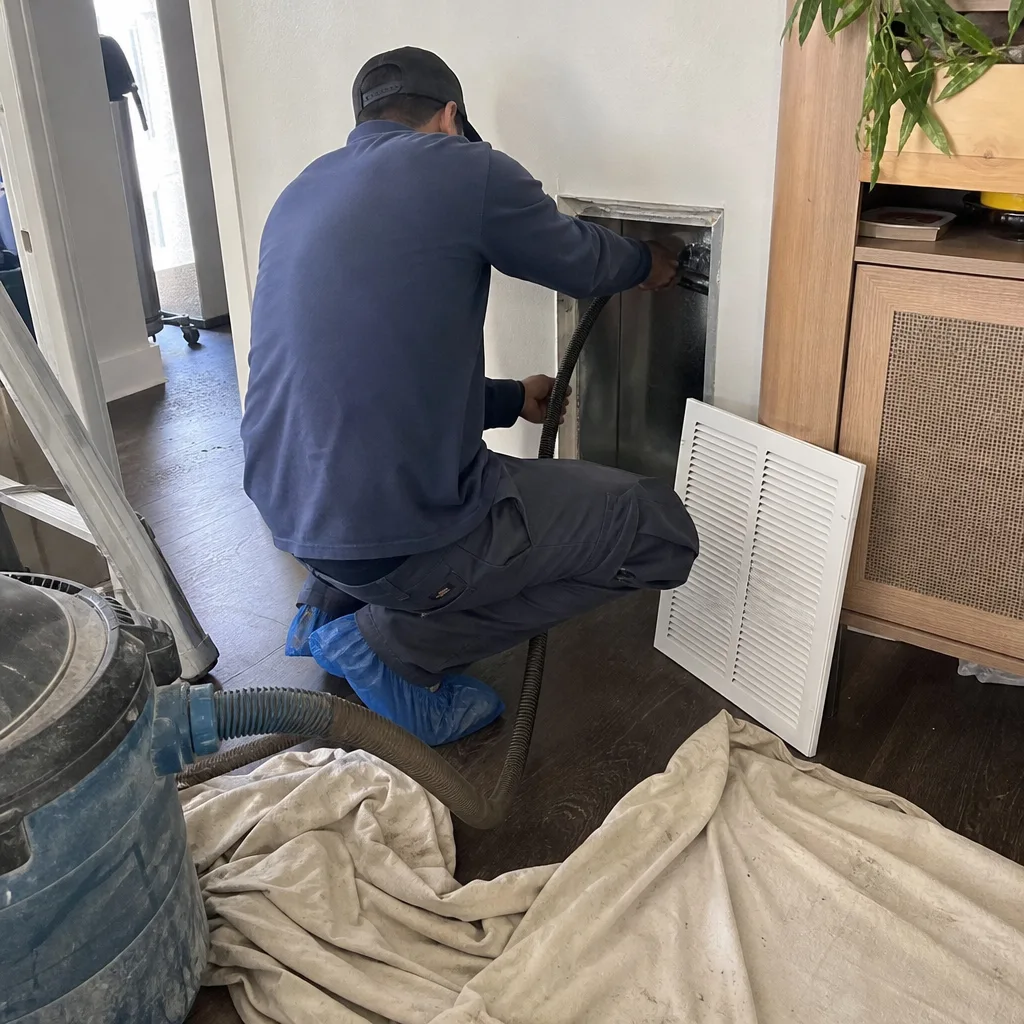
Whole-system duct and dryer vent check with before-and-after photos - you see exactly what came out of your vents
That "$99 whole-house special" is a bait ad - the real number appears once they are in your hallway, or the "clean" is a shop-vac at the register. We photograph the inside of your ducts before and after instead.
Choosing the Right Air Duct Cleaning Brand: A Buyer’s Guide for Carson
Two contractors can both list “Rotobrush” or “Nikro” on their website. One owns a current-model truck-mount with a direct-drive motor pulling 18 amps at the reel. The other bought a five-year-old portable unit at a liquidation auction and runs it off a 15-amp household circuit. Both are technically telling the truth about the brand. Only one is doing the job you’re paying for. This guide exists because the brand question in Air Duct Cleaning isn’t about marketing. It’s about equipment lineage, supply chains, and what a contractor’s machinery actually tells you before the first hose goes into your return. In Carson, where the South Bay meets industrial Wilmington and the Port of Los Angeles, that distinction matters more than in most markets. We’ll walk through exactly how to evaluate it.
Styles & brands we work with
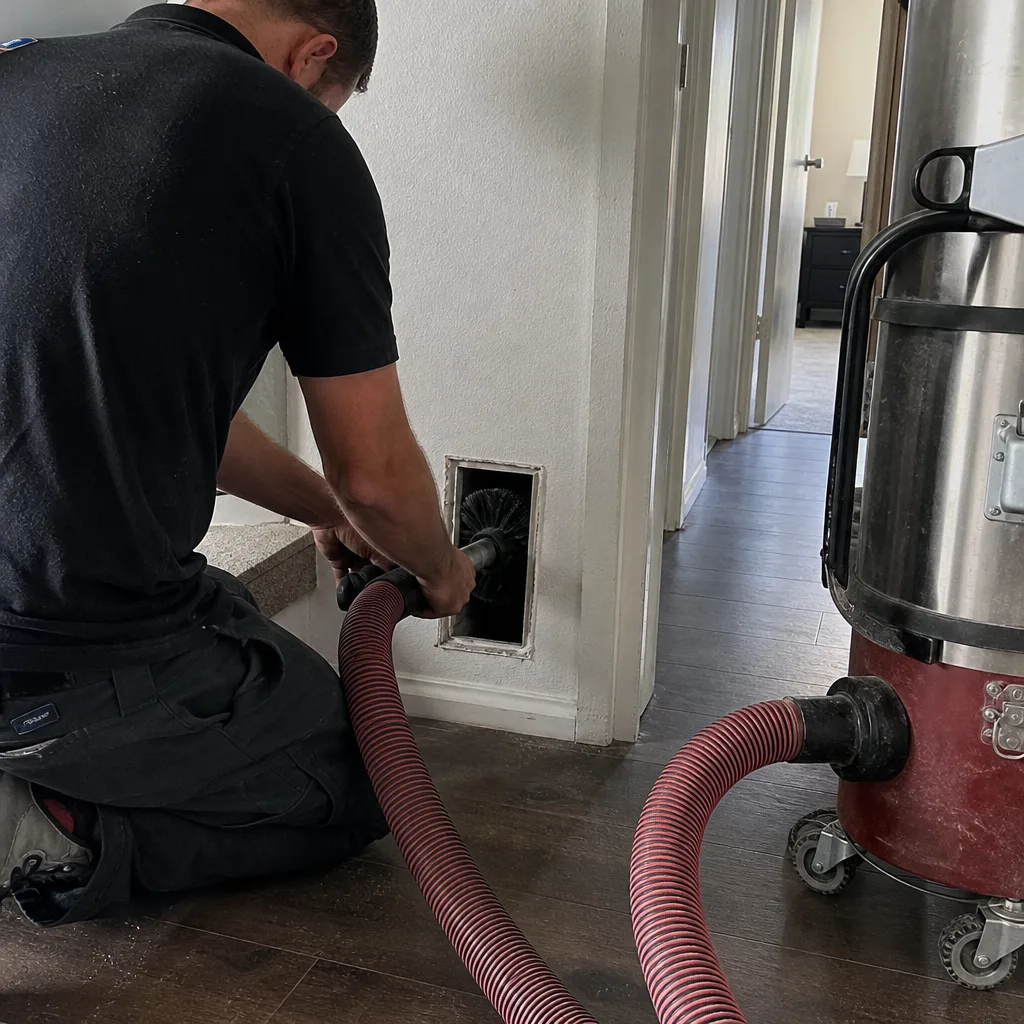
- Whole-home duct cleaning
- Dryer vent cleaning
- Camera inspection
- Sanitizing & deodorizing
Quick Answer
Choosing the right air duct cleaning brand in Carson comes down to evaluating the contractor’s core equipment: whether it comes from industrial remediation supply chains (Nikro, Abatement Technologies, Pullman Ermator) or from distributors selling to janitorial services. Look for a contractor-grade negative-air or push-pull system with true HEPA filtration, at least 10-inch hose diameter, and documented motor amperage ratings. In Carson specifically, proximity to LAX, the Port, and industrial Wilmington means legitimate remediation-grade contractors are denser here than in typical suburban markets, which makes a physical equipment audit before work begins faster and more reliable than reading online reviews alone.
Table of Contents
- The Equipment Lineage Question: Why Supply Chains Beat Logos
- The Brands That Define Contractor-Grade Duct Cleaning
- How to Evaluate an Equipment Claim: The Five Questions That Cut Through Brochure Language
- What “NADCA Member” Actually Means as a Brand Signal
- The Carson Contractor Market: Why the South Bay Has More Remediation-Grade Operators
- The 90-Second Truck Audit: What to Look For Before Work Starts
- Filtration and Negative Air: The Difference Between Cleaning and Redistributing
- Cleaning and Repair Under One Roof: Why It Changes the Equipment Conversation
- Common Mistakes to Avoid
- When to Call a Professional
- Frequently Asked Questions
- The Bottom Line
The Equipment Lineage Question: Why Supply Chains Beat Logos
A brand name on a website is a claim. A supply chain is a fact. When we talk about “equipment lineage,” we’re asking a simple question: where does this contractor buy their machinery, and what was that machinery designed to do in its primary application?
Here’s the split that matters. Most residential duct cleaning companies buy portable equipment from distributors that also sell carpet extractors, floor buffers, and janitorial supplies to building maintenance firms. That equipment is built for occasional use, lighter-duty motors, and shorter hose runs. It can clean a duct. It can also leave behind what it was supposed to remove.
The other supply chain is industrial. Companies like Nikro and Abatement Technologies design equipment for contaminant remediation: mold abatement, lead dust control, hospital isolation wards, construction containment. Pullman Ermator builds dust extractors for concrete grinding and silica dust control, where OSHA regulates airborne particulate levels. When that equipment shows up in a residential duct cleaning van, it’s not because the contractor found a deal. It’s because they’re solving a different problem: removing fine particulate from occupied living space, not just knocking visible debris loose.
In Carson, this distinction carries extra weight. Homes near the 405, the 110, and the freight corridors that feed the Port of Los Angeles accumulate a specific type of dust: diesel soot, brake pad particulate, tire wear. That’s fine particulate, sub-10-micron, the size that standard filters miss and cheap equipment redistributes. Contractor-grade negative air machines with HEPA filtration are designed to capture exactly that size range. A portable unit with a basic filter bag isn’t.
The brand question, then, isn’t “what logo is on the machine.” It’s “what was this machine built to do, and who was its original customer?” That’s the information a logo hides and a supply chain reveals.
The Brands That Define Contractor-Grade Duct Cleaning
When you’re evaluating a duct cleaning company in Carson, The Complete Air Duct Cleaning Guide for Carson Homeowners can help you understand why certain brand names should trigger specific expectations. Here’s what each one actually means in industrial and remediation contexts, and why it matters for a residential job.
Nikro
Nikro builds HEPA-filtered negative air machines, duct cleaning systems, and air scrubbers for restoration contractors. Their equipment shows up in mold remediation jobs, fire damage restoration, and hospital environmental services. The relevant spec on a Nikro negative air machine is its HEPA filter rating: true HEPA at 99.97% efficiency at 0.3 microns. That’s the particle size that causes the most respiratory irritation and the one most portable residential units can’t capture. When a Nikro negative air machine is running during a duct cleaning, it’s not cleaning the ducts directly. It’s creating a negative pressure environment in the home while the ducts are agitated, so whatever gets dislodged gets pulled into the machine’s filter, not blown into the living room.
Rotobrush
Rotobrush is the most recognized name in residential duct cleaning, and that name recognition cuts both ways. Rotobrush builds both portable and truck-mount systems. The brand itself isn’t the differentiator. The model and configuration are. A current-model Rotobrush truck-mount with direct-drive Ametek Lamb motors pulls significantly more amperage and generates more CFM at operating pressure than a five-year-old portable unit. The hose diameter also differs: truck-mount systems run 10-inch or larger hose, which directly affects the system’s ability to move debris through longer runs. In a two-story Carson home with duct runs exceeding 40 feet, hose diameter and motor power determine whether the far end of the system actually gets cleaned.
Abatement Technologies
Abatement Technologies builds negative air machines, HEPA air scrubbers, and containment equipment for the abatement industry: asbestos, lead, mold. Their HEPA units are the standard in professional remediation because they move 1,500 to 2,000 CFM through true HEPA filtration while maintaining negative pressure. In a residential duct cleaning context, an Abatement Technologies unit means the contractor has invested in equipment designed to protect occupied spaces during contaminant disturbance. That’s a different investment threshold than a plastic vacuum housing with a foam filter.
Guardsman
Guardsman is a smaller name in the equipment space, but it shows up in contractor supply chains for air quality and surface protection products. When we reference Guardsman in our work, it’s typically in the context of the air quality ecosystem: products that work alongside duct cleaning rather than replacing it. The lesson here isn’t to memorize every brand. It’s to recognize that legitimate contractor-grade equipment comes from a small number of manufacturers who sell primarily to restoration and remediation professionals. If a contractor’s equipment list includes brands you can’t trace to that supply chain, ask where they buy their machines.
Honeywell
Honeywell sits at the residential-commercial boundary. Their air quality product lines include filtration, UV treatment, and whole-home air quality management. A duct cleaning contractor who carries and services Honeywell products understands the HVAC ecosystem beyond the ductwork itself: filter compatibility, static pressure implications, and how the air handler interacts with the distribution system. That’s relevant when a cleaning reveals a filter housing issue or a static pressure problem that a duct-only operator would miss.
We name our equipment because it matters which tools go into your home. Two contractors can claim “professional-grade” equipment. The brands above, in their current configurations, are what professional-grade actually looks like in this industry. You can read more about how we approach this work on our Duct Cleaning Carson home page.
How to Evaluate an Equipment Claim: The Five Questions That Cut Through Brochure Language
Any contractor can write “HEPA,” “powerful,” and “industrial-strength” on a website. Those words have no enforcement behind them. The five questions below are different. Each one targets a specific technical spec that a legitimate operator will answer instantly and a bluffing operator will dodge.
- What is the amperage draw of your primary cleaning motor? A contractor-grade Rotobrush or Nikro truck-mount system pulls 15 to 20 amps at the motor. A portable unit running off a standard wall outlet pulls 12 amps max, and usually less. Amperage draw is the simplest proxy for actual cleaning force. If the contractor can’t answer this question, they don’t know their own equipment.
- What is the CFM rating at operating pressure, not free air? Every blower has a CFM rating under ideal conditions: no hose attached, no filter in place. That’s meaningless. The number that matters is CFM through a 40-foot hose run with filters installed. Contractor-grade negative air machines hold 1,200 to 2,000 CFM under those conditions. Portable units drop to a fraction. Ask for the operating-pressure number specifically.
- What is the HEPA filter media efficiency rating? “HEPA” is a specific standard: 99.97% of particles at 0.3 microns. “HEPA-type,” “HEPA-style,” or “hospital-grade” are not the same thing. Ask whether the filter media is true HEPA rated to that specific efficiency. If the answer is yes, ask to see the filter’s printed rating on site.
- What diameter hose does the system use? This is the question that reveals the most in the fewest seconds. A 4-inch hose on a portable unit has roughly one-sixth the cross-sectional area of a 10-inch hose on a contractor-grade system. Air velocity matters for debris removal. Hose diameter directly limits working length and cleaning effectiveness at the far end of the duct system. If the contractor’s hose looks like a vacuum cleaner hose, it is one.
- Where did you purchase the equipment, and is it under current service contract? Legitimate contractor-grade equipment requires maintenance. It comes from industrial supply distributors, not liquidation auctions. A contractor who can name their equipment supplier and describe their maintenance schedule is operating with equipment they understand. A contractor who can’t is operating with equipment they found.
These five questions take about two minutes to ask. They will tell you more than any online review. And in Carson, where the contractor market is dense enough that you have choices, they’re the fastest way to sort professionals from pretenders.
What “NADCA Member” Actually Means as a Brand Signal
NADCA stands for the National Air Duct Cleaners Association. It’s the primary trade organization for the duct cleaning industry in North America. A “NADCA member” logo on a website is a brand signal. What it signals depends on context.
NADCA membership means the company pays annual dues and agrees to follow NADCA’s published standards. Membership itself is not a certification of competence. It’s a commitment to an industry framework. The verification piece comes through the ACR standard: Assessment, Cleaning, and Restoration of HVAC Systems. A contractor who follows the ACR process does specific things: pre-inspection with documentation, source removal cleaning that agitates and extracts debris rather than just blowing it around, and post-cleaning verification with visual inspection or testing.
The difference between “NADCA member” and “ACR-compliant cleaning process” is the difference between a gym membership and actually working out. One is a card. The other is a documented set of procedures.
When you’re evaluating a duct cleaning brand in Carson, treat NADCA membership as a baseline, not a recommendation. It means the contractor has chosen to operate within an industry framework. It does not mean the contractor owns the equipment to execute that framework properly. A NADCA member with a portable unit and a 4-inch hose is technically operating within the organization’s guidelines. A non-member with a truck-mount Rotobrush and Abatement Technologies negative air machine is executing the ACR process more effectively than many members.
The correct question isn’t “are you a NADCA member?” It’s “does your cleaning process follow the ACR standard, and what equipment do you use to execute it?” The first question gets you a logo. The second gets you an answer.
The Carson Contractor Market: Why the South Bay Has More Remediation-Grade Operators
Carson sits in an unusual position for a residential city. It’s bordered by industrial Wilmington to the south, the Port of Los Angeles to the southeast, and the LAX flight path corridor to the west. The 405 and 110 freeways cut through or alongside the city. The Dominguez Channel runs along part of the northern border. This geography creates a contractor market that differs meaningfully from suburban Orange County or the Inland Empire.
Here’s why. The Port of Los Angeles and the surrounding industrial zones require environmental services at scale: mold remediation, lead abatement, dust control, air quality management in occupied commercial spaces. LAX requires the same for terminal environments. Those jobs require the kind of equipment we’ve been discussing: Abatement Technologies negative air machines, Nikro HEPA filtration, Pullman Ermator dust extractors. The contractors who own that equipment for commercial work also serve the residential market in Carson, because the homes are physically adjacent to the commercial zones.
That means Carson homeowners have access to a higher density of legitimate remediation-grade contractors than typical suburban markets. It also means the contrast between a remediation-grade operator and a blow-and-go discount service is sharper here. The equipment difference is visible. One van carries a truck-mount system with 10-inch hose and a negative air machine. The other carries a portable unit that fits in a passenger car.
The South Bay’s coastal climate adds another variable. Carson sits within LA County’s marine layer zone, which means higher overnight humidity and a different dust profile than inland cities. Homes near the Port accumulate diesel particulate. Homes under the LAX approach corridor accumulate aircraft-related particulate. Homes in the older neighborhoods near Carson Street and Avalon Boulevard have aging duct systems with different contamination profiles than newer developments near the 405. The right equipment for one Carson home isn’t automatically the right equipment for another. A contractor who understands the local particulate profile will ask different questions during the assessment.
This is one of the reasons we maintain dedicated service pages for nearby communities. If you’re comparing options across the broader South Bay, our Air Duct Cleaning in Manhattan Beach page covers some of the coastal-specific considerations, and our Dryer Vent Cleaning in Manhattan Beach page addresses the fire-risk angle that applies equally in Carson.
The 90-Second Truck Audit: What to Look For Before Work Starts
When the van pulls up at your Carson home, you have about 90 seconds to gather more information than any website will ever provide. Here’s the physical equipment audit that takes no tools and no expertise, just observation.
- Count the machines. A legitimate contractor-grade duct cleaning operation should have at least two distinct pieces of equipment: a cleaning system (Rotobrush, Nikro, or equivalent) and a negative air or HEPA filtration machine (Abatement Technologies or equivalent). If there’s one machine and it’s the size of a vacuum cleaner, that’s your answer. The job is going to be a surface-level blow-through.
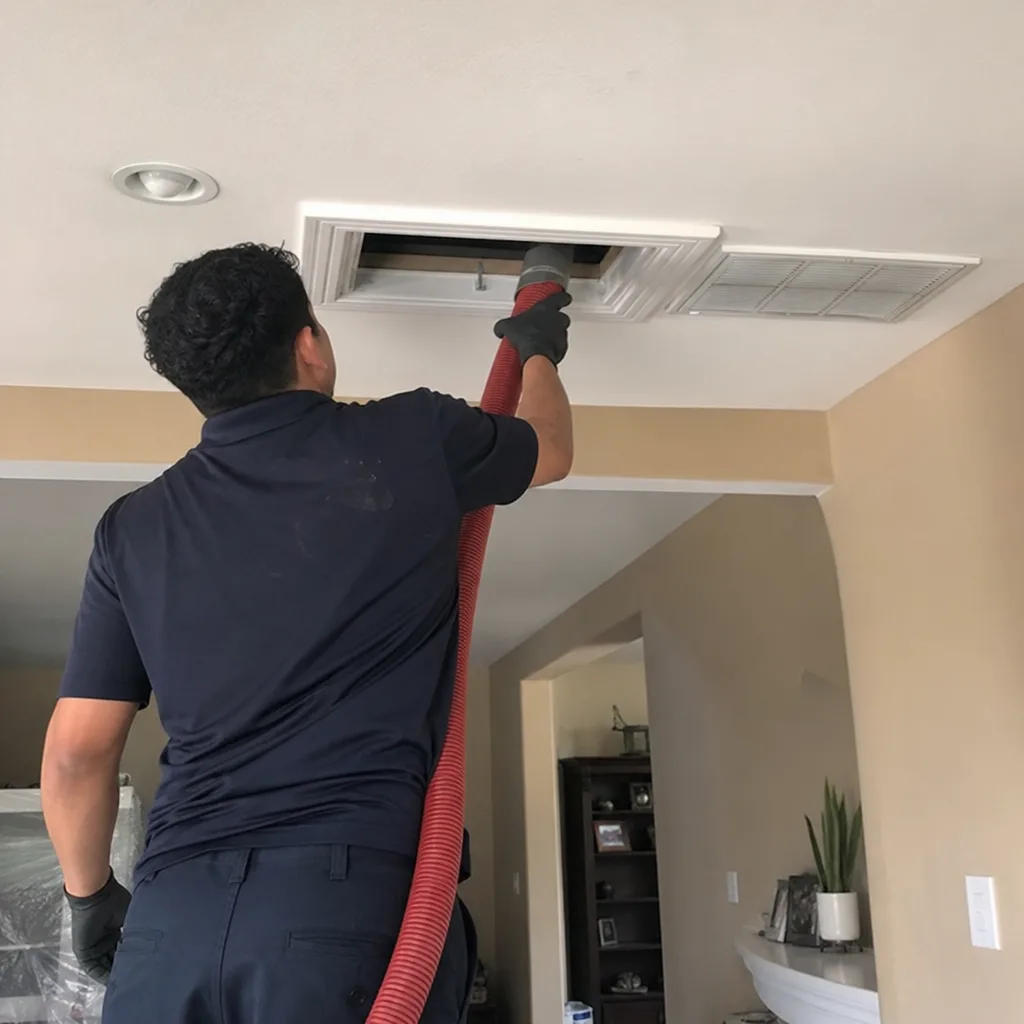
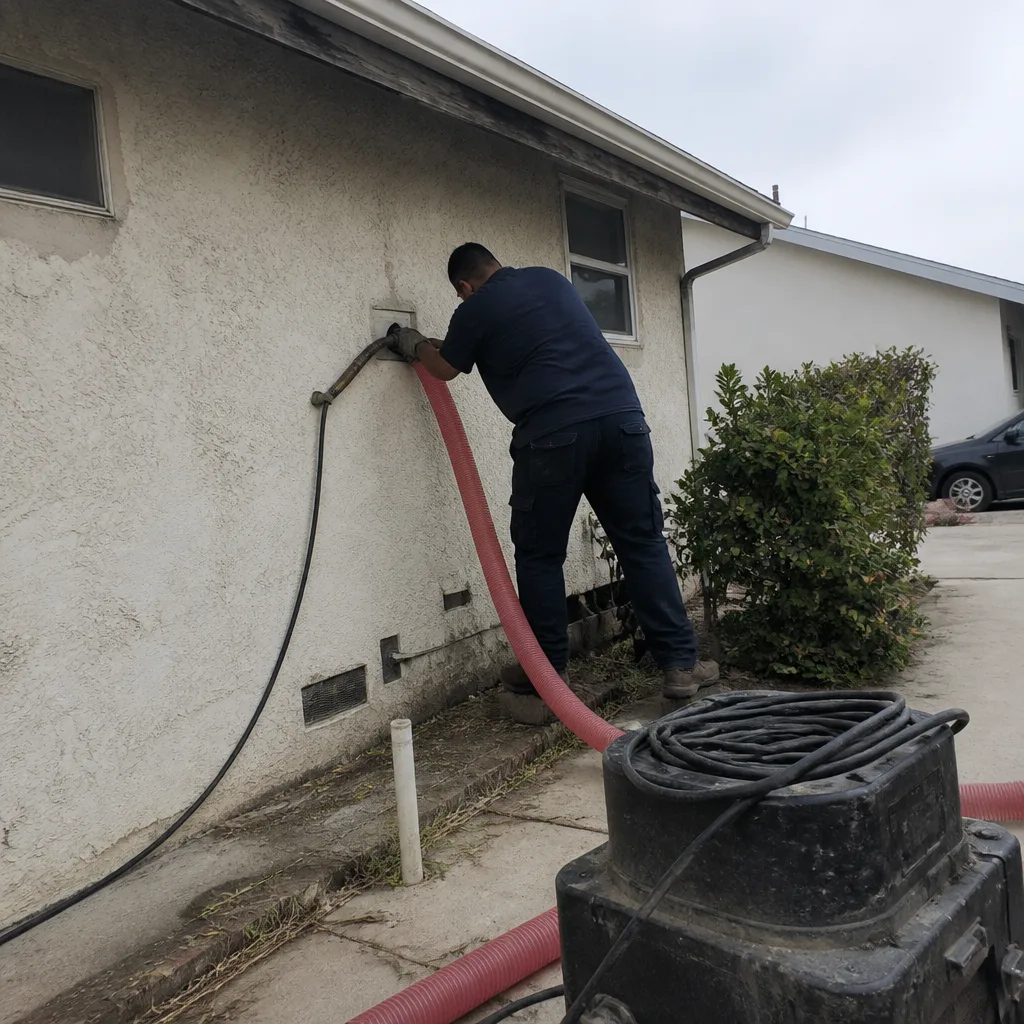
- Look at the hose diameter. If the primary cleaning hose is 4 to 6 inches in diameter, the system is portable-grade. If it’s 10 to 12 inches, you’re looking at a truck-mount or trailer-mount system designed for source removal. The difference is visible from across the driveway. You don’t need to be an HVAC engineer to recognize a vacuum cleaner hose versus a professional duct cleaning hose.
- Check for the negative air machine’s exhaust setup. A properly configured HEPA negative air machine exhausts filtered air outside the home through a window kit or door panel. If there’s no negative air machine and no exhaust setup, whatever gets dislodged during cleaning stays in the home’s air column until it settles back into the ducts or onto surfaces. This is the single biggest difference between a thorough job and a counterproductive one.
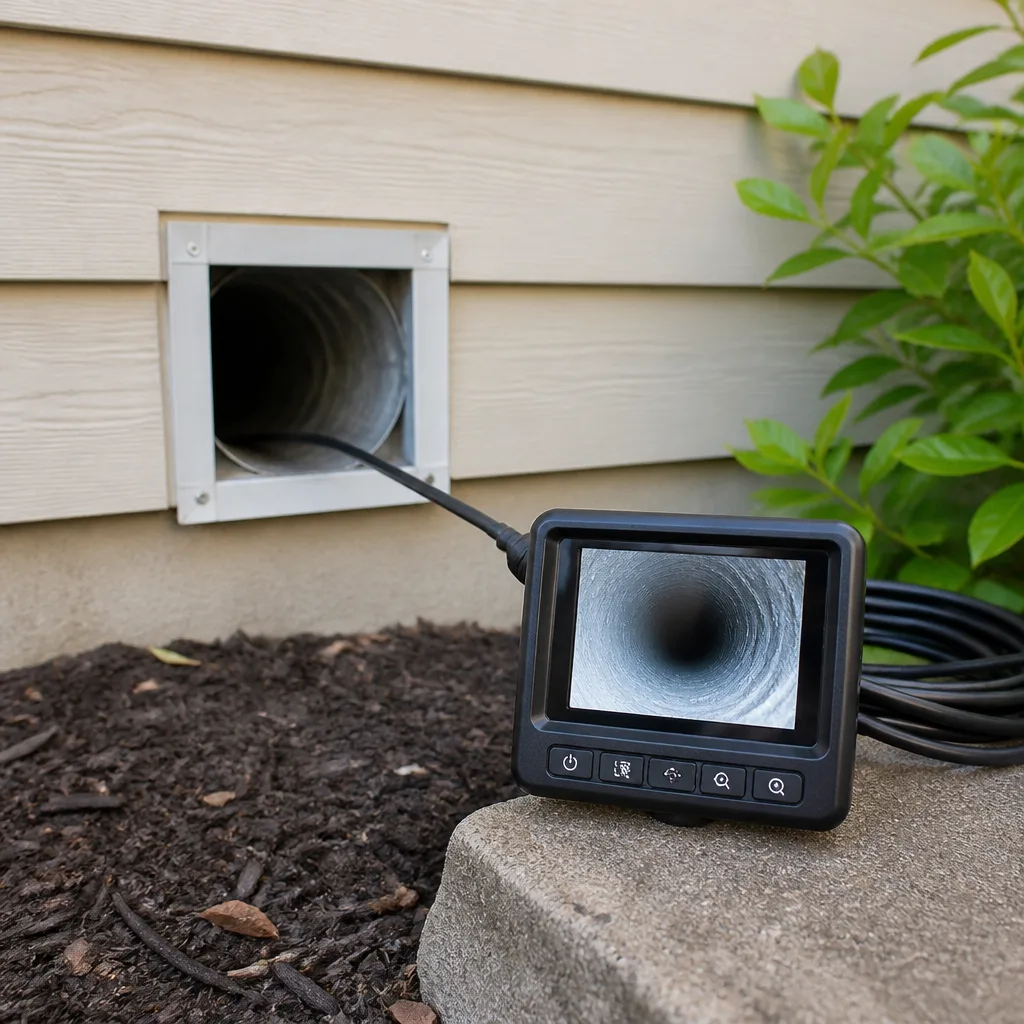
- Look for the inspection equipment. A contractor-grade operator brings a borescope camera or similar inspection tool to document conditions before and after. If the van has no inspection capability, you’ll get a bill and an assertion instead of a bill and documentation. Before-and-after documentation is the standard for ACR-compliant work.
- Notice how the equipment is maintained. A professionally maintained truck-mount system looks maintained: clean hose reels, organized tool storage, filters that aren’t visibly caked with old debris. A liquidation-auction portable unit looks like it’s been through a liquidation auction. The condition of the equipment tells you how it’s been treated, which tells you how your ducts will be treated.
This audit takes 90 seconds and requires no technical knowledge. It’s the fastest way to validate everything a contractor claimed on the phone, and it’s the check that discount operators consistently fail.
Filtration and Negative Air: The Difference Between Cleaning and Redistributing
The core physics issue in duct cleaning is simple: when you agitate debris inside a duct, that debris has to go somewhere. Either it goes into a filtration system designed to capture it, or it goes into the air you breathe.
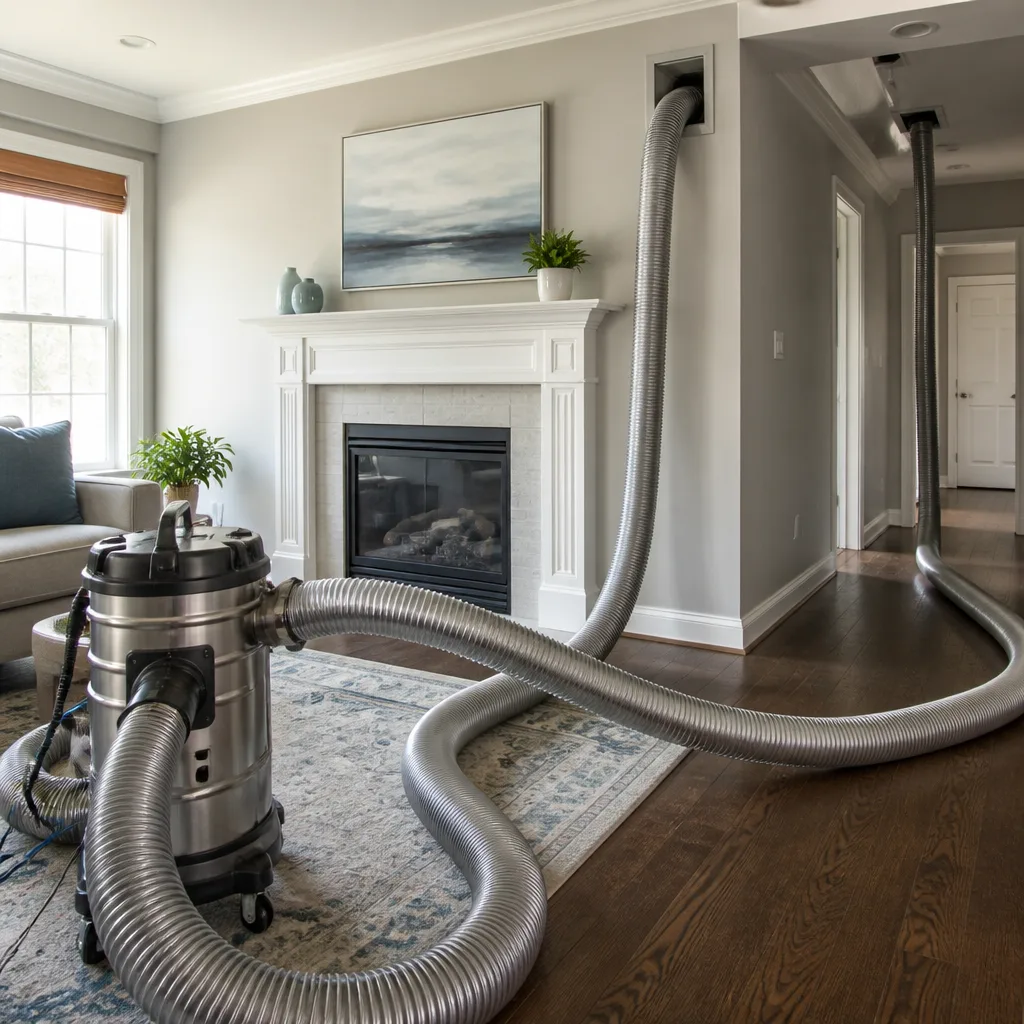
A negative air machine changes the pressure relationship between the duct system and the living space. It pulls air out of the home continuously while the ducts are being cleaned, so the home is at slightly negative pressure relative to the outside. Any debris dislodged during the agitation process gets pulled into the duct system’s airflow path and captured by the machine’s HEPA filtration. The air exhausted back outside is cleaner than the air inside the home was before the job started.
This is not a fancy add-on. It’s the difference between a cleaning job and a particle redistribution job. A portable unit that pushes air into the ducts without negative air containment will knock debris loose and then blow it through the system, some into the home’s living space, some back into the ducts where it will resettle. The homeowner sees an invoice and a temporarily dustier house.
HEPA filter media efficiency is the other half of the equation. True HEPA captures 99.97% of particles at 0.3 microns, which is the size range that penetrates deepest into lung tissue and triggers the most respiratory irritation. “HEPA-type” or “HEPA-style” filters capture a lower percentage at larger particle sizes. The difference is invisible without a printed spec sheet, which is why we told you to ask for the filter’s rating. In Carson, where outdoor particulate from port traffic and freeway corridors works its way into homes, the filtration standard matters more than in cleaner air markets.
Our equipment setup includes Abatement Technologies negative air and HEPA filtration machinery for exactly this reason. It’s the same category of equipment deployed in mold and contaminant remediation, and it’s the reason we can stand behind the claim that our cleaning process removes debris rather than redistributing it.
Cleaning and Repair Under One Roof: Why It Changes the Equipment Conversation
Most duct cleaning companies in Carson are single-service operations. They clean ducts. If they find a separated joint, a disconnected branch line, or a crushed flex duct during the cleaning, they do one of two things: ignore it, or recommend a different contractor to fix it. Either way, the problem remains until someone else schedules a follow-up visit.
There’s a structural reason this happens. Duct repair requires different skills than duct cleaning: understanding static pressure, proper sealing methods, mastic versus tape, local code requirements for duct support. A single-service cleaning company typically doesn’t have a repair technician on staff, and they’re not going to tell you about a problem they can’t fix because it complicates the customer relationship.
Our operation includes Air Duct Repair in Manhattan Beach as a standalone service, and that same capability applies to our Carson work. The equipment implication is direct: a company that repairs ducts as well as cleans them has to maintain a broader range of tools and skills. That changes the incentive structure. When we find a separation or a leak during a cleaning, we don’t have a reason to ignore it, because we can fix it in the same visit. Found during cleaning, fixed the same day. That’s a capability, not a marketing line.
It also changes the assessment process. A cleaning-only operator sees ductwork through a single lens: how dirty is it? A cleaning-and-repair operator sees the system as a system: how dirty is it, where are the leaks, how much conditioned air is being lost, what’s the static pressure doing to the equipment? The same visual inspection yields more useful information when the operator has the capability to act on everything they find.
For homeowners, this matters because duct leakage is a documented energy loss source. The Department of Energy estimates that typical duct systems lose 20 to 30 percent of conditioned air through leaks, holes, and poorly connected segments. A cleaning that ignores those leaks cleans the system but doesn’t fix the system. A cleaning that finds and fixes them addresses both the air quality issue and the efficiency issue in one visit.
Dryer Vent Cleaning: A Separate Job With Its Own Equipment Logic
Dryer vent cleaning gets treated as an afterthought by many duct cleaning companies: a small add-on, a discount bundle, a “while we’re here” line item. The fire risk data says it deserves more respect than that.
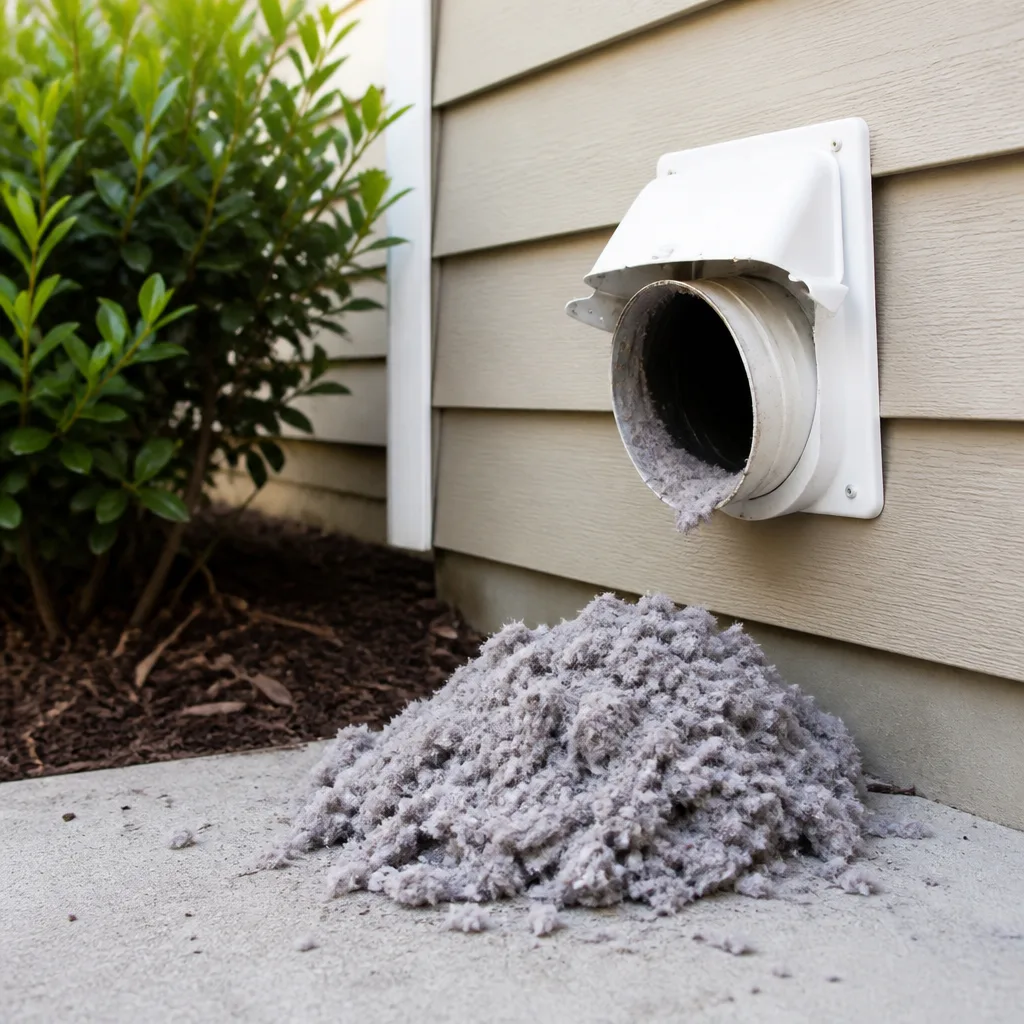
The National Fire Protection Association identifies lint-blocked exhaust venting as the leading cause of residential dryer fires. Lint is combustible, dryers generate heat, and a blocked vent restricts the airflow that carries that heat away. The result is a predictable failure mode that causes thousands of structure fires every year in the United States.
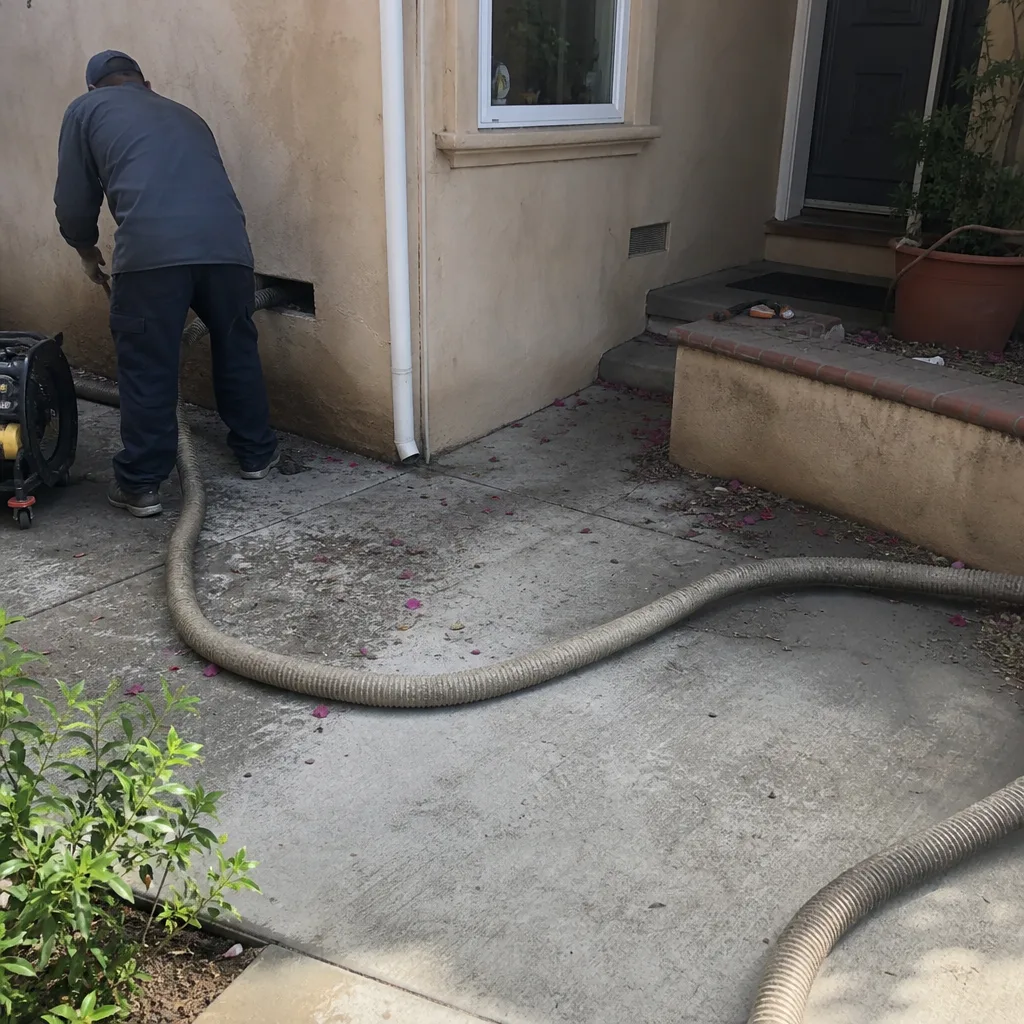
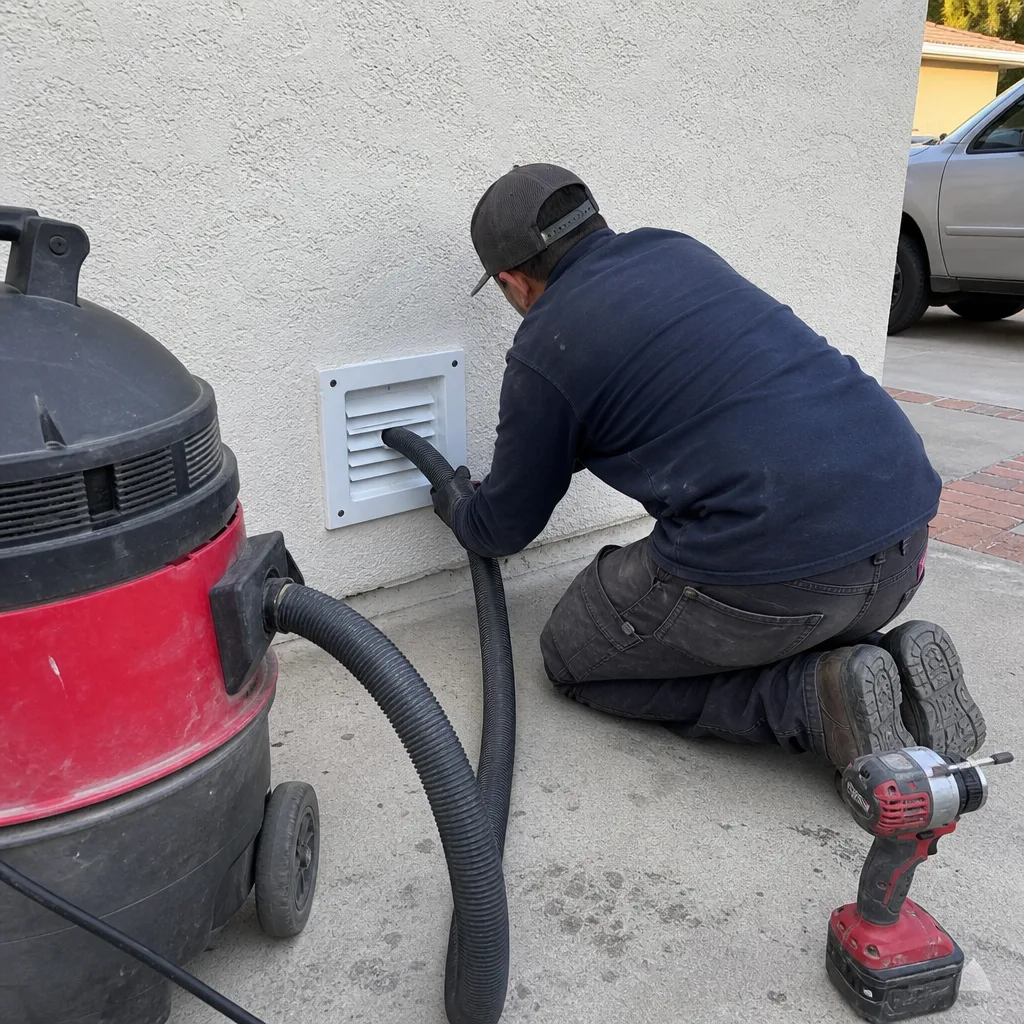
Treating dryer vent cleaning as a serious job means using equipment designed for the specific geometry of dryer exhaust systems: narrow diameter piping, 90-degree turns, exterior terminations with louvered or screened covers. It means running the full vent run with the right agitation tool, not just clearing the first few feet from the dryer connection. It means verifying airflow at the exterior termination before calling the job complete.
Our position on this is straightforward: dryer vent cleaning isn’t a bonus service. It’s a fire-prevention job. We treat it with the same systematic approach we apply to air ducts, using the same negative air principles and documentation standards. If you’re evaluating contractors in Carson, ask whether dryer vent cleaning gets the same equipment commitment as duct cleaning or whether it’s a throw-in. The answer tells you how seriously they take it.
Common Mistakes to Avoid
- Buying the brand name without the equipment spec. “Rotobrush” is not a cleaning result. It’s a manufacturer’s name. A five-year-old portable Rotobrush from a liquidation sale is fundamentally different from a current-model truck-mount Rotobrush with direct-drive motors. Ask for amperage, CFM at operating pressure, and hose diameter before you accept any brand as evidence of capability.
- Treating “NADCA member” as a certification. Membership is not competence. ACR compliance is a process standard. Ask whether the contractor follows the ACR process and what equipment they use to execute it. The answer reveals more than the logo.
- Accepting “HEPA-type” as equivalent to HEPA. True HEPA means 99.97% at 0.3 microns. “HEPA-type” means the filter costs less. If the contractor won’t show you the filter’s printed efficiency rating, assume the lower standard.
- Skipping the truck audit before work starts. Ninety seconds of observation beats twenty minutes of online review reading. Count the machines, check the hose diameter, look for the negative air setup. If it looks like a vacuum cleaner system, it is one.
- Assuming all Carson contractors face the same particulate profile. Homes near the Port deal with diesel soot. Homes under the LAX approach corridor deal with aircraft particulate. Older neighborhoods near Carson Street have aging duct systems with their own contamination history. The right contractor asks about your specific location and adapts accordingly.
- Bundling dryer vent cleaning as an afterthought. Lint-blocked exhaust venting is the leading cause of residential dryer fires. If a contractor treats it as a discount add-on, they’re treating a fire-prevention job like a coupon item. Find a contractor who treats it as a distinct service with its own equipment and process.
When to Call a Professional
Some situations clearly warrant professional assessment. If you’ve lived in your Carson home for three or more years and have never had the ducts cleaned, schedule an inspection. If you notice visible dust accumulation on vent covers, or if you can see debris inside return registers when you remove the cover, that’s a signal the system is circulating contamination. If you’ve recently completed renovation work, construction dust has likely infiltrated the duct system and needs source removal, not just surface cleaning. If anyone in the home has persistent respiratory irritation that improves when they’re away from the house, the duct system may be a contributor. And if your dryer vent hasn’t been cleaned in over a year, or if drying times have increased noticeably, schedule a dedicated dryer vent service. Duct Cleaning Carson offers free estimates in Carson, call (866) 569-6170.
Frequently Asked Questions
Choose based on equipment lineage and process, not marketing. Verify that the contractor uses contractor-grade cleaning systems with true HEPA filtration, negative air capability, and 10-inch or larger primary hose. Ask the five technical questions: motor amperage draw, CFM at operating pressure, HEPA filter media efficiency rating, hose diameter, and equipment supplier. In Carson, the density of legitimate remediation-grade contractors means you can be selective without sacrificing availability.
Cheaper quotes typically reflect cheaper equipment: portable units with 4-inch hose, basic filtration bags instead of true HEPA, and no negative air machine. The operator’s cost structure is lower because their equipment investment is lower and their process skips the containment and filtration steps that define a thorough job. The lower price is not a discount on the same service. It’s a different service with the same industry label. Call (866) 569-6170 for an honest quote based on the equipment and process we actually use.
A contractor-grade duct cleaning operation should arrive with two distinct equipment categories: a source removal cleaning system (Rotobrush, Nikro, or equivalent) and a negative air machine with true HEPA filtration (Abatement Technologies or equivalent). The primary cleaning hose should be 10 inches or larger in diameter. The system should include inspection equipment for before-and-after documentation. Anything less is a surface-level cleaning regardless of what the invoice says.
Request before-and-after inspection documentation. A contractor following the ACR standard will document conditions with a borescope camera before cleaning, then document again after. You should be able to see the difference in the images. If the contractor doesn’t offer documentation or won’t commit to post-cleaning visual verification, treat that as a red flag.
It should be treated as a separate service with its own equipment and process. Lint-blocked exhaust venting is the leading cause of residential dryer fires according to the National Fire Protection Association. The vent geometry differs from ductwork: narrower diameter, more 90-degree turns, exterior terminations with louvered covers. A thorough dryer vent cleaning runs the full vent run with the right agitation tool and verifies airflow at the exterior termination. If a contractor offers it as a bundle discount, ask whether the full vent run gets cleaned or just the first few feet.
Only if the inspection finds problems, but those problems are common: separated joints, disconnected branch lines, crushed flex duct, leaking connections. Most cleaning-only companies won’t mention these issues because they can’t fix them. A company that offers air duct repair as a standalone service has no incentive to ignore what the inspection reveals. Problems found during cleaning should be fixable during the same visit. That’s the benefit of a contractor with both capabilities.
The Bottom Line
The brand question in air duct cleaning is really an equipment lineage question. Contractor-grade machinery comes from industrial remediation supply chains, where it’s designed for contaminant control in occupied spaces. Consumer-grade machinery comes from janitorial supply chains, where it’s designed for light-duty surface cleaning. In Carson, the difference is visible, verifiable, and consequential. Before you book a company, ask the five technical questions, perform the 90-second truck audit, and verify the filter and hose specs. The company that answers clearly and shows up with serious equipment is the company that does serious work. Duct Cleaning Carson operates Rotobrush and Nikro cleaning systems with Abatement Technologies HEPA and negative air machinery. We offer air duct cleaning, dryer vent cleaning, and air duct repair in Carson. Call (866) 569-6170 for a free estimate.
Written by the team at Duct Cleaning Carson, serving Carson since 2011.
See the difference
 Before
 After
 Before
 After
 Before
 After