
Last updated November 2, 2026
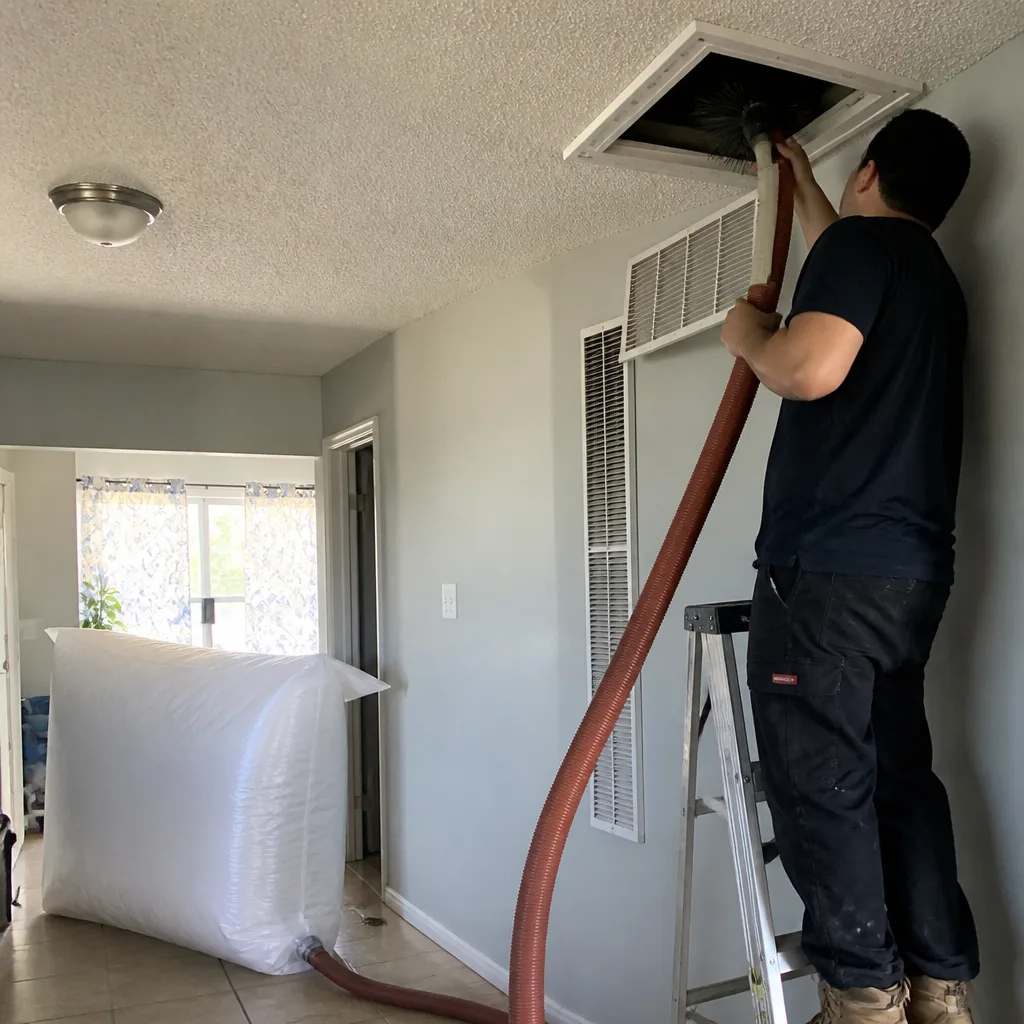
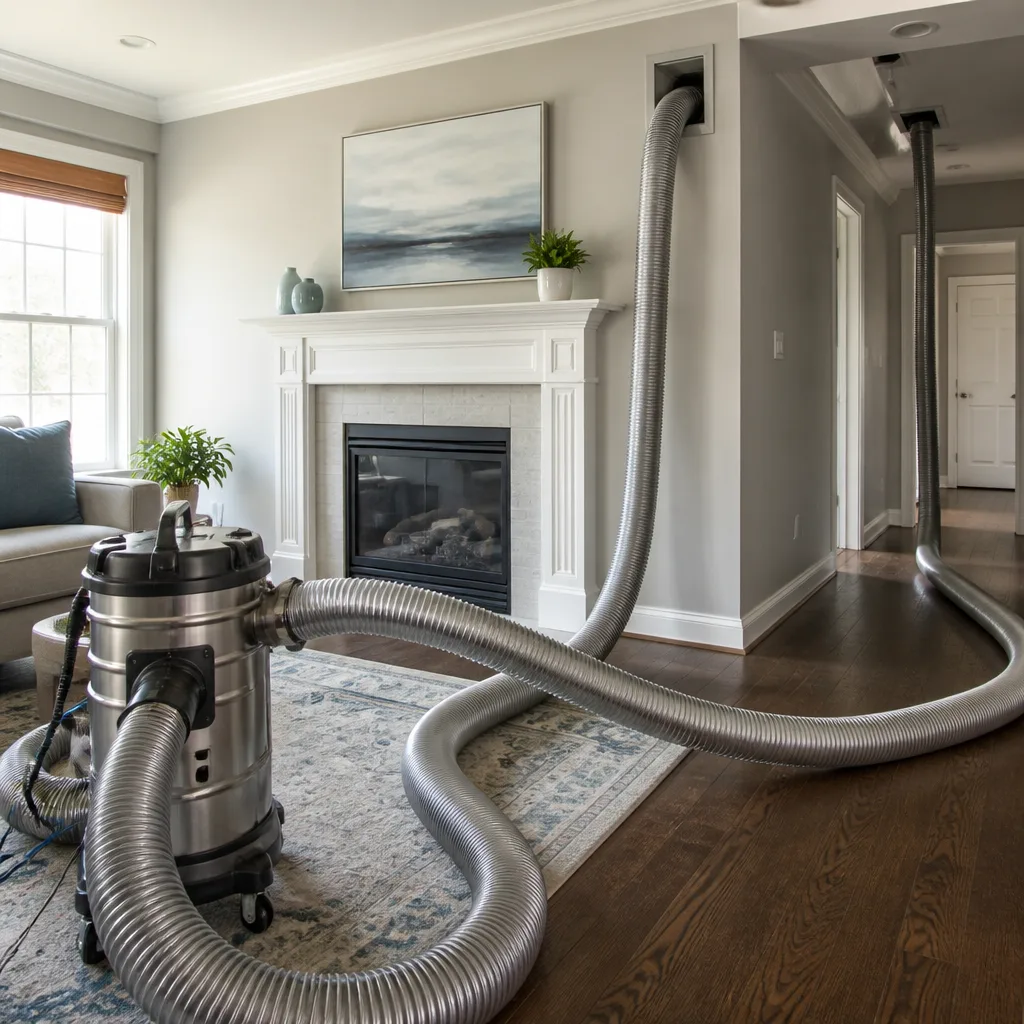 Whole-home duct cleaning
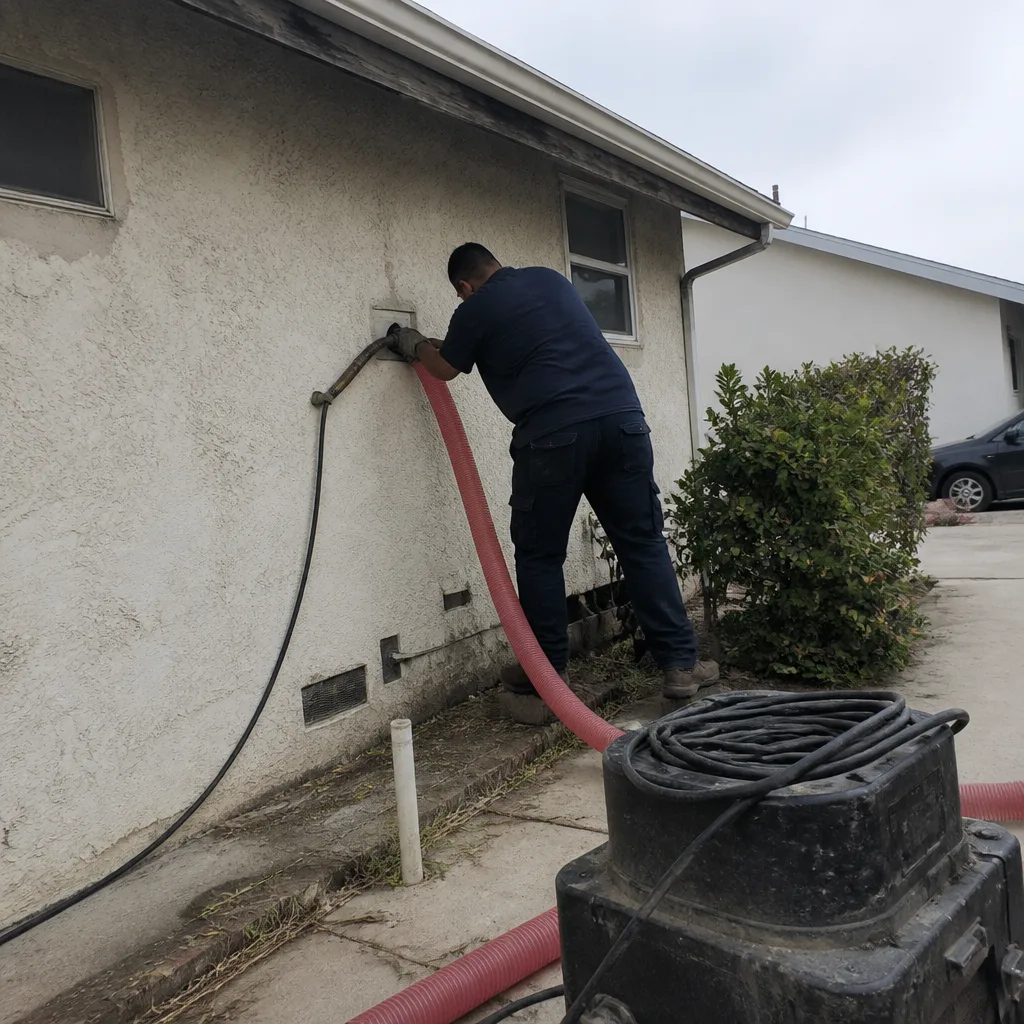
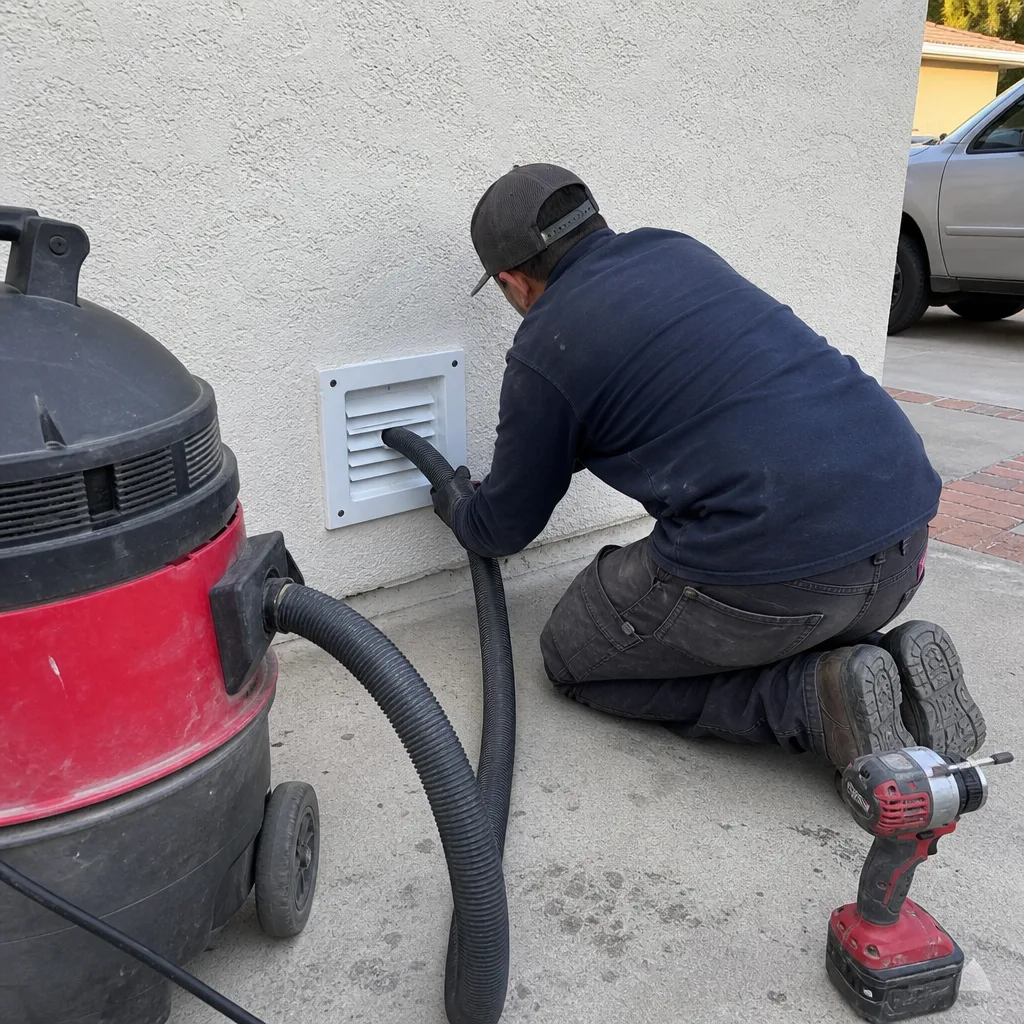
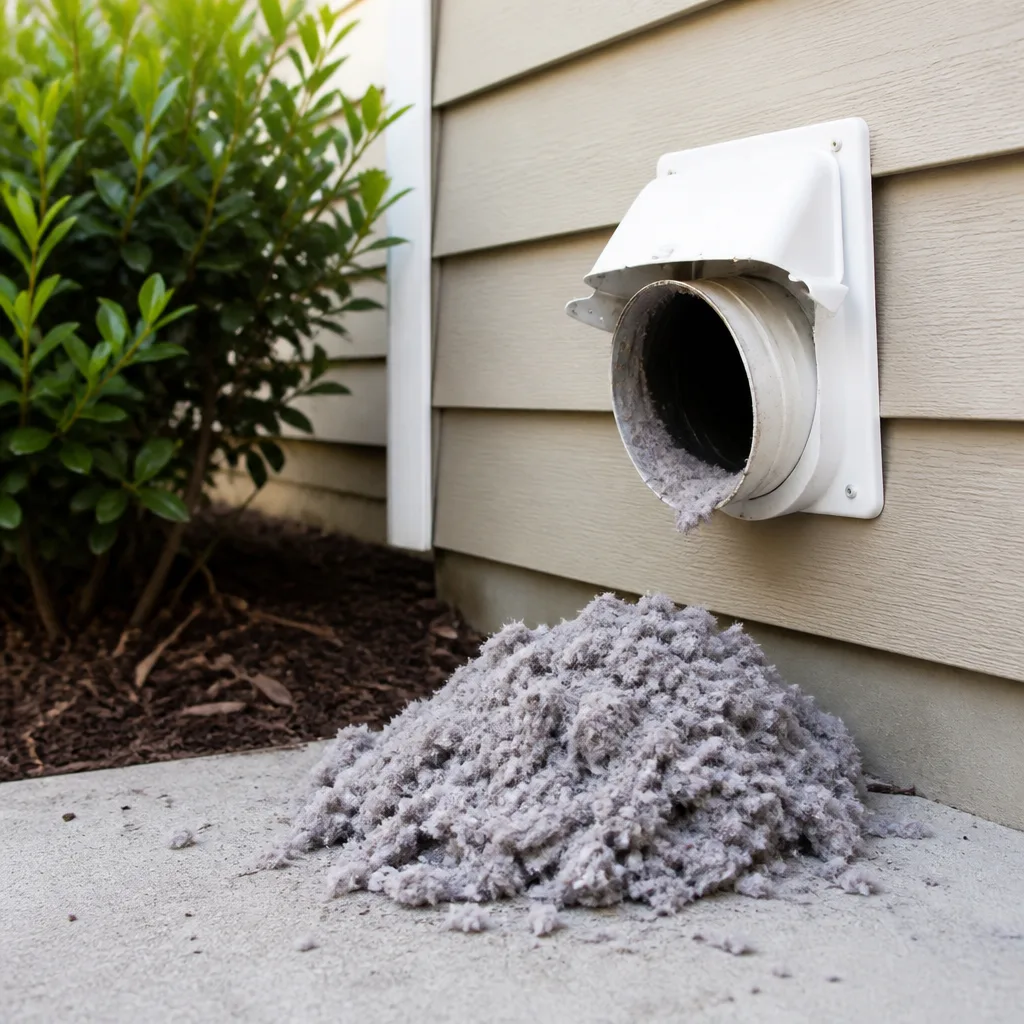 Dryer vent cleaning
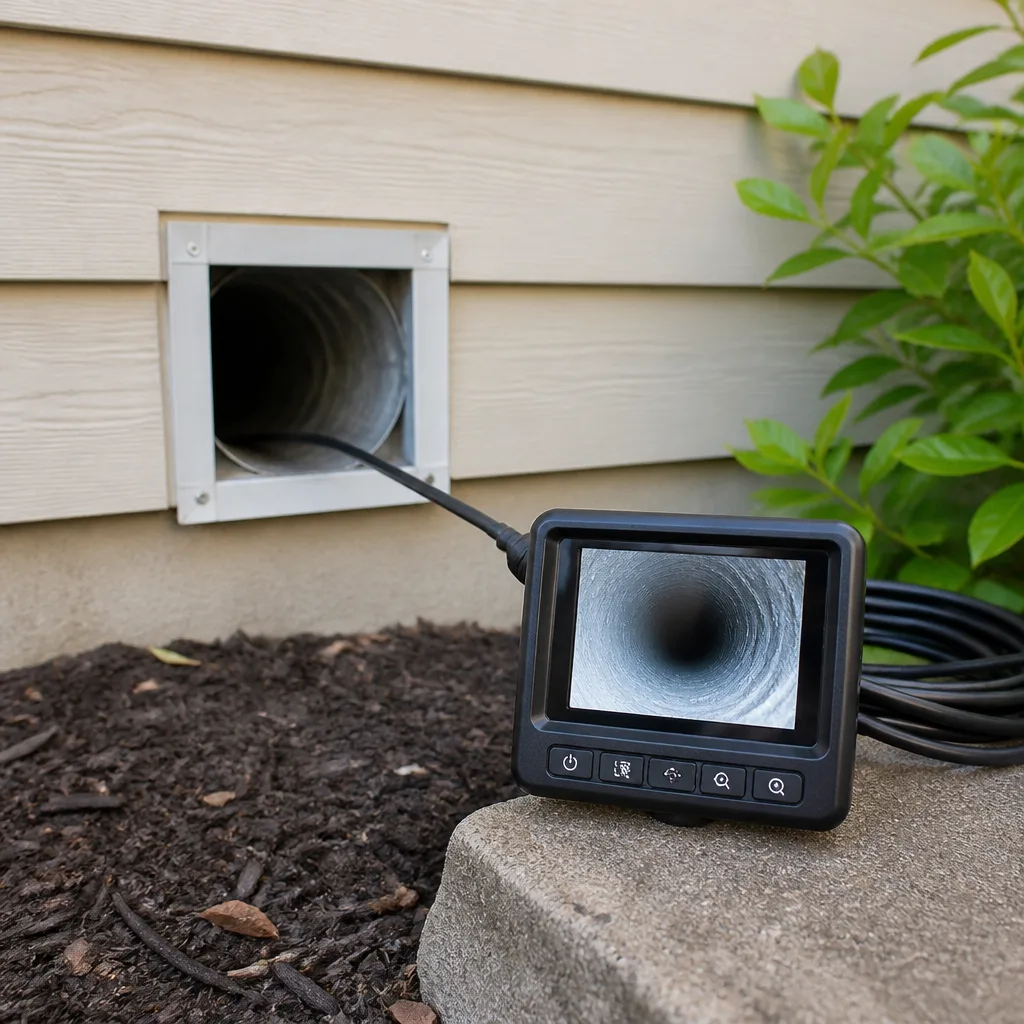 Camera inspection
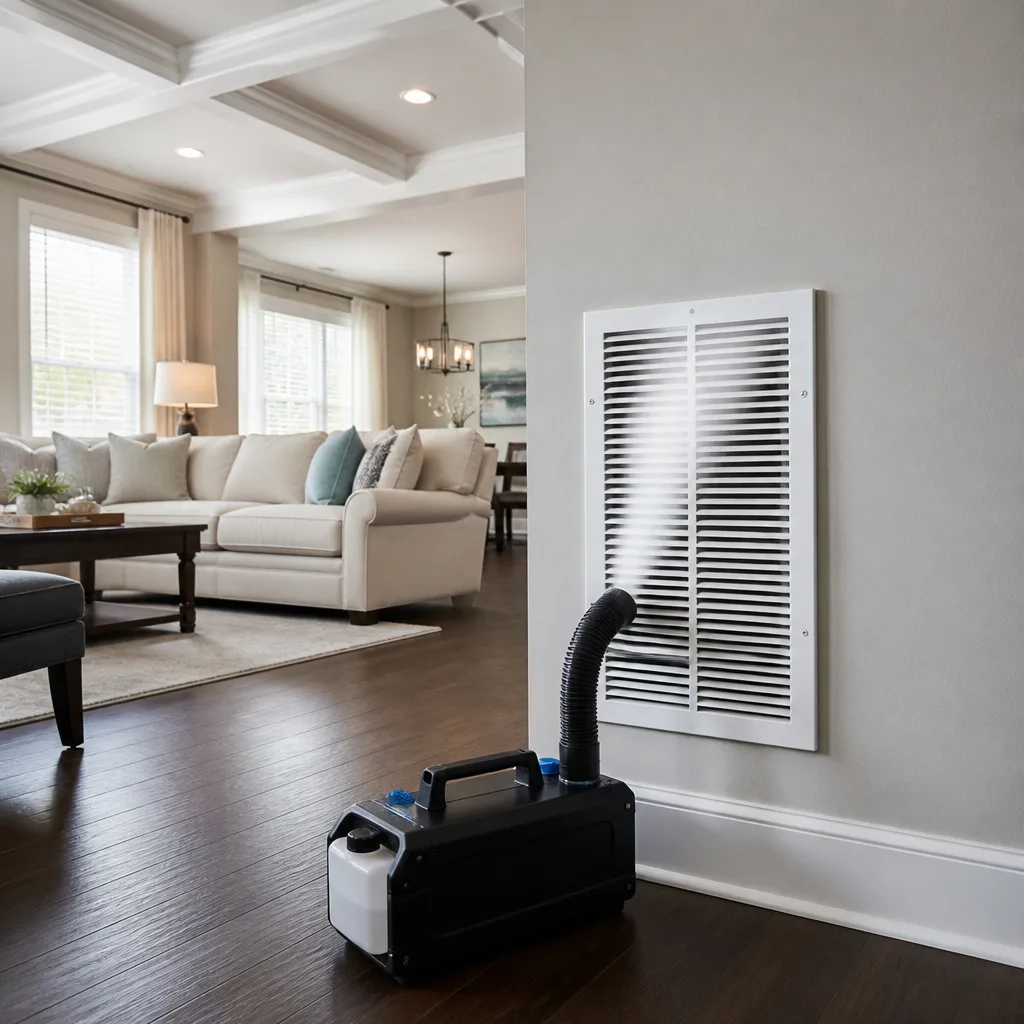 Sanitizing & deodorizing
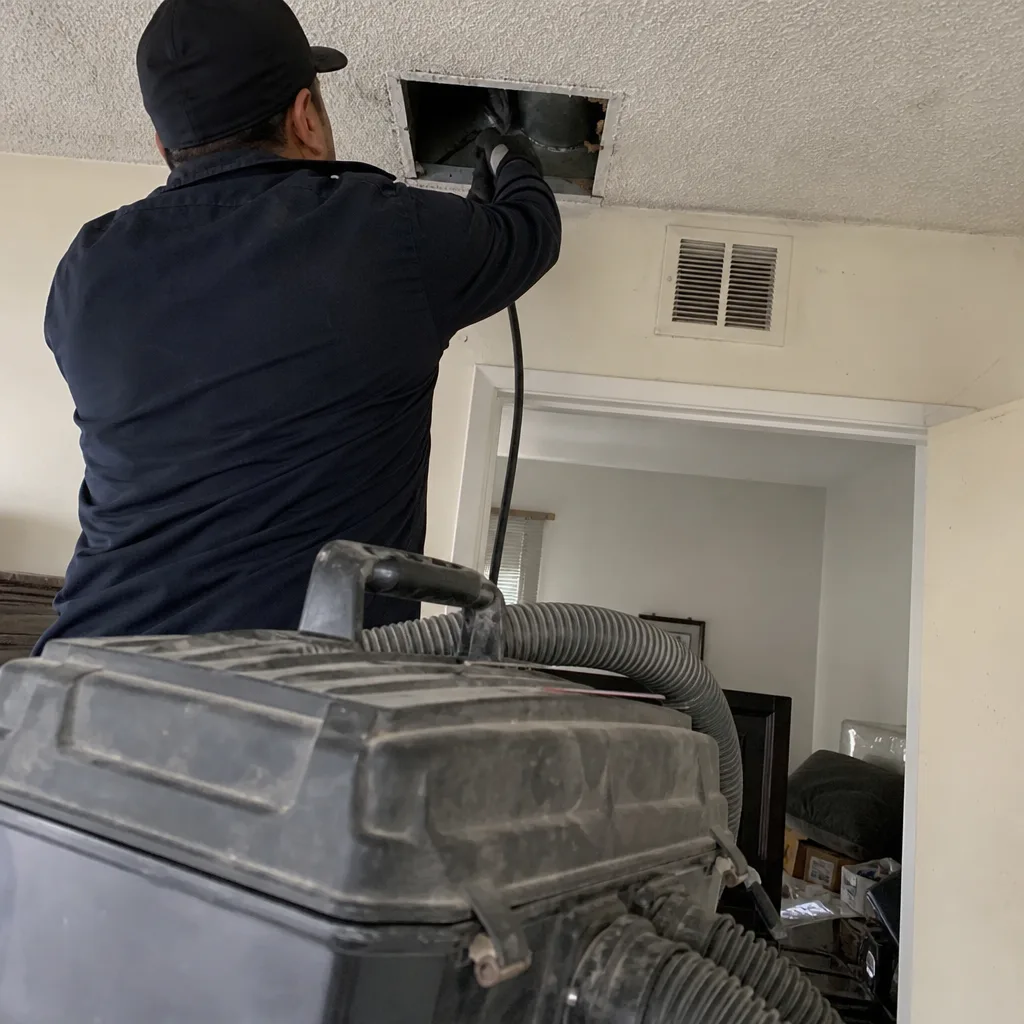
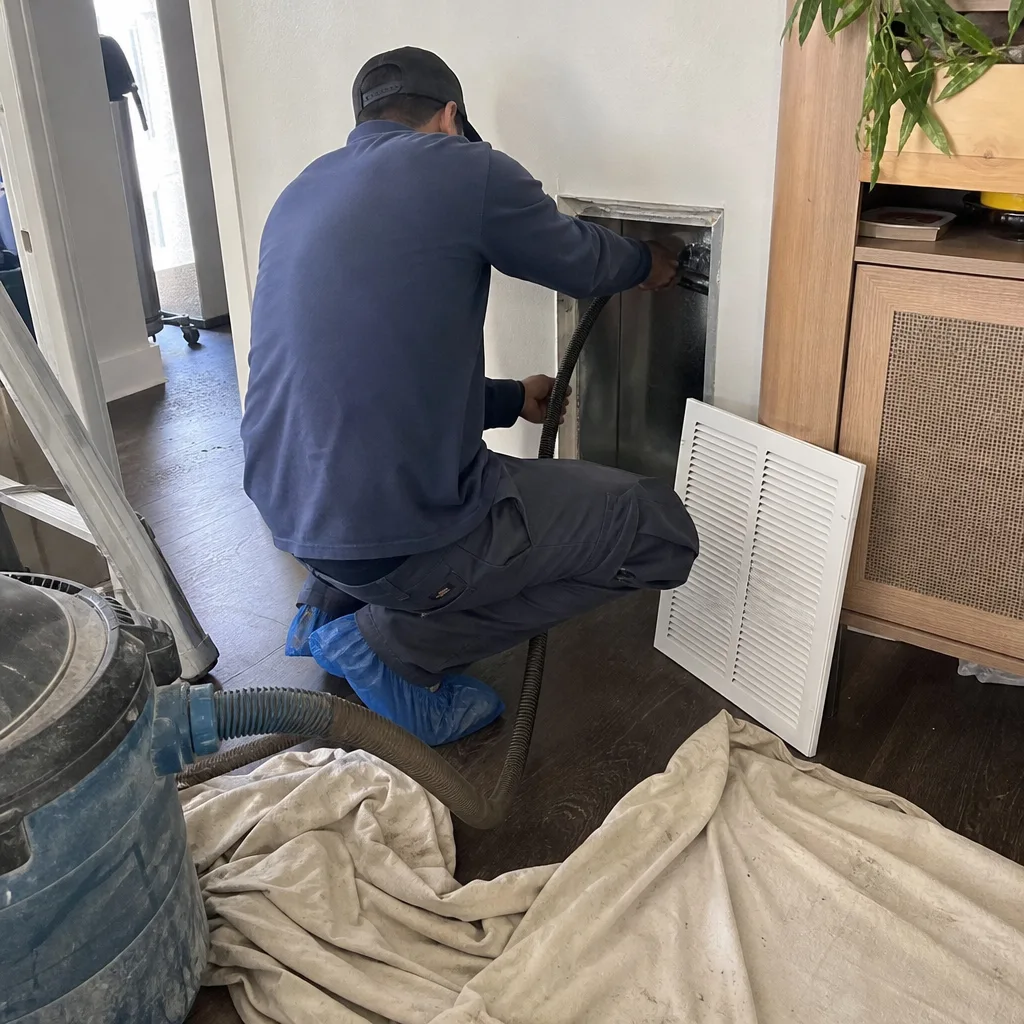
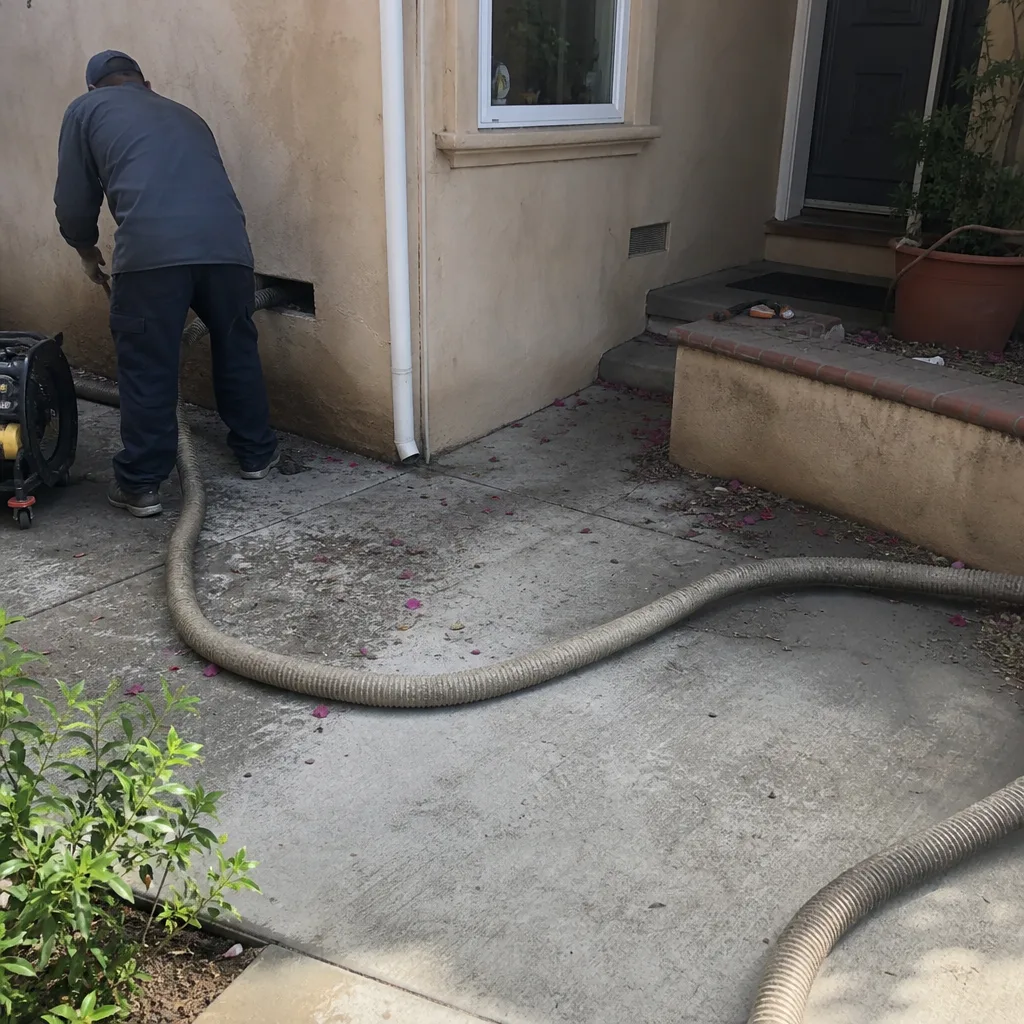
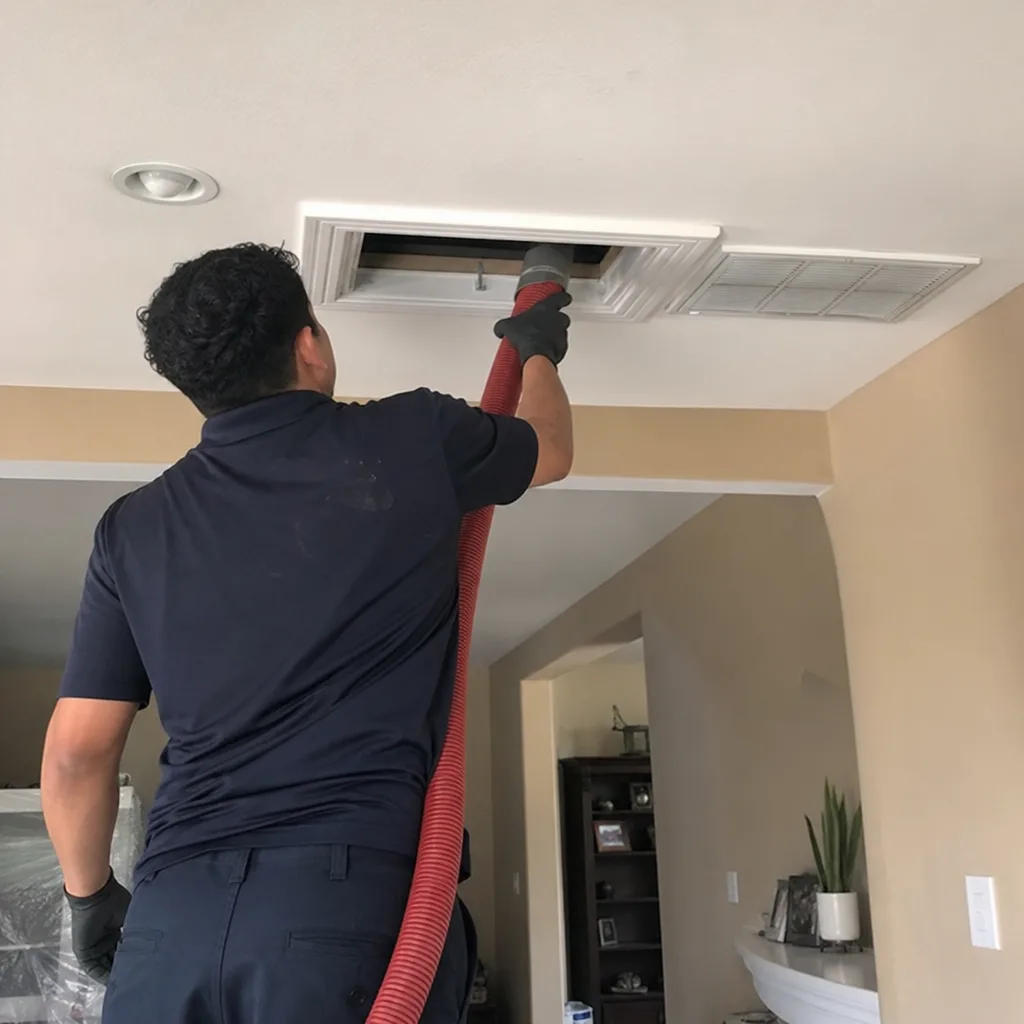
Whole-system duct and dryer vent check with before-and-after photos - you see exactly what came out of your vents
That "$99 whole-house special" is a bait ad - the real number appears once they are in your hallway, or the "clean" is a shop-vac at the register. We photograph the inside of your ducts before and after instead.
Air Duct Cleaning Maintenance Checklist for Carson Homeowners
Here’s a pattern we see at least twice a month in Carson: a homeowner pays for a professional air duct cleaning, enjoys a few weeks of noticeably lighter dust on the furniture, and then quietly stops thinking about the duct system until the next time the HVAC acts up. The month after a professional cleaning is when most homeowners stop paying attention, which is exactly when the conditions that caused the buildup start resetting. This guide builds a maintenance rhythm around observable, measurable indicators you can track yourself in Carson’s specific climate, between professional cleanings, before small degradation compounds into an HVAC problem.
Quick Answer
An effective air duct cleaning maintenance checklist for Carson homeowners includes monthly filter loading checks and register airflow comparisons, quarterly inspections of attic flex duct connections ahead of coastal temperature swings, semi-annual visual inspections of supply and return plenums, and an annual pre-service documentation routine. Homes within two miles of the 405/110 interchange corridor, or those occupied by residents with respiratory sensitivities, should increase filter checks to twice monthly. The goal is not to replace professional cleaning but to catch the duct degradation that occurs between visits, when the clock is already ticking on the next round of buildup.
Styles & brands we work with
- Whole-home duct cleaning
- Dryer vent cleaning
- Camera inspection
- Sanitizing & deodorizing
Table of Contents
- The Monthly Homeowner Checklist: Filters, Airflow, and Register Faces
- Quarterly Tasks for Carson’s Climate: Flex Duct Connections and Attic Exposure
- How to Log System Performance Data as a Duct Efficiency Proxy
- Why Carson’s Particulate Corridor and Santa Ana Events Should Accelerate Your Frequency
- Annual Pre-Inspection Preparation: What to Clear, Document, and Photograph
- Observable Signs of Duct Degradation Between Professional Cleanings
- Common Mistakes to Avoid
- When to Call a Professional
- Frequently Asked Questions
The Monthly Homeowner Checklist: Filters, Airflow, and Register Faces
The monthly routine is the diagnostic heartbeat of this maintenance rhythm. It takes roughly ten minutes, requires no tools beyond your eyes and hands, and gives you a baseline against which every future observation is measured. The three components are filter loading rate, supply register airflow symmetry, and visible register face discoloration. Each one tells you something different about what is happening inside the duct system.
1. Filter loading rate. Remove the return air filter and hold it up to a light source. A filter that blocks a clean view of the bulb after thirty days in Carson is loading faster than the system was designed for. This is not a filter problem; it is an airflow problem. Accelerated loading means your ducts are pulling in particulate from somewhere: a disconnected return run in the attic, a gap in the return plenum, or a home envelope that is leaking exterior air into the conditioned space. We have seen Carson homes near Alameda Street load a MERV 8 filter to capacity in under three weeks during the summer, when windows stay closed and the system cycles constantly. If your filter is hitting that level, the filter is doing the work your duct seals should be doing.
2. Supply register airflow symmetry. Walk the house and hold the back of your hand against each supply register while the system is running. Do not hunt for a precise measurement; you are looking for a relative difference. A register in one bedroom that feels noticeably weaker than the register in the adjacent bedroom, despite both doors being open, indicates a restriction or separation somewhere in that branch run. In Carson’s older housing stock, particularly the single-story homes built before 1980 around the Civic Center area, we commonly find branch runs that have sagged or separated at the takeoff collar in the attic. The airflow difference you feel at the register is often the first symptom.
3. Register face discoloration. Look at the face of each supply register. In Carson, register discoloration occurs in two distinct patterns. Gray-black streaking radiating from the vent slots indicates particulate being deposited by the conditioned air itself, meaning the ducts downstream of the filter are carrying something they should not be. Rust-colored spotting around the perimeter of the register face indicates condensation at the boot, which is a temperature differential problem that often traces back to a poorly sealed boot-to-drywall connection in the attic. Both patterns are worth logging. Either one tells you that the duct system is interacting with its environment in a way it should not be.
These three observations, performed consistently on the first weekend of each month, give you a rolling picture of your duct system’s health. None of them requires any technical skill. All of them require consistency, because the individual data points matter less than the trend they form over six to twelve months. The goal is not to fix anything yourself; it is to know when the system has changed enough to warrant a professional look. If you are unsure what the observations mean, our guide to Air Duct Cleaning in Manhattan Beach explains the full-service process in detail for nearby coastal homes.
Quarterly Tasks for Carson’s Climate: Flex Duct Connections and Attic Exposure
Carson’s climate creates a specific quarterly maintenance requirement that homeowners in more temperate inland areas do not face. The issue is expansion fatigue in flex duct connections. Flex duct is the flexible, insulated tubing that connects the main trunk line to individual supply registers. It is held in place at each end by either a plastic zip tie or, in older installations, a metal band clamp. The connection points are the weakest part of the entire duct system.
Here is what happens in Carson specifically. The city sits in a coastal microclimate where overnight temperatures in the attic can swing twenty to thirty degrees between day and night, particularly during the spring and fall shoulder seasons. That repeated thermal expansion and contraction works the connection points like a hinge. The outer insulation jacket stretches, the inner liner pulls away from the takeoff collar, and the connection that was airtight when the system was installed becomes a slow leak of conditioned air into a 120-degree attic. We see this most often in homes where flex runs were installed in the late 1990s and early 2000s, a period when Carson saw significant residential development south of the 405.
The quarterly check does not require you to climb into the attic. It requires a visual inspection from the access point and a set of observations you can perform from inside the living space.
- Locate your attic access. In most Carson homes, it is a hatch in a hallway ceiling or a garage ceiling. You do not need to enter the attic; you need to be able to see into it with a flashlight.
- Inspect what you can see. Look for flex duct runs that are sagging noticeably between support straps. A run that drops more than a few feet between supports is pulling on its connection points. Look for disconnected insulation jackets, exposed inner liners, or any run that appears to be touching the attic floor or roof decking.
- Check the register boots from inside the house. Remove each supply register cover (two screws, typically) and look at the transition where the flex duct meets the boot. Dust streaks on the outside of the boot, or visible gaps between the flex inner liner and the boot collar, indicate a connection that has separated.
- Listen during system startup. On a quiet morning, stand in the hallway and have someone turn the system on. A soft but audible “whoosh” that lasts for several seconds, or a faint whistling sound that was not there six months ago, can indicate air escaping from a loose connection rather than traveling through the register.
If you see a separation, do not climb into the attic to repair it yourself. Flex duct connections in a hot attic are awkward to work on, and a poorly attempted repair with duct tape will fail within a season. The reason we highlight Air Duct Repair in Manhattan Beach as a distinct service category is because this type of connection failure is exactly what a cleaning-only crew cannot address. A cleaning visit that discovers a separated flex connection and then leaves it in place is a partially completed job. The repair should happen in the same visit.
How to Log System Performance Data as a Duct Efficiency Proxy
Here is a technique almost no homeowner uses, and it is one of the most useful early indicators of duct degradation available. The idea is simple: your air conditioner is a fixed-output machine. When it runs, it removes a predictable amount of heat from the conditioned air based on the system’s capacity. When that conditioned air leaks out of a separated duct connection in the attic instead of reaching the living space, the system has to run longer to achieve the same temperature change. Logging runtime per degree of temperature change gives you a continuous, year-round proxy for duct efficiency without touching a single component.
The method requires nothing but a notebook and a thermometer, and it works like this:
- Pick a standard measurement window. The most useful window is the afternoon cool-down cycle, when the outside temperature is at its daily peak and the system is working hardest. Log the same window each time: for example, 3:00 PM to 5:00 PM on a weekend afternoon.
- Record the starting and ending indoor temperature. Note the thermostat setting and the outside temperature at the same time, so you are comparing apples to apples across different seasons.
- Track system runtime. This is the part that requires attention. Most thermostats do not display system runtime directly, but you can infer it by logging the times when the system cycles on and off. A simpler method: note the time when the system starts a cooling cycle and the time when the thermostat reaches the set point and the cycle ends. That cycle duration, measured against the temperature drop achieved, is your baseline.
- Log the same measurement each month. Over time, you will see a baseline cycle duration. A system that took 45 minutes to drop the house from 78 to 72 in July should take a similar 45 minutes the following July, assuming similar outdoor conditions. If the cycle time starts creeping upward, 45 minutes becomes 55, then 65, the system is working harder to achieve the same result. That extra runtime is not free; it is the energy cost of conditioned air escaping into the attic through a failing duct connection.
We mention this technique because it gives You, the homeowner, a way to observe duct system degradation without specialized instruments. A professional diagnostic, the kind we perform with our Rotobrush and Nikro inspection systems, will identify the location and cause of the leak with precision. But the runtime log tells You that a problem exists, and it tells you this months before the problem manifests as a failed cooling system on the hottest day of the year. Carson’s summer temperatures regularly push systems to their limits; a duct system that is losing fifteen percent of its conditioned air to the attic will show up in your runtime log long before it shows up in your July utility bill. For homeowners in nearby coastal communities, we outline a related diagnostic approach in our guide to Dryer Vent Cleaning in Manhattan Beach, where the same observational discipline applies to a different air path.
Keep the log simple. A spiral notebook with four columns: date, outside temp, cycle duration, temp drop achieved. That is it. Do not obsess over precision; the trend over eight to twelve months is what matters, and a consistent trend of longer cycle times for the same work is a clear signal to schedule an inspection.
Why Carson’s Particulate Corridor and Santa Ana Events Should Accelerate Your Frequency
Carson’s air quality profile is not uniform across the city. Homes in the northern quadrant, particularly those between Avalon Boulevard and the 110 interchange, sit in what is effectively a particulate corridor. The 405/110 interchange, one of the busiest truck and commuter corridors in the county, moves hundreds of thousands of vehicles per day within a few miles of residential neighborhoods. Diesel particulate matter, brake dust, and tire-wear particles are generated continuously, and the predominant onshore flow carries that particulate inland across the northern half of the city. A home in this corridor is ingesting a measurably higher particulate load through its return air stream than a home in the southwestern residential streets near Victoria Golf Course.
This is not a generalized statement; it is observable in filter loading. Filters in the corridor homes load to capacity in two to three weeks during periods of heavy traffic and stagnant air. The same filters in homes further south, closer to the Dominguez Channel, show meaningful capacity at six to eight weeks. The implication for your checklist is straightforward: if you live north of Carson Street and east of Main Street, your monthly filter check should become a twice-monthly check, and your quarterly visual inspections should be done every six to eight weeks instead.
I mentioned Santa Ana events. These are the episodic wind events, typically in the fall, when offshore flow reverses the normal onshore pattern and pushes hot, dry air from the desert toward the coast. For Carson, this means two things. First, the air arriving from the east carries fine particulate from the inland valleys. Second, the low humidity and high wind speed cause static electricity, which makes that particulate cling more readily to filter media, duct surfaces, and register faces. A duct system that was professionally cleaned in August can show noticeable interior particulate deposition by November if a significant Santa Ana event passed through in the interim.
What this means for your checklist is simple but too rarely applied: after a Santa Ana event, spend ten minutes walking through the house and checking register faces for new discoloration. The wind event acts as a stress test. If your duct system is well-sealed, the registers should look essentially unchanged. If they show fresh gray streaking, the ducts are admitting particulate-laden air from somewhere, and you can log that observation as a reason to move your next professional cleaning forward. This is the kind of local adjustment that no template checklist from a national source accounts for, and it is exactly the kind of local knowledge that should be built into your routine if you live in Carson.
Annual Pre-Inspection Preparation: What to Clear, Document, and Photograph
When you do schedule a professional cleaning, the value you receive from the visit depends in part on the preparation you do beforehand. This is not because the contractor requires it; it is because a prepared homeowner can direct the inspection toward the specific observations they have logged over the past twelve months. Here is our recommended annual preparation routine, built around the idea that your maintenance log is the agenda for the service visit.
1. Clear access to the returns and registers. Move furniture away from return air grilles. The primary return, usually located in a central hallway or living room wall in Carson homes, is the point where the cleaning system connects to the ductwork. If the contractor cannot access it, the entire service visit is compromised. This seems obvious, but we regularly arrive at homes where a sofa or bookcase must be moved before work can begin. Ten minutes of preparation saves service time and ensures the technician can focus on the ducts, not the furniture.
2. Clear a path to the attic access and the HVAC equipment. In many Carson homes, the attic access is in a garage ceiling or hallway, and it is easy to overlook that the area beneath it has accumulated storage boxes. A clear path means the technician can access the duct runs without moving your stored possessions.
3. Document your observations. This is the step that separates a routine cleaning from a diagnostic service visit. Take your maintenance log and write a one-page summary: filter loading rate, any register discoloration observed, any airflow imbalances noted, any unusual sounds, and any runtime observations from your performance log. A technician who receives this information at the start of the visit can direct their inspection toward the specific issues you have observed, rather than spending the first portion of the visit establishing a baseline from scratch.
4. Photograph anything you saw during your quarterly checks. If you noticed a sagging flex duct from the attic access, photograph it before the visit. If you saw register face discoloration, photograph the register with the cover on and off. These photographs are useful in two ways: they give the technician a visual reference before the cleaning starts, and they provide a before-and-after record for your own documentation. This latter point matters more than most homeowners realize, because a professional cleaning job should produce visibly different conditions at the registers and returns if the ducts were actually the source of the buildup.
5. Prepare to be present for the first fifteen minutes. You do not need to hover, but a brief conversation at the start of the visit, where you walk through your log with the technician and show them the photographs, makes the service materially more productive. We do not require this, but when it happens, the resulting service is more targeted, and the homeowner gets more useful information about their specific system.
This preparation routine is not a requirement for our service; we conduct a full inspection regardless of what the homeowner has prepared. But when you have been running the monthly and quarterly checks described in this guide, the annual visit becomes a collaboration, and the service technician can do more useful work in the same amount of time. The same principle applies to the related Air Duct Cleaning in Manhattan Beach service we provide for coastal homes with similar preparation recommendations.
Observable Signs of Duct Degradation Between Professional Cleanings
Your checklist is only as useful as your ability to interpret what you observe. Here are the specific signs, observable from inside your living space, that indicate the duct system is degrading between professional cleanings, along with what each sign typically means in Carson’s housing stock.
Persistent dust accumulation on horizontal surfaces within 48 hours of cleaning
If you dust a coffee table or dresser and the surface shows visible dust within two days, the duct system is actively distributing particulate into the living space. This is not the same as the slow accumulation that occurs in any occupied home over a week. It is a delivery problem, and it usually means one of three things in Carson homes: a return leak pulling attic particulate into the supply side, a failing seal at the filter rack allowing unfiltered air around the filter, or a separated supply run injecting attic dust into the conditioned airstream. None of these are fixed by cleaning alone; they require repair, which is why we maintain Air Duct Repair in Manhattan Beach as a separate service category with equal priority.
Uneven room-to-room temperature with no change in thermostat setting
A bedroom that runs four or five degrees warmer than the adjacent bedroom, despite identical exposure and thermostat settings, is the signature of a supply run that is either restricted or leaking. In Carson’s flat, single-story housing stock, the attic is often the common space through which all supply runs travel, and the run to the warm bedroom is almost certainly the one with the problem. This symptom is worth logging in your performance data; it will correlate with longer system cycle times.
Audible changes in system character
Your HVAC system has a characteristic sound: the low hum of the blower, the rush of air at the primary return, the soft register flow. When that character changes, the system is telling you something. A new whistling sound often indicates a separation upstream of the register. A new thumping or ticking sound can indicate a damper or piece of ductwork that has come loose. Do not tune these sounds out; log them when you notice them, because they are the earliest audible indicators of a mechanical change in the duct system.
Musty or stale odor at system startup
This is a specific observation in Carson’s climate. When the system sits idle overnight, any moisture that has accumulated in the condensation pan or in the ductwork during the evening cycle has time to evaporate. If the evaporator coil or drain pan is fouled, or if there is a moisture source in the duct run, that moisture evaporates slowly and the first air to move through the system in the morning carries the odor. A stale or musty smell at startup that dissipates within a minute can indicate a condensate drainage problem or a small moisture intrusion in the ductwork, both of which are worth addressing before they escalate.
Common Mistakes to Avoid
- Treating the filter as optional. A clogged filter does not protect the system; it restricts airflow and causes the blower to work harder, which increases energy consumption and accelerates wear. In Carson’s particulate-heavy northern corridor, a filter that is not checked for six months is effectively not filtering by the end of that period.
- Confusing visible dust with duct dirt. Dust on horizontal surfaces is not, by itself, proof that your ducts are dirty. It can originate from the attic, the envelope, or the occupants. The distinction matters, because the solution is different. A homeowner who assumes the ducts are the source when they are not will spend money on a cleaning that does not solve the problem.
- Ignoring register discoloration. Gray-black streaking around register faces is not normal, and it is not the same thing as the dust that settles on furniture. It indicates that particulate is being actively deposited by the conditioned airstream, which is a symptom the duct system, not the house, is the source.
- Relying on a filter upgrade as a substitute for duct repair. A higher MERV filter will trap fine particulate downstream of the filter, but it cannot compensate for a separated duct connection in the attic that is introducing attic air directly into the supply stream. The filter can do nothing about air that never passes through it.
- Delaying a repair because it seems minor. A separated flex connection is a small physical problem with disproportionately large consequences. It leaks a portion of every conditioned air cycle into the attic, month after month. The energy cost compounds, and the comfort problem becomes a system failure on the hottest day of the year.
- Using the wrong repair method. Duct tape fails in attic heat within a season. The adhesive dries out, the tape peels away, and the connection that was repaired becomes a connection that is now simultaneously unsealed and sticky with adhesive residue. Proper flex duct repair uses mechanical fasteners, not adhesive tape.
- Skipping the dryer vent. Your dryer vent is an air path that moves particulate out of the house, and it clogs just like other air paths do. In Carson, with its particulate-heavy air and frequent laundry loads in family households, dryer vent clogs are common. A clogged dryer vent is not an inconvenience; it is a fire prevention issue, and it belongs on the same checklist as every other duct observation.
When to Call a Professional
Some observations on this checklist can be logged and monitored. Others warrant a professional inspection sooner rather than later. If your filter is loading to capacity in under three weeks, if you observe gray-black register discoloration that reappears within days of cleaning, if your performance log shows a consistent increase in cycle time over three or more months, or if you hear a new whistling sound at startup, the duct system has changed in a way that requires diagnosis. A visible separation at a flex duct connection from your quarterly attic check is an immediate call. The same applies to any musty odor that persists beyond the first few seconds of system startup. Duct Cleaning Carson offers free estimates in Carson. Call (866) 569-6170 and we will inspect the system, explain what we find in plain language, and provide a repair or cleaning scope that matches the observations you have logged. You will find the same direct approach in our Duct Cleaning Carson home service area, where we work with Honeywell filtration products and contractor-grade cleaning equipment to diagnose the whole air path, not just the visible portion.
Frequently Asked Questions
For most Carson homes, professional air duct cleaning every three to five years is the standard interval, but the city’s specific conditions change the calculus. Homes in the particulate-heavy northern quadrant near the 405/110 interchange, homes with pets, and homes with residents who have respiratory sensitivities should move to a two-to-three-year interval. The monthly and quarterly checks described in this guide are designed to tell you when your system is departing from that baseline. If you see accelerated filter loading or register discoloration between cleanings, the interval has shortened, and your observations should drive the scheduling decision, not a calendar. Call (866) 569-6170 for a free inspection if you are unsure where your system falls.
Whole-system air duct cleaning in Carson typically ranges from $350 to $900 depending on the size of the home, the number of supply runs, the accessibility of the attic, and the degree of contamination present. Homes with extensive flex duct runs in attic spaces, the dominant configuration in Carson’s residential stock, are at the mid-to-upper end of that range. We provide a fixed price per system before any work starts, not a per-vent price that can change once the crew arrives. Call (866) 569-6170 for an exact quote based on your system’s specifics.
The price difference reflects equipment and scope. A crew that works with a portable shop vacuum and hand brushes will be less expensive than a crew using contractor-grade duct cleaning machinery, but the two services are not equivalent. Equipment like our Rotobrush and Nikro systems is designed to agitate and extract particulate from the full length of the duct run, not just the visible portion at the register. A $99 whole-house quote is, in our experience, almost always a lead generator for additional charges that materialize after the crew arrives. The cost of a duct cleaning should match the scope of work described before the visit, not the price that got the van in the driveway.
You can verify the work was done by observing three things. First, the return registers and the visible portion of the supply boots should be visibly cleaner after the cleaning than before, without the gray residue that was present at the start. Second, the filter you install after the cleaning should load more slowly than the filter it replaced, because the duct system is no longer depositing accumulated particulate into the airstream. Third, register face discoloration should not return for several months after the cleaning; if it does, the contamination source was never addressed. Some companies offer before-and-after photographic documentation of the duct interior; ask whether this is included, and do not accept a cleaning that cannot show you what was done.
The honest answer is that duct cleaning is condition-based, not calendar-based. A system in a home with well-sealed ductwork, a consistent filter replacement habit, and no pets may be fine for five or more years between cleanings. A system in a home where the return leaks attic air into the supply stream may need cleaning every two years, and the real fix is not more frequent cleaning but the air duct repair that closes the leak. Our position is that cleaning should happen when the system shows evidence of accumulation, not on a preset schedule. The maintenance checklist described in this guide is designed to help you identify that evidence.
Regular filter changes reduce the rate at which particulate enters the duct system downstream of the filter, but they do not address what is already present. Once particulate has adhered to the interior surfaces of the duct runs, it remains there until physically removed. This is especially true of fine particulate, which bonds electrostatically to duct surfaces and does not dislodge on its own. A clean filter slows the accumulation rate; it does not reverse it. The same principle applies to the Dryer Vent Cleaning in Manhattan Beach service we provide for coastal clients: the lint screen in your dryer reduces what reaches the vent pipe, but it does not remove what has already accumulated there.
The Bottom Line
A maintenance checklist for Carson duct systems is not a reminder list; it is a diagnostic habit. The month after a professional cleaning is when the conditions that caused the buildup start resetting, and the only way to catch the reset before it becomes a problem is to observe the system consistently. Filter loading rate, register airflow symmetry, register face discoloration, and runtime per degree are the four observable indicators that matter most, and logging them monthly or quarterly gives you a baseline against which any future change can be measured. In Carson, the particulate corridor near the 405/110 interchange and the seasonal Santa Ana events mean these observations are not optional. They are how you know when your ducts need attention. When they do, make sure the attention includes an inspection of the entire air path, not just a vacuum pass through the registers. Then reset the log and start again.
Written by the team at Duct Cleaning Carson, serving Carson since 2011.
See the difference
 Before
 After
 Before
 After
 Before
 After